Ob du noch zur Schule gehst, am Anfang deiner Karriere stehst oder einfach mit deiner aktuelle beruflichen Situation unzufrieden bist, es hilft, sich das Leben als eine Reise vorzustellen, die nicht schon am Start klar durchgeplant sein muss. Wirklich wichtig ist die Lektionen, die du bei jeder Station lernst und die Entscheidungen, die du auf dem Weg triffst.
Was folgt, ist die Geschichte meines persönliches Weges bis heute, also eine Langversion meines Lebenslaufes in der Seite „über mich“. Du wirst nachvollziehen, warum in meinen Instagram- und Facebook-Profilnamen der Begriff „Lebenswege“ vorkommt.
Ich werde ganz sicherlich niemals Lehrerin
Zu meinem Abitur 1992 ließ ich mich im Arbeitsamt beraten, was ich danach machen könnte. Meine ungefähre Idee war es, „etwas im Umweltbereich zu machen“. Der Berater meinte, ein Chemiestudium würde mir einen breiteren Horizont geben als Umweltwissenschaften.
Also schrieb ich mich für Chemie an der Carl-von-Ossietzky-Universität in Oldenburg ein und hatte großen Spaß am Fach und am Ort. Bei einem Heimatbesuch traf ich zufällig einen meiner ehemaligen Chemielehrer und versprach ihm Feierlich, dass aus mir garantiert nie eine Lehrerin werden würde😉
Die Forschung ist in Wirklichkeit anders als gedacht
Meine Diplomarbeit war noch im Bereich der Umweltwissenschaft und drehte sich um Schwermetalle in Böden. Dafür verbrachte ich sieben Monate an der University of Nottingham und zwar in der Außenstelle für Landwirtschaft und Bodenkunde. Vor diesem Ausflug ins Landleben hatte ich schon bei einem dreimonatigen Erasmusaufenthalt in Derby festgestellt, was für ein zauberhaftes Land Großbritannien ist. Ich liebte alles daran, die Sprache, die Kultur und die Menschen.
Anschließend führte mich mein Weg entsprechend 1998 zu einer Promotion am King’s College in London. Hier forschte ich an Gashydraten und Wachskristallen, die sich leicht aber unerwünscht in Erdöl- und Gaspipelines bilden und diese dann verstopfen. Auch wenn ich mein Leben in England weiterhin sehr genoss, beschloss ich 2002, nach Deutschland zurückzukehren, auch um näher an meiner Familie zu sein.
Zunächst arbeitet ich zwei Jahre lang als Post-Doc an der Universität Potsdam mit Sensoren für Protein C im Blut. So langsam ging mir immer deutlicher auf, dass das akademische System von mir erwartete, dass ich mit Buzzwords um mich werfen und mit Ergebnissen trommeln sollte, um Fördergelder an Land zu ziehen. Das war total verquer zu meiner Persönlichkeit. Was mir immer am besten gefiel, war der Unterricht und die Praktikumsbetreuung mit Student:innen. Das hätte mir vielleicht schon zu denken geben können. Meine allgemeine Unzufriedenheit ließ mich dann 2004 aus der Forschung aussteigen.
Anscheinend werde ich doch Lehrerin
Nach dem Umzug nach Brunsbüttel, ein weiterer Herzensort auf meinem Weg, begann ich erstmal ein Fernstudium der „Angewandten Umweltwissenschaften“ an der Universität Koblenz, bis mir ein Aufruf vor die Nase kam, mit dem das Land Schleswig-Holstein nach Lehrkräften im Quereinstieg in den mathematisch-naturwissenschaftlichen Bereich suchte.
Mein Referendariat verbrachte ich in Glinde. Im Anschluss unterrichtete ich an verschiedenen Schulen in Dithmarschen. Wie sich zeigte, war mein Versprechen damals etwas voreilig gewesen. Unterrichten war genau mein Ding, genau wie die Weiterbildung zum Lesecoach. Was absolut nicht mein Ding war, war die Bürokratie und die Einschränkungen und Vorgaben, nach denen ich meinen Unterricht zu halten hatte. Am Ende war es Zeit für eine weitere Neuausrichtung.
Coaching als Erweiterung meines Repertoires
Von 2012 to 2014 (parallel zu meiner Tätigkeit als Lehrerin), machte ich eine Ausbildung in systemischem Coaching bei Conzendo. Diese Zeit hat mich nachhaltig verändert. Zum ersten Mal auf meinem Weg durchs Leben scheiterte ich an einer Prüfung, jedenfalls beim ersten Versuch. Gleichzeitig erlebte ich, wie sehr es meinem Wesen entsprach, Menschen durch verzwickte Prozesse zu begleiten. Der ursprüngliche Plan war es, meinen Vertrag als Lehrerin zu kündigen und als professioneller Coach zu arbeiten.
Was meine eigene Lerntätigkeit angeht, bin ich beim DänischkursDuolingoapp auf der Zielgeraden. Ich freue mich jetzt schon darauf, was ich in den kommenden Jahren noch alles an Wissen und Kompetenzen sammeln werde. Wie es aussieht, werde ich selbst in diesem Leben nicht mehr fertig werden mit dem Lernen.
Was ich auf meinem Weg gelernt habe
Die Reise hat mich nicht gerade an das ursprünglich formulierte Ziel geführt. Im Rückblick könnte ich nicht zufriedener sein und alle Stationen meines Weges waren transformative und entscheidende Trittsteine. Ich habe wertvolle Lektionen aus dem Forschen, dem Unterrichten und dem Coachen mitgenommen, genauso wie aus meiner Haltung des lebenslangen Lernens an sich. Jetzt darf ich andere durch ihre Lernprozesse und Prüfungen begleiten und unterstützen.
Wenn du dir nicht sicher bist, was du in fünf Jahren machen willst, oder dich fragst, ob du auf dem richtigen Pfad bist, kann ich dir aus meinen Erfahrungen heraus sagen:
Niemand muss schon zu Beginn der Reise alles ausgetüftelt haben. Du hast das Recht, auf dem Weg Dinge neu zu justieren.
Du musst dir nicht von Diplomen und Zertifikaten vorschreiben lassen, was du beruflich wirklich machen wirst.
Wenn du am Sonntag traurig bist und jeden Freitag feierst, ist es Zeit, ganz genau hinzusehen und ein paar Änderungen vorzunehmen.
Niemand ist unersetzlich. Du musst nicht in einer Position bleiben, weil du das Team nicht hängen lassen willst. (Gilt nicht nur, aber besonders auch für Lehrkräfte im Schuldienst…)
Wenn du deinen Platz gefunden hast, wirst du es ganz klar merken. Du wirst deine Arbeit mit einem Lächeln im Gesicht tun. Vielleicht nicht immer, aber oft.
Ich wünsche dir (und allen Menschen), dass du deinen speziellen Platz im Leben finden wirst, an dem du das tun kannst,was du liebst, worin du exzellent bist, und was andere Menschen wertschätzen und würdigen. Ich wünsche dir auch, dass du diesen Platz eher früher als später findest und dass deine Reise dorthin lehrreich und fantastisch sein wird.
Wie sieht es bei dir aus? War dein Lebensweg auch alles andere als eine gerade Linie von A nach B? Hast du auch auf dem Weg diverse Lektionen eingesammelt und sie zu deiner ganz eigenen Werkzeugkiste kombiniert?
Hast du Interesse an einer Zusammenarbeit und noch Fragen? Dann schau mal hier rein:
Lillian stomped along the forest path, the snow crunching under her heavy boots. It was still early morning, and from the fast pace, her breath made clouds in the air. Her long brown cloak billowed behind her, and to the left and right of the path, small animals appeared to stare after her.
She had expected the last task to be difficult, but this? Even after spending three years in the apprenticeship, she had still been surprised when she had broken the seal on the letter and read Etta’s instructions. They were not supposed to talk about it among each other, but the assignments the other two had received had been nothing like Lillian’s.
She wiped a stray strand of wavy brown hair out of her face and reminded herself to slow down so she would not arrive overly dishevelled and sweaty. When she came to the clearing where their community hall stood, she paused for another minute to take deep breaths until her heart beat slowed down to normal. She also wanted to observe for a bit.
Most of the older healers were already there, huddled under the thatched roof. Some smiled and waved at her, some just looked, their faces unreadable. The two other students paced back and forth a short distance away from the wooden building. Ruby had her nose in a book, while Wilma was quietly talking to herself.
Then something in the air changed. The cold breeze stopped for a few seconds and birds stopped chirping as a slim figure entered the clearing. She was clad in faded black, her silver-grey hair pinned in a tight bun. From afar, Etta looked taller than she really was. Not for the first time, Lillian wished she knew the trick behind it.
Etta took a big key out of her skirt pocket and opened the door to the hall. Everybody rushed in behind her, greedy for the warmth of the fire burning in the hearth but still making sure to keep a polite distance from their superior.
“Let’s see this year’s harvest then!” Etta turned on the spot and motioned for the students to sit on three chairs separate from the rest.
Ruby went first, and Lillian was not in the mood to pay too much attention. When she heard applause, she remembered to smile at her friend. After that, it was Wilma’s turn. Again, Lillian listened just closely enough so she knew when to grin and show her two thumbs up.
“Apprentice Lillian, please come forward and present your potion!”
This was it. She rose from her seat, straightened up, and took a long breath. She strode towards the centre, took a flask from inside her cloak, and put it onto the table with a very quiet click.
“It‘s purple,“ said Etta.
“That’s correct.”
“One would expect a potion containing blossoms of sapphire quill to be light blue. If it had been prepared properly, that is.”
“Yes, one would, wouldn’t one?” Lillian conceded. “I did not use sapphire quill for this potion, though. Anyone with any herbal expertise would know that they only bloom during summer. I replaced them with morla berries and dried quill leaves from my pantry. Not only are they available now, the result will be much more potent in healing damplung. It will also be lower in possible side effects.”
Etta’s mouth was now a thin line. When she spoke next, her voice was deep and quiet: “Did it say anywhere in your letter that you were allowed to stray from your instructions? Did you pay any attention to Wilma’s exam just now? She followed her task to the letter. So did Ruby. Did you notice?”
“I noticed. They both prepared very tricky potions and passed. I am very happy for them.”
Etta folded her arms in front of her. In reality, she was shorter than Lillian, so at least with both of them standing, she could not look down her long, thin nose at her student. Etta made an effort nonetheless.
“I had high hopes for you, Lillian. We all had. You could always be counted on to fulfill your duties, carry out your assignments, read all the books. All of your charms were spot on, and you have an efficient touch with people and animals alike. That is why we chose this particular challenge for you.”
Her and Lillian stared at each other silently, until Etta went on: “There has even been a betting pool going on.” Her gaze shifted to a red-haired woman in the audience who did not even have the grace to look guilty. Instead, she grinned and winked. Etta shook her head and rolled her eyes, then looked at Lillian again.
For a while, Lillian had almost forgotten about the other healers in the room with her. So they treated her as a source of fun and entertainment on top of everything else? She was baffled. They had always seemed to get along well, and this was disappointing. She had assumed that they liked her.
“So you decided to give me an impossible task because I made an effort to be a good student?”
“I didn’t say that. And your task was not impossible. I am surprised that you would think us so mean.”
Lillian wanted to shout but used all the training she had had to keep her face relaxed and her voice neutral: “Nobody would have been able to find sapphire quill in February. I know it. You know it. And you know what else? I don’t care that you are going to fail me.”
Etta raised an eyebrow. “Oh? Why is that?”
“Because over the last three years you taught me well and you taught me a lot. So did the forest. And so did my patients. I am going to go back to my cottage and my village. And I am going to be a healer with or without your approval.”
In the silence that ensued, you could have heard a mouse scratch its nose. If it had been reckless enough to move right in that moment. The red-haired healer no longer grinned but leaned forward in her seat, her eyes wide and her mouth open. Ruby’s face was as white as the chalk on the walls.
“Hm,” said Etta. “Is this supposed to be a challenge? Do you really want to antagonise me? Your teacher?”
“No. This is not a challenge, and it has very little to do with you. This is about me. Today, I refuse to be defined by this assignment. Or by anyone betting money on my failure. I am grateful for your training, for sharing your knowledge and wisdom. At the same time, today I make my own destiny.”
For a short moment, Lillian felt like she finally had a grasp on the trick of looking taller than you were. Then she saw Etta’s folded arms and her knitted eyebrows and wilted again, even if only a tiny fraction.
“Your last word? You are willing to leave this hall, this community? You believe you can go healing without passing your exam?”
“My last word.”
The corners of Etta’s mouth rose higher than Lillian had ever seen them do. It was not clear however, if this was a grin of malice. Finally, the old healer winked and spoke:
“Thank you very much for helping me win a tidy sum of money. I knew that today would be the day for you to shine. Well done, and congratulations, healer Lillian!”
Like my contribution to the story challenge March 2023? On my blog you can find and read more of my stories!
Es gibt Menschen, die schreiben Lieder über die Vorteile und Nachteile des Daseins als Zombie. Bei mir geht es etwas harmloser zu. Obwohl, vielleicht ist das eine Frage der Perspektive, denn das Fach Mathematik löst bei vielen ziemlich starke Emotionen aus. Dies hier ist der Beitrag pro Mathe, der contra-Post ist hier.
Wofür brauchen wir Mathe überhaupt? – Die pro-Antwort
Nicht alle finden Mathe schön
Es passiert mir nicht selten, dass ich im Unterricht mit großer Begeisterung Hoch- und Tiefpunkte pantomimisch vortanze oder von der Schönheit einer Ebenengleichung schwärme und mehrheitlich glasige Blicke ernte. Dann denke ich mir immer, dass die Mathematik grundsätzlich sehr missverstanden ist. Auch wenn ich mit meinem Enthusiasmus nicht alleine bin, ich würde mir wünschen, dass wenigstens die Jugendlichen, die jahrelang zum Genuss dieses Faches verpflichtet sind, ein bisschen einen weicheren Blick auf die Sache bekommen. Schon alleine aus Eigeninteresse, denn sie kommen ja nicht drum herum.
Grundkenntnisse
Ich habe ein paar Jahre teilweise in der Grundschule unterrichtet und erlebt, was für einen organischen und offenen Zugang jüngere Kinder zur Welt der Zahlen haben. Wie sie Kekse auf Zwerge aufteilen und an einer gespielten Supermarktkasse Beträge addieren. Dieser Teil der Mathematik ist für die meisten Menschen einfach nachzuvollziehen. Wie viel Mathematik Menschen angeboren ist, wird in Forschungskreisen diskutiert (Außerdem auch, inwieweit uns diese Fähigkeit von anderen Tieren unterscheidet.) Über die Frage, wie viel mathematisches Verständnis uns angeboren ist, werde ich später noch einmal bloggen.
In höheren Klassenstufen wird immer mehr und immer detaillierter auf den Grundfertigkeiten aufgebaut. Und dann wird es entweder anstrengend oder spannend. Das liegt in meinen Augen unter anderem daran, dass die Mathematik ist zu großen Teilen eigentlich eine Sprache ist, diese Tatsache aber nicht allen Beteiligten klar ist.
Mathematik als Sprache
Wir übersetzen Textaufgaben, die wenigstens theoretisch im Alltag stattfinden, in Vokabeln wie „Mittelwert“, „Schnittpunkt“ und „relative Häufigkeit“. Hinter diesen eigentlich schlichten deutschen Worten öffnet sich jeweils eine Tür zu einem Raum mit Rechenoperationen, Regeln und Bedingungen. Diese Begriffe, die an sich schon eine kurze Geschichte zusammenfassen, übersetzen wir dann noch in zunehmend kompaktere Formelzeichen. Und die verarbeiten wir dann nach einem hoffentlich gut beherrschten Algorithmus. Das Ergebnis holen wir dann wie nach einer Heldenreise zurück in die normale Welt. Und können damit eine Aussage über die Geschichte machen, die die Textaufgabe erzählt.
Mir ging es bei allen Sprachen, die ich gelernt habe so, dass der Anfang sehr leicht war, die Vokabeln sich hauptsächlich um konkrete Begriffe aus dem Alltag drehten und in der Gegenwart stattfanden. Die erste Konfrontation mit Konjunktiven und Präpositionen, die sehr anders funktionierten als im Deutschen waren die Hürde, an der sich das Dranbleiben entschied, aber auch der Punkt, an dem Freiheit und Kreativität möglich wurde.
In der Mathematik ist dieser Punkt da, wo Schüler:innen nicht mehr auf eintrainierten Wegen rechnen, sondern die gelernten Vokabeln und Grammatikregeln nutzen, um sie frei und neu zu kombinieren. Aus meiner Erfahrung weiß ich, dass gerade diese Art Aufgaben eher unpopulär sind. Gleichzeitig motiviert mich das, wenigstens zu versuchen, junge Menschen in dieser Kompetenz fitter zu machen. Jüngeren Schüler:innen habe ich damals als Lehrkraft im Schuldienst zum Beispiel gerne Fermi-Aufgaben vorgelegt.
Mathematik als Ausdruck von Kreativität
Wenn die Sprache der Mathematik sicher beherrscht wird, wirken Beweise tatsächlich ein bisschen wie Gedichte und Hypothesentests wie Geschichten über die Beilegung von Konflikten, wenn auch sprachlich etwas minimalistisch. Eine harmonisch gestaltete Gleichung kann ein Lächeln auslösen, wenn eine Rechnung aufgeht, leben die Beteiligten glücklich bis ans Ende ihrer Tage. Oder wenigstens bis zur nächsten Aufgabenstellung.
Der ästhetische Eindruck wird in der Geometrie noch ein Level weiter angehoben. Hier sehe ich eine große Schnittmenge mit der Kunst. Perspektiven und goldene Schnitte sind nur ein Teil des Überlapps. Mit einer halbzeiligen Gleichung eine Kugel in einen dreidimensionalen Raum zu setzen, hat etwas Magisches, solange ich mich nicht zeitgleich unter Druck setze, etwas richtig zu machen oder genug Punkte für das Bestehen einer Klausur zusammenzuhamstern. Ich kann Raketen durch den Weltraum fliegen und Hummeln mit Schmetterlingen kollidieren lassen. Ich kann durch einfache Rechenschritte einen Kreis so rotieren lassen, dass das Volumen eines Donuts berechenbar wird.
Mathematik als Teil der Menschheitsgeschichte
Und oft, wenn ich gefragt werde, wofür wir das alles brauchen, ist meine Antwort:
„Im Alltag für nichts. Allerdings pilgern wir hier eine Teilstrecke der Menschheitsgeschichte nach.“
Auch wenn diese Perspektive nicht immer alle Anwesenden begeistert, einige Teile des Curriculum sind eine Reise durch die Zeit, in die Vergangenheit. Damals haben unsere Ahnen unter ganz anderen Voraussetzungen und mit zum Teil sehr unterschiedlichen Weltbildern Meilensteine für die Entwicklung diverser Wissenschaften gesetzt. Und uns damit viele technische Hilfsmittel überhaupt erst ermöglicht. Diesen Menschen ein bisschen anerkennend über die Schultern zu gucken, finde ich tatsächlich spannend, obwohl ich selbst ansonsten für das Fach Geschichte oft nicht immer nur Begeisterung übrig hatte.
Mathematik als Grundlage zur Selbstwirksamkeit
Letztlich ist das, was in der Grundschule und der frühen Mittelstufe erarbeitet wird, eine Art Werkzeugkoffer. Zu den späten Klassenstufen hin werden die Aufgaben komplexer und Lehrkräfte gehen stillschweigend davon aus, dass ihre Schüler:innen eine Kiste zur Verfügung haben, die gut aufgeräumt ist und gefüllt mit Werkzeugen, die in ihrer Anwendung beherrscht werden. Und dass klar ist, bei welcher Gelegenheit welches Werkzeug weiter hilft. Oder wie sich eventuell auch kreativ mit einem anderen Werkzeug beholfen werden kann. Ein ideales Training für den Problemlösemuskel in unserem Gehirn und übertragbar auf Lebensbereiche jenseits der Schulzeit.
Mein Fazit
Ja länger ich darüber nachdenke, umso weitschweifender könnte ich meine Freude an der Mathematik mitteilen. Stattdessen kommt hier mein zusammenfassendes Fazit:
Wenn wir verstehen,
dass Mathematik eine Sprache ist,
deren Vokabeln und Grammatik wir entsprechend lernen und verstehen müssen,
dass sie dann eine kreative Ausdrucksform sein kann,
uns rückbindet an unsere Wurzeln und die Entwicklung der Menschheit in vergangenen Zeiten
und uns bei guter Pflege und Organisation unseres Werkzeugkoffers ein hohes Maß an Selbstwirksamkeit ermöglicht,
dann ist es uns hoffentlich möglich, dieses Fach ein bisschen mehr lieben zu lernen.
Und falls du dich gerade auf die Abiturklausur in Mathematik vorbereitest: Dieser Blogartikel fasst alle meine Beiträge zu diesem Themenkomplex zusammen:
Mathe abschaffen, das klingt ja schon sehr drastisch, oder? Es gibt Menschen, die schreiben Lieder über die Vorteile und Nachteile des Daseins als Zombie. Bei mir geht es etwas harmloser zu. Obwohl, vielleicht ist das eine Frage der Perspektive, denn das Fach Mathematik löst bei vielen ziemlich starke Emotionen aus. Dies hier ist der Beitrag contra Mathe, der pro-Post ist hier.
Wofür brauchen wir Mathe überhaupt? – Die anti-Antwort
Wofür müssen wir das alles lernen?
Eine wiederkehrende Frage in meinem Unterricht ist: „Und wozu brauchen wir das?“ Wohlgemerkt, nur in Mathematik, die Sinnhaftigkeit von Naturwissenschaften oder Englisch wird praktisch nicht angezweifelt. Meine ehrliche Antwort: „Für dein Leben und deinen Alltag praktisch gar nicht, sondern für die Klausur, für deine Note oder deinen Abschluss.“ Wenn meine Schüler:innen dann erleichtert realisieren, dass ich ihnen nichts verkaufen will, füge ich noch hinterher: „Außerdem ist es Training für dein Gehirn, deine persönliche Frustrationstoleranz und ein gesundes Allgemeinwissen.“ Manchmal bekommen sie eine abgespeckte Version meines allgemeinen Lobliedes auf die Mathematik dazu serviert.
Ich selbst habe als Schülerin praktisch jedes Fach gemocht, bis auf Sport. Und selbst der hat mir abschnittsweise gefallen. Als ich später selbst im Schulbetrieb als Mathelehrerin tätig war, hing mein Erleben mittig zwischen dem, was ich im Seminar an Methoden und Konzepten zum freien und selbstmotivierten Lernen lernte, und dem Schulalltag mit seinem Zeitmangel, den ganzen Nebenschauplätzen und den allseits beliebten Vorgaben aus dem Ministerium.
Ein Professor ruft zur Abschaffung auf?
Als ich 2021 zum ersten Mal eine Episode des Podcasts Detektor.fm hörte, in der der Mathematikprofessor Edmund Weitz die Abschaffung der Schulmathematik fordert, fühlte ich mich mit meinen Erfahrungen als Lehrerin sehr abgeholt. Worum geht es ihm? Bei genauerem Hinhören nicht darum, überhaupt keine Rechenfertigkeiten mehr zu vermitteln. Sondern um eine realistische Neuausrichtung unserer Sicht darauf, was Mathematik an sich ist, was davon in der Schule gelehrt wird und was wir Menschen davon brauchen, um gut informierte, selbstwirksame und insgesamt runde Persönlichkeiten zu sein.
Der große Bluff
Ein sehr großes Problem ist die Erzählung, wir bräuchten alle diese schönen Rechenmethoden später im Leben. Dass das nicht stimmt, fällt wirklich allen auf und es ist wie mit des Kaisers neuen Kleidern. Im Alltag brauchen wir hauptsächlich den Dreisatz, ein gewisses Grundverständnis für Exponentialentwicklungen (Zinsen und Infektionsgeschehen) und ein paar Dinge aus der Geometrie, wenn wir mal ein Möbelstück durch die Tür bekommen oder eine Wand tapezieren wollen. Nicht umsonst gibt es Witze der Sorte:
„Da lernen wir den Satz des Pythagoras und fragen uns trotzdem immer noch, welche der vier Backofenschienen die mittlere ist!“
Genauso wenig umsonst sind die Textaufgabengeschichten gerade für den Pythagoras in ihrer Vielfalt sehr begrenzt. Wo überall eine Leiter angelehnt werden soll, ist schon echt lustig.
Von modernen Technologien überholt
Ich gehöre noch zu der Generation, der erklärt wurde, wir müssten im Kopfrechnen fit sein, weil wir ja nicht immer einen Taschenrechner dabei haben würden. In Wirklichkeit kann ich mit meinem Smartphone meine Geogebra-App aufrufen und mir die gesuchten Geraden im dreidimensionalen Raum angucken und hin und her drehen. Oder die zu untersuchende Funktion inklusive der Ableitungen, Nullstellen und Extrempunkte anzeigen. Es gibt Onlinerechner für alle möglichen Fragestellungen, zum Beispiel zum Lösen von Gleichungssystemen. Wie gut diese Hilfsmittel für die kognitive Entwicklung der Menschheit sind, sei mal dahingestellt. (Dazu gibt es natürlich auch Forschung und Diskussionen.) Die ursprüngliche Behauptung der Taschenrechnerknappheit stimmt jedoch schon lange nicht mehr.
Oder wie Herr Weitz es formuliert:
„Kurvendiskussion, die wichtigste Sache der Welt! Haha. Stimmt doch gar nicht!“
Anschlussausbildungen mit Mathebedarf
Womit ich Schüler:innen noch schocken kann, ist die Tatsache, dass gerade soziale Studienrichtungen wie Psychologie ausgerechnet Stochastikscheine erfordern. Bei anderen Fächern rechnen sie eher mit einem Matheanteil. Selbst in diesen Fällen ist es aber so, dass im Berufsleben den größten Teil der Last Tabellenwerke und Computer übernehmen. Dafür haben wir diese Werkzeuge ja, damit wir unsere Zeit und Energie für kreativere Tätigkeiten verwenden können. In meiner Zeit als Forscherin habe ich jedenfalls nie auch nur eine einzige Taylorreihe für irgendetwas entwickeln müssen.
Wie kam es zu der Misere?
Mathematik ist sehr vielfältig, nur ein kleiner Teil dieses Faches besteht aus „Formeln und Zahlen“ und ist sehr eindeutig. Dadurch eignet sich dieser Bereich sehr verführerisch zum Testen von Routinen, wird daher schwerpunktmäßig an Schulen unterrichtet und letztlich in seiner scheinbaren Bedeutung übersteigert.
Im Vergleich sind Mathearbeiten deutlich zügiger zu korrigieren als beispielsweise Englischarbeiten. Was durch das sehr enge Raster der Fragen und richtigen Antworten gelernt wird, ist hauptsächlich Disziplin, Auswendiglernen und Reproduktion von Rechenwegen. Es wird nicht Selbstwirksamkeit, Kreativität oder ein Verständnis für Problemlösungen vermittelt.
In einem Vergleich mit dem Fach Musik erklärt Herr Weitz im Interview, dort müsste entsprechend behauptet werden, Noten akkurat auf Notenpapier zu schreiben sei ds grundsätzliche Wesen der Musik. Genau so empfinde ich es auch, wenn ich sehe, wie meine Schüler:innen mit ihren Aufgaben umgehen, für sie ist es überhaupt nicht Bestandteil, was für eine Geschichte hinter einer Aufgabe steht, sondern „Stimmt dieses Ergebnis?“ Wie ein Vogel, der Pflastersteine zählt, statt sie als Startbahn zu nutzen und zu fliegen.
Was sollte sich idealerweise ändern?
Die Vorschläge aus dem Interview gehen zunächst einmal in die Richtung, dass Mathematik „ein Fach wie jedes andere auch“ wird, also nicht in der Oberstufe verpflichtend durchgezogen werden muss. Diejenigen, die sich dann dafür entscheiden, könnten eine ganz andere Art von Unterricht erhalten. Sie könnten Mathematik als die Geisteswissenschaft kennenlernen, die sie in Wirklichkeit ist, und viel stärker interessengeleitet lernen. Dieser Teil der Schüler:innen würde dann das Wissen und die Kompetenzen für die Zukunft weiter tragen, die anderen wären nicht mehr dem Mathezwang ausgesetzt.
Außerhalb des Bildungssystems könnte Mathematik noch mehr popularisiert werden, zum Beispiel durch das Internet. Es gibt alleine auf YouTube sehr unterhaltsameKanäle, die teils in kleinen Häppchen spannende Facetten der Mathematik präsentieren. Es ist nie zu spät, sich zu interessieren und einen neuen Zugang zu einer Sache zu bekommen, die vielleicht während der Schulzeit eher abschreckend war.
Aus meiner Sicht geht es aber nicht nur um eine Neuorganisation der Lehre. Ich selbst würde noch eher anfangen. Es ist eine Frage der generellen Haltung und der Kommunikation: Wenn wir aus diesem Hamsterrad der Zwangsmathematik heraus wollen, die sowohl Schüler:innen als auch Lehrkräfte unnötig belastet, sollten wir das Curriculum neu abklopfen und und fragen, warum und wozu wir Mathematik vermitteln. Und das auch an die neuen Gegebenheiten des Internetzeitalters anpassen. Wollen wir zukunftsbereite Persönlichkeiten ausbilden? Oder wollen wir akkurat vorhersagbare Lernroboter? Um den Unterschied in der Haltung mal plakativ zu formulieren.
Die äußeren Umstände
Diese Perspektive auf die Mathematik müssen wir auch Schüler:innen gegenüber deutlich, von Anfang an und immer wieder kommunizieren. Und das erfordert eine andere Art von Aufgaben zusätzlich zum notwendigen Routinetraining. Natürlich gibt es diese Ansätze schon und solche Arbeit wird auch gemacht. Letztlich habe ich persönlich allerdings die Erfahrung gemacht, dass diese Art von ermächtigendem Lernen durch den Schulalltag mit seinem pathologischen Zeitmangel und den starren Vorgaben ausgebremst und aufgerieben wird. So eine Neuausrichtung „nebenher“ zu stemmen, ist schon eine Herausforderung.
Am Ende sind wir also bei der aktuell diskutierten Frage: Wie können wir gut unterrichten unter den Defiziten, die sich im Bildungssystem hauptsächlich durch finanzielles Kurzhalten über Jahrzehnte eingeschliffen haben. Das ist Thema für einen anderen Blogpost. Gleichzeitig ist es schon jetzt wichtig und auch langfristig lohnend, unsere Haltung, Kommunikation und die Strukturen des Unterrichtens auf ihre Tragfähigkeit und Sinnhaftigkeit zu überprüfen. An irgendeiner Stellschraube müssen wir mal anfangen.
Ich selbst lege in meinen Nachhilfestunden Wert darauf, meine Schüler:innen nicht nur (aber auch) auf die üblichen Abfragen in der nächsten Arbeit vorzubereiten, sondern ihnen parallel dazu möglichst viel von dem zu erzählen, wovon dieser Blogpost handelt. Das sind meine kleinen Steine, die ich immer wieder in das Wasser werfe. In der Hoffnung, dass sie Kreise ziehen.
Was meinst du?
Wie war es in der Mathematik für dich? Warst Du froh, als du nach deinem Schulabschluss nichts mehr damit zu tun haben musstest? Oder wurde sie dir in deiner Berufsausbildung dann noch weiterhin aufgedrückt? Hätte dir eine andere Haltung, weniger Überhöhung und mehr Transparenz geholfen, Mathematik anders wertschätzen und damit auch effektiver lernen zu können?
Wenn dir dieser Beitrag gefallen hat, findest du weitere ähnliche Texte in der
My journey to where I am today was less than straight. Whether you are still at school, at the start of your career or maybe just dissatisfied with where you currently are professionally, it helps to think of life as a journey that does not have to be clearly mapped out or make sense from the outset. What is important is what you learn from each station and the decisions you make or even revise along the way.
The following is a recount of my personal journey to where I am today. You will see there is a reason that my Instagram and Facebook profile names contain the word “Lebenswege”, which is German for “life journey”.
I am never going to be a teacher
When I graduated from school in 1992, the guide at the jobcenter advised me to choose chemistry as a profession. My long term goal was to “do something about our environmental problems”, but he told me that this way I would get a “broader horizon”.
So I went to study chemistry at the Carl-von-Ossietzky-University of Oldenburg and loved everything about it. Back then, I met my former chemistry school teacher and solemnly vowed to him that I would never, ever become a teacher 😉
Being a researcher is not what I had in mind
My Diplom thesis was about heavy metals in soils and I spent the time researching for it at the agricultural campus of the University of Nottingham. Before that, I had spent three months on an Erasmus exchange in Derby, where I had fallen in love with Great Britain, the language, the culture and the people.
For my graduate studies, I enrolled at King’s College, London in 1998. There, as part of my PhD thesis, I looked into hydrates and wax crystals which form in natural gas and crude oil pipelines. Even though I still enjoyed life in England, in 2002 I decided to move back to Germany to be closer to my family again.
I spent two years at the University of Potsdam as a post-doc working on sensors for measuring protein C in blood. Soon I realised that the expectations within the academic system were for me to spout buzzwords and make noise to rake in grant money. This was completely add odds with my personality. The thing I enjoyed most was teaching students and supervising their laboratory classes, which should have given me a hint or two. My overall dissatisfaction with my life as a researcher soon led me to leave this job.
Looks like I am going to be a teacher after all
After moving to Brunsbüttel, another on of my great loves, I started remotely studying “applied environmental sciences” at the University of Koblenz, cut short when I saw an ad by the Schleswig-Holstein Ministry of Education for lateral entrants into teaching at schools here.
From 2005 to 2007 I did teacher training in Glinde near Hamburg. Afterwards, I worked at schools in Dithmarschen. I found that (contrary to my promise to my former teacher years ago) teaching was exactly my thing, as was the extra training as a reading coach. However, the bureaucracy and restrictions on how I was to do my job were not. Eventually, it was time for another reorientation.
Coaching as an extension of my repertoire
From 2012 to 2014 (parallel to my teaching at schools), I did training in systemic coaching with Conzendo. This course was transformative. For the first time in my life, I failed an exam at the first try. At the same time, I experienced the joy of accompanying people through tricky processes. My plan back then was to terminate my teaching contract and just do professional coaching.
Eventually finding my place
What actually transpired, was that since 2014 I have been self-employed as a professional teacher and tutor, cooperating with the adult education center in Brunsbüttel, the tutoring institute “Studienkreis” (for the Elmshorn, Quickborn und Krupunder branches) and the Lerncoaches in Halstenbek.
Currently, I am close to finishing the Danish course and enjoy brushing up my French on Duolingo. I am looking forward to all the new knowledge and expertise I am going to pick up in the coming years. It very much looks like I myself will never be done learning.
Conclusions from my journey
My journey did not exactly take me where I had set out to be. Looking back, I could not be happier and all the stations on my way were transformative stepping stones. I took valuable lessons from being a researcher, a school teacher and a coach, as well as a lifelong avid learner myself. Now, I get to accompany and support others through their learning processes and exams.
If you are not sure about what you want to do five years from now or are confused about if you chose the right path, I am here to tell you a few things from my experiences:
Nobody has to have it all sorted from the start. You are allowed to make adjustments along the way.
You don’t have to let certificates or diplomas dictate what you do for a living.
If you feel sad on a Sunday, and celebrate each Friday, take stock and see what you can change.
Nobody is irreplaceable. You don’t have to stay in a position just to “not let the team down”.
When you find the place you are meant to be, you will know. You will do your work with a smile on your face.
I wish you (and everybody else) that you may find this special place in life where you can do what you love and what you are excellent at for people who appreciate you. That you find this place sooner rather than later but also that your journey to this place may be educational and amazing.
What about you? Was your career also far from a straight line? Did you also pick up many different lessons to combine them in your very own special toolbox?
Eto pulled the door shut and made her way through her family’s backyard. She left through the gate and took off into the forest.
She waited underneath the tree they had climbed up so often through the years. They would probably not have the time to meet like this for much longer, now that they had graduated from school. Time to be adults now. She rolled her eyes. Still, the air was warm and fragrant, and there were birds chirping all around this wild piece of land.
When Adu arrived, she was out of breath from running. “Sorry, dinner took longer than usual. Ato is home for a visit, so we had to listen to his long winded stories about some financial success or other before we even started eating.”
Eto laughed and pulled down the rope ladder. “I am glad my first sibling lives far enough away. I am sure Eki’s stories are even more tedious.”
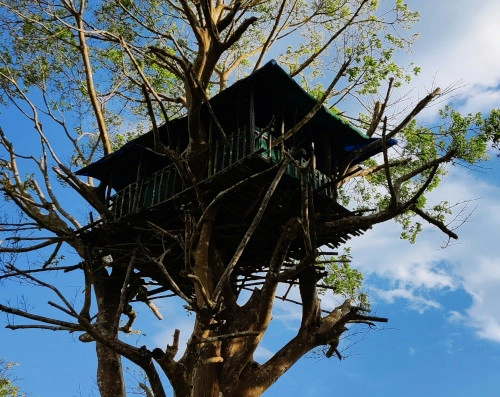
They went up the trunk and settled on the roof of the treehouse they had built together. There they reclined to observe the dark blue sky turning a deep purple and to listen to the insects’ song.
Adu stretched lazily. “I am glad my parents never found out about this. ‘Nothing good comes from up there! Keep your head where things are real and your eyes forward on your task!’ If they knew, they would explode!”
Nobody knew where this tradition had come from, but it was the way things were. Stay on the ground where things were solid. Be realistic and do your duty. Even the treehouse was pushing it, and Adu had not been easy to convince that it was a good idea.
When it was so dark that they could hardly see each other anymore, Adu took a small lantern from inside the folds of her jacket and lit it. She laughed: “So like you to forget to bring a light! By the way, my parents want me to join the order. They did not tell me in so many words, but I just know that’s what they want. You know?”
Eto sighed. “I know. My parents are the same. They have been on about how it would be a great honour for the family.”
“It would be an honour for you and me too, I guess. Perhaps we should tell the recruitment cleric that we have been friends for years, so we would love to stay together when we join?”
Eto sat up, frowning. “Don’t you mean ‘if we join’? I am not sure it’s right for me. And not only because of the robes clashing with my complexion.” Her grin fell when she saw Adu’s face.
“You know, I think it’s time to be real, Eto. I didn’t get grades as good as yours, and being a member of the order helps in getting a respected place in society. Besides, you are a second, just as I am. It’s kind of trad-”
“Don’t remind me. It really does suck to be second. Eki was allowed to even leave town, what about my choices?” With her long, grey arms, Eto gestured back towards the lights of their little town. “Is this all there is going to be in life for me?”
“Why does there have to be more? I mean, it was fun, when we were kids, but we aren’t any more. And I can’t see myself joining without you. Please, just this once, can’t we do something I want?”
“You just said it yourself, you don’t actually want it. You just follow along! And you want me to follow along with you? So I have to chant all day and make others obey stupid rules? I thought we were friends!”
Adu’s voice rose in pitch as well as volume: “So did I! So what if just this once I decide to go along with tradition and my parents’ wishes? We are not the only ones on this planet! There is something like contributing to community! Also, we have been waiting here for long enough now, and honestly? I kind of agree with my parents: If you ask me, nothing will come from up there, good or otherwise! Take a good, honest look up there, even the last remaining bright spots have long disappeared from the night sky! So maybe we should stop waiting and start joining everybody else and just live?”
They scowled at each other until Adu grabbed her lantern and went to climb down the ladder. Eto scrambled after her.
While she ran after Adu, she called out, “Wait! I am sorry! Come on, wait for me!”
Adu stopped but did not turn around, her shoulders drooping. In a very small voice she said, “I have always looked up to you. But I am not like you, Ets, I am not that good with opposition.” She turned around at last, her purple eyes shining with tears.
“Perhaps we can talk about this tomorrow? Let’s just enjoy school being over tonight, okay?”
They hugged and Adu whispered against Eto’s shoulder, “Okay. For the record, watching the sky with you definitely wasn’t a waste of time.”
Eto sent one more longing glance upwards, only to find that the last remaining bright spot had, in fact, not disappeared. She blinked twice, then elbowed Adu and pointed up: “You see that too, right?” Adu actually took a look and nodded wide-eyed.My first short story for 2023 and my 11th with deadlinesforwriters.com: Shouldn’t graduation be the first step into being able to choose your own future? Eto certainly thinks so but not everyone agrees.
“What? How? It went dark ages ago!”
Eto’s face lit up “This can’t be the last bright spot. It’s in a totally different place. This is something new! Erm, wait… Is it just me or is it getting bigger?”
They watched with open mouths as the previously tiny point of light grew into a fiery streak across the sky. Soon they could hear it screeching downward, louder and louder, until it hit the ground behind the ridge in an explosion of blue dust and white flames.
The two of them stood very still, then looked at each other. They started walking at the same time. In the light of the lantern, they made their way through the undergrowth and up the incline to reach the crash site. There they found a heap of hot metal shards and bent rods with little boxes still halfway attached to them. A gleaming yellowish rectangle lay on the crater’s rim.
They walked closer taking small steps. Even though it had been warped a bit upon impact, the markings on the rectangle could clearly be seen: To the left a couple of lines intersecting in one spot, to the right two strange bipedal beings, one of them lifting their right arm. At the bottom was a row of circles, one of them big and nine smaller ones. An arrow connected the fourth circle from the left with something that looked like an image of this thing that had fallen from the sky.
Eto knelt down and traced the alien images with her long fingers hovering above the plate. She was quiet for a while, then glanced up at her friend, a new sparkle in her eyes, and asked: “So what do you say now? What should we do with the rest of our lives?”
Like my contribution to the story challenge January 2023? On my blog you can find and read more of my stories!
Diese Geschichte zum Neujahr schlummerte in einem Ordner auf meinem Computer. Hoffentlich macht sie dir ein bisschen Freude. Auf meinem englischen Blog gibt es noch ein paar weitere Kurzgeschichten.
Fjodor Klingeling
Ich saß am Küchenfenster und guckte nach draußen. Es war Neujahr und draußen lagen noch ein paar Raketenreste und Sektflaschenscherben. Mein Kopf fühlte sich nach der viel zu kurzen Nacht etwas pappig an, hungrig war ich aber ehrlich gesagt noch nicht. Plötzlich schepperte ein klitzekleines Glöckchen und vor meiner Nase schwebte ein klitzekleines Männchen. Es schien über die Feiertage, milde gesagt, auch kulinarisch nicht zu kurz gekommen zu sein und trug mit mittelprächtiger Souveränität einen eng anliegenden grünen Anzug mit spitzen Stiefelchen und Hütchen. Seine Flügel wirkten ein bisschen wie gebraucht gekauft, aber die Art, wie er sich vor mir bebend über seine volle Körperlänge hinaus reckte, machte das fast wieder wett. Fast.
„Frohes Neues Jahr!!! Und taddah: Du hast einen Wunsch frei!!!“ tönte er.
„Wer bist du denn?“
„Fjodor Klingeling. Und ein Wunschelf… Und Du hast einen Wunsch frei!!!“
„Nur einen Wunsch?“
„Ja, nur einen. Sparmaßnahme. Immerhin, Wunsch ist Wunsch. Und bevor Du jetzt etwas sagst: Stell Dir mal vor, wie gut es tut, anderen eine Freude zu machen. Ich würde mich extrem über ein paar anständige Flügel freuen.“ Hoffnungsvoll hoppelnd zwinkerte er mir zu. „Na, wie wär’s?“
Ich starrte ihn ein paar Sekunden lang an, bis er das Hoppeln wieder einstellte.
„War einen Versuch wert.“
„Na okay, also dann… Ich wünsche mir Weltfrieden.“
Fjodor zuckte zusammen. „Kann ich nicht.“
„Kannst Du die Klimakrise stoppen?“
„Nö.“ Er wurde merklich kleiner.
„Kannst Du dafür sorgen, dass alle Miesepeter netter werden?“
„Auch nicht.“
„Was kannst Du denn?“
„Haare flauschiger, Zähne gerade, Winterspeck weg, so aus dem Bereich eine ganze Menge. Oder kurze Flugreisen.“
„Wie kurz?“
„Belgien?“
Ich sah ihn sehr ernst an. „Kurzflüge sind sowieso eine ganz schlechte Idee, das weiß Du, oder?“
„Ich lege auch einen Atmosfairgutschein obendrauf. Die pflanzen Bäume gegen das CO2.“
Mir kam hier das eine oder andere doch relativ merkwürdig vor: „Sag mal, was ist das eigentlich für ein sehr spezielles Wunschsortiment?“
Jetzt sackten Fjodors kleine Schulter komplett ab. „Ich muss erst mal Punkte sammeln. Für jede zufriedenstellende Wunscherfüllung gibt es Punkte. Und je nach Level kann ich irgendwann auch größere Wünsche erfüllen.“
„Wie lange machst Du das denn schon, so als Wunschelf?“
Fjodor schniefte ein bisschen. „Ich habe erst vor kurzem umgeschult. Vorher war ich als Kobold tätig, aber das war überhaupt nicht mein Ding. Wir sind als Trupp in ein Haus rein und haben Unsinn gemacht. Blumentöpfe verschoben und Bücher falsch rum ins Regal gestellt, sowas. Ich bin immer irgendwie als letzter im Zimmer gewesen und ziemlich jedesmal war irgendwie die Tür zu und ich wurde erwischt und es gab amtlich Ärger. Die anderen Kobolde fanden das jedes Mal superlustig. Aber irgendwann reichte es mir. Ich wollte dann was anderes machen. Was soziales. Wo ich anderen helfen kann.“
Die kleinen Hängeohren und Knopfaugen gingen mir echt ans Herz. „Na gut, weißt Du was? Ich nehme dann bitte die flauschigen Haare.“
„Echt jetzt?“
„Echt jetzt. Na, mach schon!“
Fjodor wirbelte kompliziert mit seinen Händen durch die Luft. Ich hatte den Verdacht, dass er da mehr Show machte, als grundsätzlich nötig. Als ich gerade soweit war, zu glauben, ich sei hier einem schwer verschwurbelten Koboldstreich aufgesessen, prickelte es auf meiner Kopfhaut. Ich fühlte nach.
„Wow!!!“
Fjodor platzte fast vor Stolz. „Da habe ich auch ein Weilchen dran geübt. Im Wald. Das Leben dieser Wildschweine wird nie wieder sein wie vorher.“ Er lächelte versonnen, kratzte sich dann schüchtern an der Schulter. „So, jetzt bräuchte ich Dir noch eine Zufriedenheitsbestätigung. Ein Daumenabdruck reicht.“ Fjodor kramte einen kleinen Block raus und blätterte zur ersten leeren Seite. Er musste nicht sehr weit blättern. Als er mir den Block entgegenstreckte, drückte ich meinen Daumen auf das Papier.
Fjodor strahlte. „War mir ein Vergnügen! Bis irgendwann mal!“ Die kleine Glocke schepperte wieder und er verschwand mit einem glücklichen Quietschen. In der Luft lag ein Hauch von Vanille und Schwarzpulver.
Ich strich mir mit der Hand durch die flauschigen Haare. Wahnsinn. Das neue Jahr konnte kommen.
Im Dezember 2021 hatte ich den Jahresrückblick 22 noch fest eingeplant. Im November 2022 dachte ich eher, dass mir das doch ein bisschen viel Aufwand wäre. In einem schwachen Moment habe ich mich dann doch wieder angemeldet und es nicht bereut 🙂
Ich wusste ja, was auf mich zukommt, und dass ich mir das alles selber zurecht basteln und einteilen konnte.
Was ist eigentlich genug?
Rückblickend bin ich mir mit genau diesem Ansatz näher gekommen. Niemand hat etwas davon, wenn ich mich nach Ansprüchen oder Vorstellungen anderer ausrichte, am wenigsten ich. Das war mir natürlich immer klar. Auf dem Weg zum Jahresrückblog blubberten dann diese Worte hoch: „Der Maßstab für mein Genug bin ich.“
Und es war nicht mehr so ein schöner Spruch zum an die Wand hängen. Es war eine Meldung von ganz tief drinnen. Und gleich meldete sich ein Teil meiner inneren Persönlichkeiten, das sei schonetwas sehr banal. Ein paar andere wunderten sich, dass ich so alt werden musste, um das zu lernen. Der Teil, der diese Lektion kapiert hatte, antwortete: „Ja, genau. Das ist der Punkt.“
Erkenntnisse sickern ein
Heimlich still und leise sind Dinge bei mir von der rein kognitiven Ebene tiefer gerutscht. Dort wirken sie sich wirklich befriedend in meinem Leben aus. Das ist mir beim Schreiben dieser Bilanz der letzten zwölf Monate immer wieder aufgegangen. Ich gehe nicht davon aus, dass die da jetzt auf ewig ruckelfest sitzen. Auch nicht davon, dass ich nichts mehr zu lernen und zu verinnerlichen habe. Gleichzeitig habe ich metamäßig gesehen ganz gut geübt, was ich tun kann, um den Einsinkprozess zu erleichtern.
Das Einsickern von Erkenntnissen braucht Geduld und Bereitschaft.
So einfach und gleichzeitig so anspruchsvoll. Jedenfalls für mich 😉
Was ich außerdem brauche: Handfeste Repräsentationen der wichtigsten Botschaften. Einer der Sätze, die ich im Unterricht am häufigsten sage, ist:
„Mach dir eine Skizze!“
Wenn wir etwas vor Augen haben, ist es etwas ganz anderes, als nur so darüber nachzusinnieren. Auch das ist so schlicht wie tiefgreifend. Teils einfach nur aus kreativen Impulsen und einer Bastelfreude heraus, habe ich dieses Jahr anscheinend genau die richtigen Erkenntnisse gegenständlich gemacht. Und damit habe ich etwas in mir die Gelegenheit gegeben, wirklich zu begreifen.
Was für ein leises und gleichzeitig umwälzendes Jahr 💕
Was hatte ich 2022 vor und was ist daraus geworden?
Lernvideos erstellen und hochladen
Davon habe ich insgesamt gar kein Video geschafft. Ich habe mich zu sehr in Zweifeln verheddert.
„Es gibt ja schon so viele Lernvideos auf Youtube“ und „Mit welchem Thema sollte ich denn anfangen?“
Dass ich mein eigener Maßstab für mein Genug bin, hat sich in dem Bereich meines Lebens noch nicht ganz herum gesprochen.
Webseite renovieren
Ich war zum Jahresrückblick 2021 wirklich überzeugt und wild entschlossen, dass das im Januar losgehen sollte. Mit Glück schaffe ich es noch auf den letzten Metern im Dezember. Vielleicht auch nicht, aber auch da bin ich mit dem, was ich jetzt schon fertig habe, zufriedener als Ende 21, da hatte ich nur Dinge, die ich nicht mehr wollte, aber keine konkreten Schritte zur Veränderung. ✅
An meinem Pulli weiterstricken
Basierend auf einem Zitat bin ich kontinuierlich dabei, meinen Kontakt mit meiner Mitwelt so zu gestalten, dass ich weder schutzlos offen bin noch hinter einer Rüstung versteckt. Das hat ziemlich gut geklappt, auch wenn mich der Krieg in der Ukraine besonders im Sommer noch einmal extra runter gezogen hat. ✅
Photos besser ablegen
Der Plan war, alle Bilder von meiner Kamera und meinem Smartphone alle paar Wochen auf meinen Rechner zu schaufeln und dort im jeweiligen Ordner „Bilder-2022-Monatsname“ abzulegen. Das habe ich konsequent umgesetzt und es hat mir richtig Freude gemacht und mir die Bildersuche für den Jahresrückblog22 sehr erleichtert. Gleichzeitig hatte ich mir vorgenommen, mehr Bilder zu machen. Entsprechend war die Sammlung deutlich größer, was die Bildersuche wieder erschwert hat. Irgendwas ist immer 😉 ✅
Stapel beseitigen
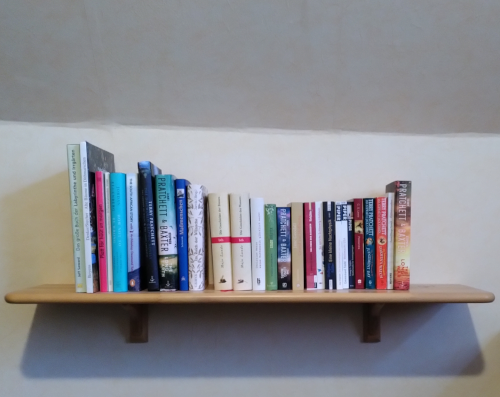
Wie schon im letzten Jahr habe ich auch Ende Dezember 2022 noch fast dieselben Stapel an ungelesenen Büchern und unerledigten Nähprojekten. Immerhin habe ich ein Buchregal an die Wand gedübelt, so stehen die Bücher schonmal dekorativer im Raum 😆
Mehr Ordnung in mein Zuhause bekommen
Im Januar habe ich wieder mit viel Motivation einen Simplifyplan aufgestellt und mir 5-Minuten-Routinen (im sich öffnenden Artikel Tipp Nr. 10) überlegt. Mit diesen Methoden hatte ich 2021 schon gute Erfahrungen gemacht. Dieses Jahr hat mich zwischendrin der Schwung verlassen, ein bisschen was muss ja auch für 2023 zu tun übrig bleiben 😉
Meine Prioritäten klären
Nachdem das Neinsagen im Jahr 2021 so erfreulich war, habe ich mir für 2022 vorgenommen, genauer herauszuarbeiten und mir vor allem vor Augen zu führen, was wirklich meine Prioritäten sind. Weiter unten schreibe ich mehr dazu. ✅
Das Konzept Gleichzeitigkeit öfter bewusst erleben
Zum 2. Februar habe ich mit mir einen Vertrag geschlossen und ein Teil davon war es, bewusster darauf zu achten, wann ich gerne „aber“ sagen wollte und dann nach einem „und gleichzeitig“ Ausschau zu halten. Das hat mir richtig gut getan. Es ist gleichzeitig ein vermutlich nie endendes Vorhaben. ✅
Mehr Persönlichkeiten häkeln
Die 2021 neu aufgenommenen Mitglieder meines Inneren Teams wollten gerne auch begreifbar in die Welt gebracht werden. Für eine von ihnen hat das stattgefunden, weiter unten erzähle ich, wie gut das gelaufen ist. Ein paar andere Persönlichkeiten stehen dann für 2023 auf dem Programm. Da muss mich noch die Inspiration treffen, wie sie denn aussehen sollen. ✅
„Den Faden weiterspinnen“
Das war mein Jahresmotto. Es stand ja gleichzeitig für einen freundlichen Blick auf mich selbst, das Lösen von Knoten, das Loslassen von Stricken, die gar nicht meine sind, und das Weben neuer Verbindungen. Im Rückblick stelle ich erfreut fest, wie gut mich das durch das Jahr getragen hat und wie sich wirklich noch sehr viel weiter geklärt, vereinfacht oder sicherer gefestigt hat. ✅
Am Bücherstapel hat sich wenig getan, dafür ist das Regal schon mal angedübelt.
Mein Jahresrückblick 2022:
Mein Prioritätenboard
Eine Upcyclingpinnwand mit dem, was mir wirklich wichtig ist.
Die Weniger-Challenge
Das Jahr begann mit einer „Weniger“-Challenge, geleitet von Birte Peters und Anna Koschinski. Es ging nicht nur um ein vordergründig effektives Entrümpeln und den kürzesten Weg zum Minimalismus, sondern um ein Paket aus Schreibaufgaben, Zoomcalls und dem Austausch in einer Facebookgruppe, um unsere Gründe für das Ansammeln von Dingen zu beleuchten. Ich habe leider beim Sortieren fast immer verpasst, Photos zu machen, aber es hat sich einiges in meinem Inneren und meinem Äußeren gefunden, das ich nicht mehr brauchte, das aber noch so rumlagerte.
Beim Jahresrückblick 2021 war Neinsagen eins meiner Themen. Dieses Jahr wollte ich genauer hinsehen, wozu ich denn tiefgründig Ja sagen kann und möchte. Meine Prioritäten abklopfen, um mich weniger zu verzetteln und zu kaum etwas wirklich gründlich zu kommen.
Gedanken greifbar machen
Wie sich auch bei meinen Persönlichkeitenfiguren zeigte, hilft es mir sehr, manche Dinge aus dem Gehirn herauszuholen und als reale Objekte in mein Umfeld zu stellen. Es war auch nicht so, als hätte ich mich nicht schon vorher regelmäßig mit meinen Werten und Zielen beschäftigt. Wie ich 2021 im entsprechenden Rückblickkapitel erzählte, hat mir der Kompasskurs von ZeitZuLeben schon zu viel Klarheit verholfen.
Um das Ganze visuell zu gestalten, habe ich mich vom Konzept der Visionboards inspirieren lassen. Allerdings ging es mir nicht um Zielerreichung, sondern um das „Was ist?“. Eine Art Bestandsaufnahme, was mich ausmacht, was meine Werte sind, was mich berührt und glücklich leben lässt. Kein „Wo soll es hin gehen?“, sondern eine Erinnerung an die Angela, die ich schon bin. Eine Art Landkarte für mein Ja und für mein Genug.
Variation eines Visionboards
Anleitungen für ein Visionboard gibt es online in einer fast unendlichen Fülle. Die meisten haben gemeinsam, dass zu Anfang ein Brainstorming steht, dass Fragen gestellt werden, aus denen sich Stichworte herauskristallisieren, dass dafür dann Bilder und Zitate gesammelt werden, die am Ende in Papierform oder virtuell zu einer Collage zusammengestellt werden.
Ich habe per Mix&Match aus verschiedenen Anleitungen Ideen mitgenommen und mich gefragt:
Was habe auf meiner ToDoListe? Will ich das? Will ich das? Will ich das? Was werde ich mir am Ende meines Lebens wünschen, getan zu haben? Wofür werden Menschen mich in Erinnerung behalten? Was sagen mir die Ergebnisse des Kompasskurses und all der anderen bisherigen Übungen, wer oder was mir wichtig ist, wo meine Schwerpunkte liegen?
Mit den sich ergebenden Stichworten habe ich dann Bilder, Symbole, Zitate und Worte gesucht, ausgedruckt und ausgeschnitten. Diese Papierstücke sind dann noch einmal durch einen gründlichen Prozess des Arrangierens, Aussortierens, Verwerfens und Neuarrangierens gegangen, lagen ein paarmal über Nacht auf der umgewidmeten Pinnwand, bis ich draufgucken und sagen konnte: Ja, das bin ich. Es hört sich lange nicht so bewegend an, wie es war, als ich auf diese Collage sah und es innerlich klickte.
Die Pinnwand hängt jetzt bei mir zu Hause an der Wand und ich gucke ziemlich oft darauf. Dieser regelmäßige visuelle Impuls hilft mir tatsächlich, mich glücklich lächelnd an meine Prioritäten zu erinnern. Sehr wahrscheinlich hat dieses Prioritätenboard dazu beigetragen, dass die eine oder andere Erkenntnis einsickern konnte. Manchmal kann es echt so einfach sein.
In den Jahren 2020 und 2021 hatte ich mich auch schon schreibend mit dem Jahreskreis befasst, den zirkulären Veränderungen der Natur und der Jahreszeiten um uns herum, die wir beobachten können, sofern wir denn weit genug vom Äquator entfernt leben und unser Wohnort Jahreszeiten hat.
Der erste Durchgang beschäftigte sich mit grundsätzlichen Gedanken und der Einbindung in regionale und globale Traditionen. Im zweiten Jahr habe ich für jeden der acht Termine jeweils eine Meditation geschrieben.
Passende Aktivitäten
In diesem Jahr war dann der Plan, jeweils passende Aktivitäten rund um (unter anderem) die Themen Garten, Kreativität, Lesen und Musik zusammenzustellen, und ein paar Anregungen, wie die sich dabei ergebenden Erkenntnisse im eigenen Zuhause zur regelmäßigen Kontaktaufnahme in einem sogenannten Fokus gebündelt werden können, damit wir in unserem Alltag immer eine Anbindung und regelmäßige Erinnerung haben.
Ich habe nicht zu jedem Termin einen Blogartikel geschafft und ich werde auch in kommenden Jahren an der Aktivitätenreihe immer noch weiter schnitzen und neue Ideen zufügen. Das Ganze war für mich eine wunderbare Übung in „genug“ und gleichzeitig hat mich die Aktion angeregt, der Natur noch ein bisschen aufmerksamer über die Schulter zu gucken. Ich habe in der Vorbereitung auf das Schreiben der Blogartikel sehr viel deutlicher wahrgenommen, welche Pflanzen und Tiere in meiner Umgebung leben und wie sie sich über das Jahr hinweg entwickeln. Das hat mich auch mit meinem Wohnort noch einmal spürbar näher zusammen gerückt.
Vertiefung durch Wiederholung
Außerdem hat die Wiederholung der Themen 2021 und 2022 noch einmal meinen Zugang dazu geschärft, welche Fragen und Themen für mich aus dem Jahreskreis abgeleitet werden können. Ich bin immer noch sehr zufrieden damit, dass ich dieses Projekt 2020 begonnen habe und auch dass ich den Schwerpunkt auf einen relativ weltlichen Ansatz gelegt habe. An dieser Stelle möchte ich noch einmal den Podcast „The Wonder“ erwähnen, von dem ich in dieser Zeit viel gelernt habe, neben dem, was die Natur selbst mich lehrte. Auch Mark und Yucca, die beiden daran Beteligten, betrachten ihre Spiritualität auf naturwissenschaftlicher Basis und schaffen es gleichzeitig (oder vielleicht auch gerade deswegen), eine sehr satte Anbindung an diese Erde zu leben.
Dass ich in diesem Jahr nicht zu jedem Termin etwas gebloggt habe, bedeutet nur, dass ich nächstes Jahr wieder einen Anlass haben werde, genauer über mein Verhältnis beispielsweise zur Herbsttagundnachtgleiche nachzusinnen. Das Schöne und der ganze Punkt an einem Kreis ist ja, dass er nicht endet.
Abschied von Romy
Erst zweimal abgesagt, dann 2023 ohne Romy.
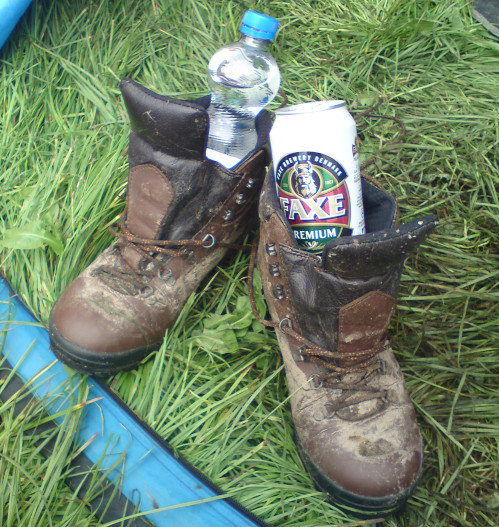
Wackenteam
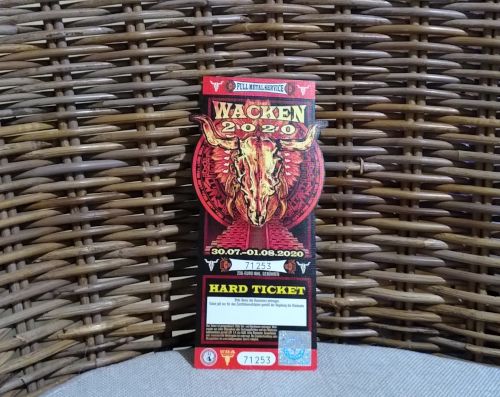
Wir waren ein eingespieltes Team. Zelt aufbauen, Lagepläne lesen und den kürzesten Weg zur Bändchenausgabe rausknobeln, die persönlichen Running-Orders abgleichen und Gemeinsamkeiten finden, nur ganz wenig mit den Augen rollen, wenn wir mal zu einer Band mitgegangen sind, die die andere ausgesucht hatte („Guck doch mal, was die für schöne Frisuren haben!“), den Stand mit dem veganen Gemetzelten finden und da jeden Tag zweimal essen. Oder aber die jeweils andere alarmieren, wer wieder demnächst in der Markthalle spielen würde und zwei Tickets bestellen, den Überblick verlieren, wie viel Geld unterm Strich noch wem zu überweisen war. Das dann doch wieder sortiert bekommen.
Am letzten Morgen in Wacken etwas abgerockt und angeschmuddelt vorm Auto den letzten Kaffee trinken und sagen: „Wir sind so langsam echt zu alt für den Quatsch!“ – „Also soll ich dir fürs nächste Jahr ein Ticket mit besorgen?“ – „Na klar, das wäre super!“
Wir haben uns wirklich hauptsächlich nur zu solchen Gelegenheiten gesehen, obwohl wir gar nicht so weit auseinander wohnten. Als bei Romy der Krebs wiederkam, von dem sie mir nie erzählt hatte, fragte ich sie, ob ich mal vorbeikommen sollte, einfach so. Sie war sehr zögerlich, anscheinend wollte sie sich nicht so sehr in die Karten gucken lassen, wie schlecht es ihr wirklich ging.
Plötzlich ohne Romy
Im Februar 2022 starb sie und ich denke noch oft darüber nach, ob ich ihr Zögern falsch verstanden hatte, und ob sie sich doch über einen Besuch gefreut hätte. Oder ob sie sich dann überrumpelt gefühlt hätte, und ob es nicht doch richtig war, das zu respektieren. Eine klare Antwort werde ich wohl nicht mehr bekommen. Sie wurde an dem Tag beerdigt, als Putin die Ukraine angreifen ließ.
Dieses Jahr war ich endlich wieder in Wacken und an jeder Ecke kamen Erinnerungen auf. Obwohl der Stand mit dem Gemetzelten fehlte, was allerseits für Entrüstung sorgte. Ich musste oft über meine Erinnerungen lachen, und oft war ich auch traurig, dass ich diese oder jede Band nicht mehr mit ihr gemeinsam würde genießen können. Für das nächste Jahr habe ich nur eine Karte für mich gekauft. Das wird das erste Mal sein, dass ich ganz alleine nach Wacken fahren werde. Ein bisschen tue ich mir leid, ein bisschen bin ich gespannt auf die Erfahrung. Es sind schließlich noch ein paar andere Menschen mit mir gemeinsam dort.
Lauter kleine Erinnerungen
Auch im Alltag erinnert mich vieles an Romy. Wir haben uns über ihren Yogakurs unterhalten und wie sie zunächst beim Bogen immer gedacht hatte, sie müsste die Beine gestreckt lassen und nur nach hinten greifen, um an ihre Füße zu kommen. Was haben wir gelacht! Und als ich ihr erzählte, dass ich die Hoffnung aufgegeben hatte, jemals Chaturanga schaffen zu können, sagte sie mir, das sei keine Frage von Puddingarmen, sondern der richtigen Technik.
Nach 2019 fiel ja das WOA mehrere Male hintereinander aus und damit auch unsere Yogagespräche. In der Zwischenzeit lernte ich tatsächlich, dass ich Chaturanga doch kann. Jetzt denke ich jeden Tag auf meiner Matte an Romy und wie mich ihr Hinweis weitergebracht hat.
Ich bin sehr dankbar für all die Jahre, in denen wir gemeinsam getanzt und gelacht haben. Ich bin froh und dankbar, dass Romy vom Ukrainekrieg nichts mehr mitbekommen hat. Dieses Jahr schreibe ich ihr keine Weihnachtskarte mehr. Umso mehr trage ich sie weihnachtlich in meinem Herzen.
Die Kurzgeschichtenchallenge
Eine der Geschichten drehte sich um einen kleinen Elefanten. Ich hoffe, er hat den Weg zum Strand gefunden.
Seit Jahrzehnten trage ich zwei Geschichten in mir herum, die konkrete Romane in Buchform werden wollen, daneben jede Menge Ideen, was ich der Welt noch so als Fiktion oder Nonfiktion mitteilen könnte.
Die Challenge
Ende Januar habe ich mich auf der Seite deadlinesforwriters angemeldet, weil ich dachte, das könnte eine gute Vorübung zum Nanowrimo sein, bei dem ich mich 2022 aber wirklich mal beteiligen wollte, was dann aber doch nicht stattgefunden hat. Der Hintergedanke hinter den Deadlines ist, dass ein wirklich eingehaltener konkreter Abgabetermin den Schreibprozess allgemein fördert. Oder so. Ein Originalzitat von Mia Botha, der Frau hinter der ganzen Aktion: „Here we kick procrastination-butt“ Eigentlich genau, womit ich normalerweise nicht klarkomme, gleichzeitig hat es mich sehr angesprochen.
Es gibt unterschiedliche Challenges, eine der kostenlosen ist 12 Short Stories in 12 Months. Dabei gibt es einmal im Monat ein Stichwort und eine vorgeschriebene Anzahl an Worten sowie ein 24-Stundenfenster, innerhalb dessen die jeweilige Geschichte eingereicht werden soll. Eine Übung in Disziplin, die meine Kreativität freisetzen sollte. Witzigerweise ist dies eine der Aktivitäten, die richtig gut gelaufen sind.
Meine Geschichten
Die erste Geschichte schrieb ich in einer sehr nachdenklichen Stimmung, als gerade meine Freundin Romy gestorben war. Das war eine gute Gelegenheit für mich, meine Gefühle zu sortieren und mit anderen zu teilen. Und ich bekam liebevolles und hilfreiches Feedback, aus dem ich eine Menge über englische Zeichensetzung lernte.
Die folgenden Geschichten drehten sich alle um Paul und Helen. Die Namen stammen ausgerechnet von zwei Teilnehmenden der zweiten Staffel Big Brother UK. Wir lebten damals in London und haben über die Mätzchen der beiden sehr gelacht. Jedenfalls waren sie und die Frage, was wohl aus ihnen geworden ist, Basis meiner zweiten Geschichte. Danach sind die Namen mir treu geblieben, wenn die Charaktere sich auch etwas von den beiden Originalen entfernt haben.
Paul und Helen passieren oft merkwürdige Dinge, zum Beispiel kam im Sommer ein kleiner Elefant zu Besuch und hat ihren Garten gründlich angeknabbert und einen neuen Durchgang in die Hecke integriert. Deshalb war ich etwas perplex, als das Stichwort für die letzte Geschichte bekannt gegeben wurde: Strange. „Ja was, quasi alle Kurzgeschichten über Paul und Helen waren bisher von sich aus strange, was soll ich denn da noch rausholen?“
Meine Bilanz
Da ich sowieso erst zum zweiten Termin, also im Februar, in die Challenge eingestiegen war, hatte ich keinen Druck, wirklich zwölfmal etwas einreichen zu müssen. Am Ende bin ich bei zehn von zwölf gelandet und sehr zufrieden mit meinem Lernprozess und mit meinem procrastination-butt-kicking.
Für das kommende Jahr schwebt mir schon ein neues Setting vor, in dem meine neuen Geschichten spielen werden. Die Challenges zum Schreiben eines Romans klingen zwar auch sehr spannend, allerdings wollte ich die langen Geschichten tatsächlich auf Deutsch schreiben, da muss ich wohl auf eine andere Inspiration warten.
Dänisch lernen mit der grünen Eule
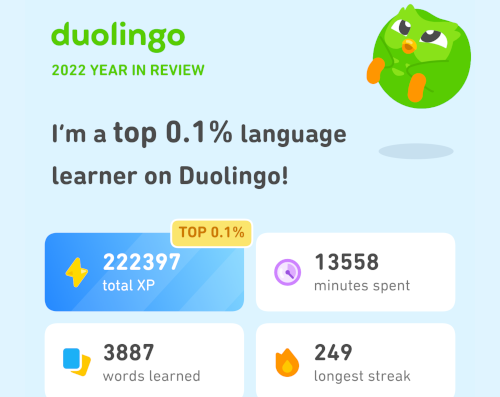
Meine Duolingostatistik nach ca. 250 Tagen.
Der Hype packt mich
Bis zum 27. März konnte ich noch widerstehen, obwohl in meinem Bekanntenkreis so viel von diesem mysteriösen Duolingo gemunkelt wurde. Am diesem Sonntagmorgen wollte ich dann „nur mal kurz gucken“, was denn an dieser Sprachapp so spannend sein sollte. Am 31.12. werde ich 280 gemeinsame Tage mit der grünen Eule beisammen haben.
Der dänischen Sprache hatte ich 1990 schon mal eine Chance gegeben, als ich mit meiner Schwester und einer Freundin mit dem Rad quer durch Schleswig-Holstein gefahren bin und auch ein Abstecher nach Kollund in Dänemark auf dem Plan stand. Meine Freundin hatte ein Buch mit einem Selbstlernkurs. Da hatte ich allerdings nach den ersten drei Kapitel die Faxen dicke. Nur mit Hilfe der Lautschrift und nur für ein paar Stunden auf dänischem Boden war das dann doch ein bisschen viel.
Der Teil meiner Familie, dessen Namen ich teile, stammt aus einer Region, die zeitweise zu Dänemark gehört hat. Diese Tatsache und ein Besuch im Danevirkemuseum, bei dem ich lernte, was wirklich der Grund dafür war, dass dort vor ein paar hundert Jahren ein großer Schutzwall gebaut wurde, haben mir immer im Hinterkopf herumgespukt. Ich habe immer mal wieder auf Youtube Videos zum „weichen D“ angesehen und spontan wieder beschlossen, dass mir diese Sorte Zungenbrecher zu schwierig ist.
Was an Duolingo so motivierend ist
Dann kam die kleine grüne Eule. Mit ihren wild-bizarren Beispielsätzen. Mit dem Punktesystem und dem Klettern durch die Ligen. Nicht nur, dass ich da endlich einen unterhaltsamen Zugang zum Dänischen gefunden habe und das wie ein Nachhausekommen war. Nicht nur, dass es nur die Option gab, Dänisch auf Englischer Basis zu lernen und ich so quasi gezungenermaßen durch das Hinundherübersetzen noch eine viel größere Wertschätzung für die Dreiecksverwandschaft dieser beiden Sprachen mit Deutsch und speziell mit dem Norddeutschen bekam.
Ich lernte die kompetitive Seite an mir kennen, von der ich gar nicht wusste, dass sie überhaupt existierte. Mich hat es komplett unerwartet unwiderstehlich motiviert, bis zum jeweiligen Ende am Sonntagabend auf dem ersten Platz zu sein. Dafür habe ich jede Menge Extralektionen und Schnellraterunden eingelegt, mich derweil über die Abenteuer des klugen Bären gefreut und offensichtlich richtig viele Vokabeln in meinem Hirn fortgeschrittenen Alters abgelegt.
Inzwischen bin ich mit dem Dänischkurs so gut wie fertig, der ist auf Duolingo kürzer als zum Beispiel der für Französisch. Letzteren habe ich jetzt auch schon mal angefangen, um mein Schulfranzösisch abzustauben. Ich freue mich sehr, wie wenig eingerostet es tatsächlich ist, allerdings hat Dänisch einen ganz anderen Platz in meinem Herzen.
Unterwegs habe ich begonnen, dänische Podcasts zu hören, hier ein paar Empfehlungen: Learning with Ervin, Danishtube mit Liam, „Dansk i ørerne“ mit Sophie und „Koen på isen“ mit Helle. Außerdem folge ich Sigga Hansen auf Instagram, die täglich sehr charmante und sehr informative Videos postet. Und wenn ich wirklich demnächst alle meine Dänischlektionen auf „legendary“ gelevelt habe, kann ich noch die komplette Dänischreihe von „Mic‘s Languages“ angucken. Det vil være dejligt.
Eine Persönlichkeit zum Begreifen
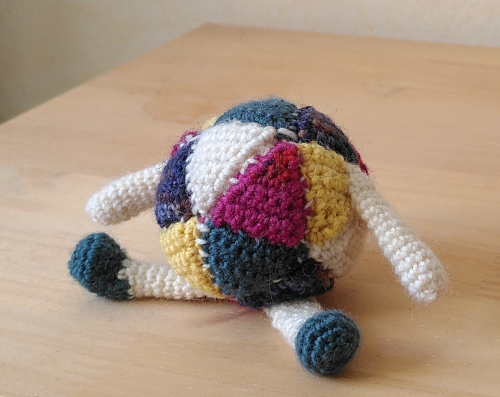
Mein runder bunter Ikosaeder.
Mein Inneres Team
Schon im Jahresrückblog 2021 habe ich diesen Aspekt meiner Persönlichkeit erwähnt. Sie ist diejenige, die am wenigsten in diese Gesellschaft hinein passt und die am tapfersten am Ball bleiben muss, um nicht unterzugehen. Für sie ist es sehr wichtig, dass Dinge „gerecht“ und „richtig“ sind, Schneeflockendesigns mit einer vierfachen oder achtfachen Symmetrie machen sie ganz wuschig, mathematische Beweise genießt sie wie Gedichte. Wenn sich zum Beispiel im Straßenverkehr Menschen rücksichtslos verhalten, könnte sie platzen vor Wut. Sie ist diejenige, der am wärmsten das Herz aufgeht, wenn sie das Schachbrettmuster in meinem Instagramprofil (mein Instaprofil existiert nicht mehr) sieht. Und selbst wenn es sonst niemandem auffallen oder gefallen sollte, ich werde es immer beibehalten. Allein, um ihr eine Freude zu machen.
So richtig konkret wahrgenommen habe ich sie wie gesagt erst 2021, vorher dachte ich einfach, irgendetwas an mir sei komisch und ich müsste mich mehr bemühen und locker machen. Zu würdigen, dass ein Teil meines inneren Teams ist, wie sie ist, und dass das auch gut so ist, hat schon viel Bewegung in Richtung inneren Friedens und Zufriedenheit ausgelöst.
Gehäkelt = Begreifbar
Wirklich greifbar wurde sie für mich, als ich mich daran machte, sie zu häkeln. Das habe ich schon für andere Teile meiner Persönlichkeit gemacht und empfinde es als sehr hilfreich für „Teambesprechungen“. Wenn ich eine neue Persönlichkeit kennenlerne, ergibt sich meist zuerst ein Name, dann überlege ich mir, welche äußeren Merkmale diese Person hat. Und dann mache ich mich auf die Suche nach passenden oder anpassbaren Häkelanleitungen.
In diesem Fall war mir gleich klar, dass ich einen Polyeder brauchen würde. Also häkelte ich 20 gleichseitige Dreiecke, nähte sie zusammen und befüllte sie mit Füllwatte. Dass dabei aus dem Ikosaeder eine Kugel wurde, passte der neuen Persönlichkeit super und mit zwei Armen und zwei Beinen sitzt sie seitdem sehr zufrieden auf meinem Regal und strahlt ihr neues Lebensgefühl in meinen Alltag aus. Ich kann nur empfehlen, Persönlichkeitsaspekte so greifbar und real in die Welt zu bringen. Diese Form von Würdigung und Aufmerksamkeit hat in diesem Fall Knoten gelöst, an denen ich bald 49 Jahre rumgefriemelt hatte.
Ein paar Teammitglieder stehen noch Schlange, um auch auf meinem Regal Platz nehmen zu können und ich freue mich schon auf die Wirkung, die das auf meine innere Ausgeglichenheit haben wird.
Nostalgisches Kochen mit der Twitterbubble
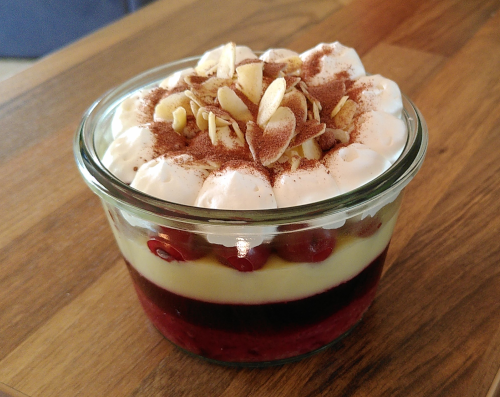
Old English Trifle
Die vegane Twitterbubble
Bevor Musk es übernahm, habe ich dieses Jahr auf Twitter eine große Gruppe lieber Menschen kennen gelernt. Wer mit irgendetwas einer Minderheitengruppe angehört, weiß wie gut es tut, sich nicht mehr so alleine zu fühlen, und sei es online mit Menschen, die teils relativ weit weg wohnen. Wie sich herausstellte, bestand die vegane Bubble auf Twitter größtenteils aus zauberhaften Menschen, die sich gegenseitig auch in anderen Zusammenhängen unterstützten und einfach auch viel miteinander gelacht haben.
Besonders inspirierend wurde es, als ein paar dieser Menschen sich überlegten, dass wir „gemeinsam“ kochen könnten, indem einen Monat lang jeden Tag immer eine Person ein Gericht aus einem Kochbuch als Startpunkt nahm und davon eine pflanzliche Version kreierte und vorstellte. Der Hintergedanke war, dass viele Menschen sich nicht vorstellen können, ohne Tierprodukte zu leben, weil es da dieses oder jenes Gericht gibt, mit dem sie so viel verbinden. Die Aktion lief unter dem Hastag #veganmakeit, was ich anfangs immer erfolgreich als makeitvegan missverstand. Ist ja auch beides sinnvoll.
Ich habe da eine Menge sehr phantasievolle Gerichte gesehen: Maultaschen, Haggis, Labskaus, „Himmel und Erde“, eher bodenständige Mahlzeiten sowie richtig ausgefeilte Kunstwerke. Genau wie wir alle aus unterschiedlichen Regionen kommen und unterschiedliche Zugänge zum Kochen haben.
Meine Beiträge zur Challenge
Meine Beiträge waren ein English Trifle, Cordon Bleu mit selbstgemachtem Seitanschnitzel und selbstgemachtem „Speck“ und Ananastoast. Dieses Retrogericht war auch ein bisschen für einen Twitterbekannten, der sich immer sehr über Ananas auf Pizza echauffieren konnte. Er hat diesen kleinen Scherz auf sein Kappe mit großem Gleichmut hingenommen.
Zwei andere Gerichte stammten aus meiner Kindheit. Meine Oma, die damals im Haus meiner Eltern wohnte, hat sie öfter mal gekocht: Birnen, Bohnen und Speck sowie Fliederbeersuppe mit Grießklößen. Beide Gerichte hatte ich buchstäblich seit dem letzten Jahrtausend nicht mehr gegessen. Der Moment, als ich dann jeweils den ersten Löffel beziehungsweise die erste Gabel im Mund hatte, war unbeschreiblich. Da war ich innerhalb von Sekunden wieder zehn Jahre alt. Alleine für diese Erfahrung bin ich dieser Gruppe Menschen sehr dankbar. Schon beeindruckend, wie tief eingegraben solche schönen Kindheitserinnerungen sein können und wie einfach sie teils wieder aktivierbar sind.
Twitters Schattenseite war für mich dieses Instantempörungslevel. Ein nicht unerheblicher Teil meiner Erfahrung dort war mit schlechter Laune verbunden. Als Musk die Plattform übernahm und das Knirschen immer inakzeptabler wurde, schloss ich mich dem Twexit zu Mastodon an. Dort fand ich einen großen Teil der #veganmakeit-Bubble wieder und darüber hinaus einen generell konstruktiven Umgang der Teilnehmenden miteinander. Ich bin mal sehr gespannt, wie sich diese Geschichte noch weiter entwickeln wird. Persönlich sehe ich es als frühes Weihnachtsgeschenk, dass ich jetzt dieses Netzwerk in einem Umfeld haben kann, in dem es nicht um den neuesten Aufreger geht, sondern um einen interessierten Austausch miteinander. Eine gute Basis für das Würdigen meiner Prioritäten und neuen Schwung für meinen Aktivismus.
Und fürs nächste Jahr habe ich schon eine Liste mit Rezepten, mit denen ich gute Zeiten verbinde und die ich dann neu interpretieren werde. Make it vegan 😉
Quo vadis, Aktivismus?
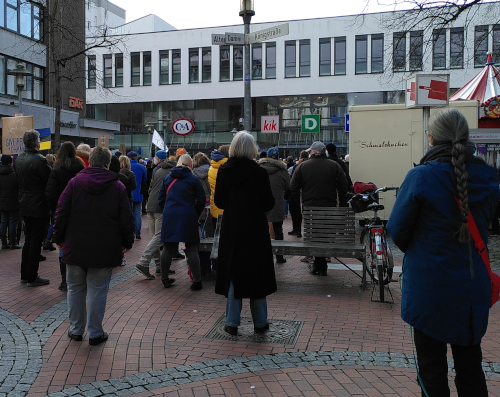
Friedensdemo in Elmshorn
Krisenstapel
Wie sich in den letzten Jahren die Krisen aufeinander gestapelt haben, ist uns allen bekannt. Schon als Kind hat mich die Umweltproblematik tief beschäftigt und mein Studienfach Chemie habe ich damals gewählt, weil ich (auch durch eine Beratung beim Arbeitsamt) damit vorhatte, die Welt etwas besser zu machen. Heute bin ich schon lange aus der Forschung raus und es ist für meinen mentalen Zustand sicher auch besser so, dass ich nicht so direkt dran bin und die Informationen darüber, wie es mit unserem Ökosystem steht, dass ich filtern und dosieren kann.
Organisationen
Ich bewundere die Menschen, die sich in Organisationen wie Scientists for Future, Scientist Rebellion aber auch die Letzte Generation so aktiv für unser aller Zukunft einsetzen. Manchmal frage ich mich, was ich später mal sagen möchte, was ich getan habe, als noch Zeit war, das Kippen zu verhindern.
Meine Gruppe zur Aufklärung über Ursachen von Pandemien hat dieses Jahr einen Verein gegründet und ich habe noch im März eine kleine Aktion organisiert. Ich war auch im Rückblick auf ein paar Demos für Frieden in der Ukraine, Tierrechte und den Klimaschutz. Im Sommer hatte meine Motivation aber eine merkliche Delle.
Krieg in der Ukraine
Krisen sind die eigentliche Motivation dahinter, dass Menschen auf die Straße gehen. Allerdings kam im Februar mit dem Angriff auf die Ukraine noch ein dicker Klumpen dazu und die generelle Ausrichtung von Twitter auf Negativmeldungen sorgte bei mir dafür, dass mich der riesige Stapel an Krisen nur noch demotivierte. Es gab einige Demos und andere Veranstaltungen, zu denen ich gehen wollte und mich dann kurz vorher entschied, doch nicht hinzugehen. Bei manchen ging es wirklich nicht, weil mein Rücken mir das viele Sitzen im Homeoffice übel genommen hatte.
Mein Umgang mit dem Frust
Die erste Maßnahme, die geholfen hat: Die Twitterlektüre drastisch zu reduzieren. Dadurch passiert zwar nicht weniger Kritisches auf der Welt, gleichzeitig überlaste ich mich damit nicht mehr. Mich so oft so umfassend und zeitnah zu informieren, hat mir auch nicht geholfen, die Welt zu retten. Wann macht der Mensch überhaupt genug?
In den letzten Monaten des Jahres ist dann bei mir eingesickert, dass der Maßstab für mein eigenes Genug ich selbst bin. Ich kann weiterhin die Menschen bewundern, die so viel mehr Zeit und Energie aufbringen als ich. Die auch größere Risiken eingehen als ich. Genauso kann ich auf Demos gehen, die nicht bei allen Vorbeikommenden gleich das radikale Umdenken bewegen. Ich kann in meinem Alltag Vorbild sein und Menschen informieren und damit kleine Steine ins Rollen bringen.
Ich glaube, noch habe ich mein Level an Aktivismus nicht gefunden. Für 2023 möchte ich wieder mehr bewegen und mehr rausgehen, wenn auch nicht auf der Basis, dass ich das muss, sondern dass ich aus mir heraus das Bedürfnis dazu habe.
Digitale Renovierung
So könnte der Jarüblo 22 dann aussehen.
Ruckeliger Anfang
Den ersten Blog hatte ich ab 2006 bei Twoday, dann einen bei Blogspot. Ich realisierte beim Schreiben dieses Jarüblos, dass der Ende 2022 noch existierte. Der erste, der auf meiner eigenen Seite lief, basierte noch auf WordPress. So richtig warm bin ich mit dem System allerdings nicht geworden. Dieser hier läuft seit 2020 auf Typo3. Und auch da sind noch immer ein paar Dinge glattzuziehen. Nicht ohne Grund ist eine meiner Persönlichkeitshäkelfiguren eine Schnecke. Anfang 2022 habe ich mir eine Liste mit Dingen gemacht, die ich ändern wollte, etwas später habe ich dann wirklich angefangen, in kleinen Schritten zu recherchieren. Und seit November bin ich hinter den Kulissen ernsthaft am Basteln und Schrauben.
Ein Grund dafür, dass meine Webseite lange so unentschlossen aussah und es mir schwer fiel, konkret etwas zu ändern oder mal eine Entscheidung zu treffen, wohin die Reise gehen sollte, war meine eigene berufliche Unentschlossenheit. Erst im Laufe dieses Jahres habe ich entschieden, dass ich mir auch von meiner Coachingausbildung genausowenig wie von meinem Chemiestudium vorschreiben lasse, was ich mit meiner Lebenszeit anfangen will. 2021 war die Trauerphase für die Chemikerin vorbei, jetzt streiche ich das Coaching aus meiner Webseite. Am Unterrichten und der Begleitung auf dem Weg zu Prüfungen hängt mein Herz. Darin bin ich gut, das macht mir Freude, damit kann ich anderen Menschen das Leben erleichtern. Was interessieren mich da Zertifikate aus Papier?
Neuer Anfang mit neuem Ansatz
Genauso ist bei mir jetzt eingesickert, was Judith meint, wenn sie sagt: „Blog like nobody‘s reading“ Natürlich ist ein Konzept für einen Blog hilfreich. Gleichzeitig hat mir die Vorstellung, ich müsste dieses oder jenes Thema bedienen, ein Korsett angelegt. Meine Jahreskreisreihen und meine Kurzgeschichten habe ich gesehen als „bis mir etwas zu XY einfällt“. Inzwischen sehe ich sie als vollwertige Bestandteile meines Blogs. Es ist sehr gut möglich, dass ich demnächst mehr über das Lernen und über naturwissenschaftliche Themen bloggen werde. Aber auch meine allgemeinen Gedanken über das Leben werde ich weiterhin hier ausdrücken und nicht mehr mental unter „ferner liefen“ kategorisieren.
Technisch freue ich mich darauf, dass die Kopf- und Fußzeilen, die Buttons und die Menüleisten so aussehen werden, wie ich mir das vorstelle, wenn ich mit dem Schrauben fertig bin. Auch, dass die Bildergrößen am PC und auf dem Smartphone richtig aussehen werden. Beim Thema Webseite und Blog konnte ich wieder mal eine Menge lernen. Technisch, inhaltlich und auch etwas über mich. Und das ist doch immer erfreulich.
Meine drei liebsten Blogartikel des Jahres
Dieses Jahr habe ich wieder deutlich mehr gebloggt als 2021. Ich bin mit allen dieser Beiträge sehr einverstanden, aber hier sind mal meine drei liebsten Artikel:
Den Anfang macht gleich mein Neujahrspost. Da habe ich mich von einem meiner Lieblingsbücher inspirieren lassen, dem Hogfather von Terry Pratchett. Und zwar von der Aussage, dass wir alle Geschichten brauchen, um wirklich Menschen sein zu können. Unter anderem empfinde ich die Erzählung um den Neuanfang zum 1.1. und auch das Konzept der guten Vorsätze als sehr hilfreich. Eigentlich ist ja dieses Datum „in Wirklichkeit“ willkürlich festgelegt. Im Artikel zitiere ich Terry weiter:
“It’s still magic even if you know how it’s done.”
Terry Pratchett
In diesem Sinne freue ich mich auf die Magie des nächsten Jahres.
Der zweite Artikel dieser Liste war auch der reichweitenstärkste Instagrampost 2022. Kann sein, dass es daran lag, dass ich die Hashtags #Wacken und #WOA verwendet hatte. Es war auch mein erster Beitrag zur Kurzgeschichtenchallenge von Deadlinesforwriters. Weil ich diese Geschichten teilen wollte, habe ich sie einfach mit auf meinen Blog gestellt und immerhin 10 von 12 eingereicht.
Die erste Geschichte ist autobiografisch angelehnt an meine weiter oben schon beschriebene Freundschaft mit Romy. Mit ihr bin ich jahrelang zu Konzerten und zum Wacken Open Air losgezogen. Das Stichwort „Boots“ hat mich sofort dazu inspiriert, über die Erfahrung mit ihrem viel zu frühen Tod zu schreiben. Heraus kam eine Erzählung darüber, wie jemand nach mehreren Jahren Pandemieflaute endlich wieder die guten alten Festivalstiefel anzieht.
Der dritte Artikel ist Teil der Jahreskreisserie. Es sind nicht alle geplanten Beiträge fertig geworden. Immerhin hat mir selbst die Ausgabe zum 1.11 mit ihrem zuversichtlichen Grundthema sehr gut getan. Ich habe genau hingesehen, wie viel Farbe und Leben noch in der Natur war. Mir wurde außerdem deutlich, wo meine eigene innere Stärke wurzelt und wie entlastend regelmäßiges Loslassen ist.
Im November ist es Zeit, los zu lassen.
Und das war sonst noch los:
Ich war zum ersten und sicher nicht zum letzten Mal auf Amrum.
Ich habe zum ersten Mal im Leben eine Blindschleiche gesehen und bewundert.
Die dunkelvioletten Bohnen wurden leider beim Garen ganz schnöde grün.
Ich bin natürlich auch mit dem 9€-Ticket durch die Gegend gefahren.
Zum Beispiel zum Wandern.
Mein Lieblingsstau
Das WOA-Gelände im Oktober
Wir haben endlich das Projekt Solaranlage eingetütet, wenn auch nicht mit dieser Firma.
Hamburger Museumsschiffhumor
Klingonischer Bärenhumor
Heißgetränkeservice bei der Nachhilfe außer Haus
Was habe ich 2023 vor?
Erkenntnisse einsickern lassen
Auf jeden Fall möchte ich diesen Prozess noch vertiefen und weitere Einsichten vom kognitiven Level zumindest mal auf Herzhöhe absinken lassen. In meinem natürlichen (vielleicht etwas gemächlichen) Tempo und gleichzeitig mit einer bewussten und offenen Bereitschaft. Das klingt für mich schon mal nach einem super Plan.
Was ist wirklich zu tun?
Ich schleife seit ein paar Jahren an meiner idealen Methode für ein Bulletjournal rum. Inzwischen ist es sehr minimalisiert, vor allem der „ToDo“-Anteil nähert sich immer mehr der Realität und meinen Priotitäten an 😆 Da bin ich gespannt, ob diese neue Version, die ich mir für 23 überlegt habe, meinen gleichzeitigen Bedürfnissen nach Überblick und Nachsicht mit mir selbst gerecht wird. Ansonsten wird eben weiter angepasst.
Neue Geschichten
Ich werde an einer weiteren Runde der „12 Short Stories“ bei Deadlinesforwriters teilnehmen. Da schwebt mir schon ein Setting vor, das nur auf die neuen Prompts wartet.
Lernen
Die letzten Lektionen des Dänischkurses von Duolingo wollen noch auf „legendary“ hochgelevelt werden 🥰 Danach schaue ich mal, wie es mit dem Französischkurs weiter läuft.
Bloggen
Auf diesem Blog will ich als nächstes etwas zum Thema „Mathematik in der Schule Pro und Contra“ schreiben, das wuselt mir schon länger im Kopf herum und jetzt habe ich Aufhänger und Motivation beisammen. Insgesamt habe ich so viele Ideen, dass ich locker mehr schreiben kann, als 2022. Wenn das dann jeweils meinem aktuellen Bedürfnis entspricht.
Im Grunde ist mir am wichtigsten, dass ich alles das, was jetzt bei mir greifbar angekommen ist, noch solider in tieferen Etagen verwurzeln kann. Und dass möglichst noch weitere Erkenntnisse konkreter werden und einsickern. Dafür werde ich aktiv etwas tun.
Mein Motto für 23 heißt daher:
Ich gieße meine Wurzeln.
Angela, Dezember 2023
Hast du auch Pläne oder sogar ein Motto für 2023? Bist du mit deinem 2022 zufrieden? Hast du auch einen Jahresrückblick 22 geschrieben? Wie auch immer, ich wünsche dir einen guten Rutsch und alles Gute für das kommende Jahr!
Ziemlich genau vor zwei Jahren schrieb ich einen Artikel über die Wintersonnenwende. Die traditionellen Fäden, die hier zusammenlaufen sind:
natürlich Weihnachten, aus christlicher Perspektive, sowie wie auch als Fest des Schenkens und der Gemütlichkeit
der kalendarische Winteranfang
die Rückkehr des Lichtes in dunkelster Zeit
die Ruhe der Natur im Winter
als Schattenseiten Kitsch, Kommerz und besonders prägnant gefühlte Einsamkeit
Diese Themen haben sich für mich abgeleitet: Zuversicht, Rückzug und Ruhe, aber auch Gemeinschaft und Selbstwirksamkeit.
Was folgt, sind ein paar Anregungen, wie diese Themen mehr oder weniger konkret erlebt werden können, außerdem die Beschreibungen meiner eigenen Aktivitäten und Erlebnisse. In diesen Artikel werde ich auch in Zukunft eventuell auftauchende neue Ideen einflechten.
Eine weitere Perspektive bietet die Wintersonnenwendfolge des englischsprachigen Podcasts The Wonder aus dem Jahr 2021.
Raus vor die Tür
Es wird so früh am Nachmittag dunkel und der norddeutsche Winter lädt nicht besonders ausführlich dazu ein, sich vor die Tür zu begeben. Der Wind hat hier Tatsachen geschaffen und es hängen nur noch sehr vereinzelt Blätter an den Bäumen. Hier ist es in letzter Zeit unerwartet kalt gewesen, so dass die ganze Gegend ein bisschen durchfrosten konnte. Nennenswerte Mengen Schnee gab es allerdings nicht.
Das Licht ist zur Zeit wirklich magisch, während die Felder unter einer Schneedecke schlafen.
In der Nähe gibt es eine Menge wild wachsender Schlehen. Eigentlich hatte ich nach den kurzzeitigen Frösten im November vorgehabt, ein paar der vorher zu sehenden unzähligen Früchte zu pflücken. Auf einer Walkingrunde Anfang Dezember fiel mir dann auf, dass die Zweige mehr oder weniger leergefegt waren. Entweder hatte irgendjemand noch mehr Appetit auf Schlehenmarmelade gehabt als ich, oder ein paar Tiere hatten sie weggefuttert. Nachdem ich im Keller schon einige Gläser Hagebuttenmarmelade stehen habe, kann ich was die Schlehen angeht auch gut gönnen. Und werde das im nächsten Jahr mal etwas aufmerksamer beobachten. Von den Hagebutten sehe ich nämlich noch große Mengen in den Hecken leuchten.
Es liegt gerade genug Schnee, um Herzen auf Autofensterscheiben zu malen.
Wie sieht es bei dir aus? Liegt bei dir Schnee? Fällt dir auch mal wieder auf, wie es am Nachmittag aussieht, als sei tiefe Nacht? Welche Früchte hängen in Deiner Umgebung noch an den Zweigen?
Raus in den Garten
Tipps für jetzt möglicherweise anstehende Arbeiten gibt es zum Beispiel hier und hier. Als Anregung für das nächste Jahr kannst du dir überlegen, am 4.12 ein paar Zweige von einem Obstbaum zu schneiden und in deinem Zuhause aufzustellen. Diese sogenannten Barbarazweige sollten dann zur Weihnachtszeit blühen und damit sind sie ideale Repräsentationen für die Hoffnung auf den neuen Frühling.
In meinem eigenen Garten habe ich kaum was gemacht die letzten Wochen und dann kam die Kälte. Ich hoffe mal, dass die Tonnen, in denen noch Regenwasser stand, das Ganze unbeschadet überstehen. Nach dem trockenen Sommer hatte ich mich gefreut, als ich endlich eine Menge Wasser auffangen konnte und irgendwie habe ich vergessen oder auch nicht übers Herz gebracht, dieses Geschenk dann wegzuschütten.
Vieles an abgeblühten Pflanzenteilen habe ich letztlich einfach stehen gelassen, auch für die Wildtiere. Da kann ich auch an meiner Vorstellung davon, was „winterfest“ bedeutet, allgemein und speziell für mich, noch ein bisschen knabbern.
Eine meiner wenigen Aktivitäten ist es, Futter für die Vögel und Eichhörnchen rauszustellen. Und den Ilex in meinem Vorgarten zu bewundern. Der ist noch von der Familie, die hier vor uns wohnte und er sieht so wunderschön weihnachtlich aus. Da konnten wir ein paar Stückchen als Deko für unseren Adventskranz abschneiden.
Ich habe mich nicht rechtzeitig von dem Regenwasser trennen können und hoffe jetzt, dass die Tonnen das überleben.
In der Zeit zwischen den Jahren werde ich in mich gehen und schon ein bisschen vorplanen, welchem Gemüse ich nächstes Jahr eine Chance geben will, und etwas voraus träumen, wie ich in die Schräge von der Terrasse runter in den eigentlichen Garten Stufen rein bekomme und mit welcher Art Umrandung ich das Gemüsebeet für die Schnecken weniger zugänglich machen werde. Ansonsten sehe ich für Weihnachten vielleicht noch eine Sitzung an der Feuerschale und das war es dann für 2022.
Wie sieht es in deinem Garten, auf deinem Balkon oder Fensterbrett aus? Wie hast du deinen Garten winterfest gemacht? Welche Pläne für die Bepflanzung schlummern in dir für das nächste Jahr?
Meditation
Neben meiner eigenen Meditation gibt es online eine breite Auswahl an passenden und unterschiedlich langen geführten Meditationen unter den Stichworten „Wintersonnenwende“ oder Jul auch geeignete Yogaflows, geeignet sind vor allem solche mit dem allgemeinen Schwerpunkt der Entspannung, aber natürlich ist der Gruß an die Sonne an sich aktuell sehr passend. Eine weitere Alternative wäre noch, einfach in der Stille eins oder mehrere der Themen dieses Tages in geeigneter Atmosphäre zu meditieren.
Kreativität ausleben
In der Weihnachtszeit mangelt es nicht an Bastelanregungen für Schnee- und Weihnachtsmänner, Engel und Kerzenarrangements. Vielleicht möchtest du ja einmal Räucherkegel selber machen? Hier ist eine allgemeine Anleitung auf Deutsch und hier eine speziell für Weihnachten auf Englisch. Die Kegel müssen zwar ein paar Tage trocknen, aber sie müssen ja auch nicht zwingend schon am Tag der Sonnenwende angezündet werden.
Zum 2. Februar habe ich nach dieser Anleitung für einen Smartphoneständer aus fester Pappe einen Aufsteller gebastelt, auf dem ich das ganze Jahr über ein jeweils jahreszeitlich passendes Bild präsentieren kann. Jetzt werde ich ein neues Bild anfertigen und meinen eigenen Fokus für die kommenden Wochen neu gestalten.
Wenn ich es noch rechtzeitig schaffe, werde ich mir aus Salzteig einen Ministeinkreis für meinen Fokus bauen. Und das soll es auch schon gewesen sein, in dieser Zeit ist ja eigentlich besinnliches Ausruhen wichtig und da ist weniger auch mal mehr.
Musik hören oder machen
Dieses Fest ist in meiner Artikelreihe sicherlich das mit der längsten Liste an dazu gehörender Musik in allen Genres, gesungen oder instrumental, traditionell oder modern. Als großer Weihnachtsfan höre ich ab Anfang Dezember eine Menge Musik aus allen möglichen Sparten rauf und runter. Es ist fantastisch, wie viele Versionen es von den diversen alten und neuen Weihnachtsliedern gibt.
Ich liste hier hauptsächlich ein paar Stücke auf, die eine andere Perspektive bieten oder sich mehr um den Winter und die Dunkelheit als die „tradionelle“ Weihnachtsfeier drehen.
Für den Winter haben wir zuerst einmal die Vertonungen von Vivaldi, Haydn und Glasunov. Alle drei drücken dabei ihre jeweils persönliche Bezeihung zum Winter, dem Erstarren der Natur und der festlichen Saison aus. Fanny Mendelssohn Hensel hat in ihrem Zyklus durch das Jahr natürlich auch ein Stück für den „Dezember“ komponiert. Der Anfang erinnert an eine Szenerie mit Schneegestöber, zur Hälfte scheint ein warmer ruhiger Unterschlupf erreicht worden zu sein, in dem Variationen des Weihnachtsliedes „Vom Himmel hoch“ gespielt werden.
Auf meiner Suche habe ich auch ein spannendes ganzes Instrumentalalbum namens „Music for Yule – Winter Solstice songs“ von Miguel Berkemeier gefunden, das moderne, klassische und archaische Stilanteile verbindet, und dabei Anleihen in einer Reihe europäischer Regionen macht.
Jürgen Fastje, der Kinderliedermacher, den ich in einigen anderen Artikeln aus dieser Reihe schon erwähnte, hat eine extra Playlist für Winterlieder.
Auch die Metalsparte hat viele Coverversionen traditioneller Weihnachtslieder im Programm, sehr zu meiner persönlichen Freude. Unter anderem haben auch August Burns Red ein komplettes Weihnachtsalbum herausgegeben, auf dem auch eigene Stücke sind, wie zum Beispiel „Flurries“. Hier wird instrumental dargestellt, wie ein Kind am Weihnachtsmorgen als Geschenk einen Schlitten auspackt und dann damit loszieht und abenteuerlich einen Hügel herunterrodelt.
Auch „Winter Maiden“ von Swansong ist eine Eigenkomposition mit majestätischen Riffs, die im Video mit beeindruckenden Kameraflügen über ein winterliches Meer und einen verschneiten Wald zusammen wirken. Inhaltlich geht es dabei um eine Art Schneekönigin, die ihr frostiges Reich an der Küste regiert, ohne zu altern.
Ich habe in meiner tatsächlichen CD-Sammlung noch ein mit Weihnachtsliedern von Loreena McKennitt und eine von den Medieval Babes. Daraus greife ich einfach nur zwei Hörbeispiele heraus: Good King Wenceslas und Carol of the Bells.
Es finden sich viele Popsongs zu den Stichworten Dunkelheit und Winter. In „Sounds of Silence“ geht es Simon & Garfunkel darum, unter widrigen Umständen Widerstand zu leisten und die Trennung der Menschen voneinander zu überwinden.
And in the naked light I saw
Ten thousand people, maybe more
People talking without speaking
People hearing without listening
People writing songs that voices never share
And no one dared
Disturb the sound of silence
Simon & Garfunkel
Für mich passt das sehr gut zum Thema Gemeinschaft und Selbstwirksamkeit. In der dunkelsten Kälte ist das Beste, was wir tun können, aufeinander achtzugeben und in Verbindung zu bleiben.
Das Lied „Winter“ von Tori Amos verbindet eine winterliche Klangatmosphäre mit dem inhaltlichen Bezug auf ihren Vater und wie die Verbindung mit ihm sie sowohl wärmt als auch nicht davor bewahrt, älter zu werden und sich nach vielen Jahren zu fragen, wo all die Zeit geblieben ist.
I get a little warm in my heart when I think of winter
And even hand in hand sometimes we face the night alone
From our darkness light will grow
Put your ear to her, the night might even whisper up her secret
Gaia Consort
Auch wenn der Liedtext grundsätzlich auf jede Nacht passt, ist er für die Wintersonnenende in meinen Augen besonders relevant. Die Dunkelheit ist der Ort, an den wir uns alleine zurückziehen, um mit neuem Licht und neuen Erkenntnissen wieder zurück zu kehren. Manchmal müssen wir sehr leise sein, um das Eigentliche zu hören. Einerseits scheint die Intensität dieses Liedes dazu im Widerspruch zu stehen. Gleichzeitig vielleicht auch nicht. Ich jedenfalls sitze hier mit einem breiten Grinsen und mit Gänsehaut und freue mich auf die längste Nacht.
Lesen
Wenn sich zur Sonnenwende für mich ein Roman aufdrängt, dann der Hogfather von Terry Pratchett, auf Deutsch heißt das Buch „Schweinsgalopp“. Ich hatte die Geschichte zum Jahresbeginn schon einmal erwähnt. In der von Terry erschaffenen Welt wird die dort lebende Version des Weihnachtsmanns entführt. Der Tod gerät in die missliche Lage, ihn vertreten zu müssen, damit genug Menschen an den Sonnenaufgang am Ende der längsten Nacht glauben. Inklusive „HO! HO! HO!“, diverser alberner Weihnachtsfeiern und ein paar sozialkritischer Gedanken zur Gerechtigkeit der Geschenkeverteilung. Schließlich kommt es zu einem Wettlauf auf Leben und Tod zwischen dem Weihnachtsmann und seinen Gegenspielern und am Ende haben die meisten Beteiligten eine Menge gelernt. 2006 wurde der Roman verfilmt, natürlich habe ich ihn auch auf DVD und sehe ihn mir traditionell im Dezember an.
Ich habe eine ganze Reihe Wintergedichte gefunden, die nicht explizit Weihnachten thematisieren, sondern die generelle Gestimmtheit der Natur. Betty Paoli beschreibt die wehmütige Sehnsucht nach dem Frühling und die scheinbare Totenstarre der Natur.
Im Winter
Wiesengrund und Bergeshöh‘
Liegen wie begraben,
Auf dem schimmernd weißen Schnee
Tummeln sich die Raben.
Mag die Sonne auch ihr Licht
Fernehin entsenden,
Es erquickt und wärmet nicht,
Kann nur schmerzlich blenden.
Dicht vor meinem Fenster steht
Eine schlanke Linde,
Mit Demanten übersä’t
Stöhnet sie im Winde.
An die Scheiben pocht sie leis‘,
Leis‘ wie Glöckchen läuten;
Was sie sagen will, ich weiß
Mir es wohl zu deuten.
Arme Linde! Tag und Nacht
Scheinst Du mir zu klagen:
»Dürft ich doch, statt todter Pracht,
Wieder Blüthen tragen!«
Betty Paoli, 1814-1894
Clara Müller-Jahnke sieht auf der anderen Seite diese Zeit nicht als Totenruhe, sondern als Traumzustand mit einer ganz eigenen inneren Schönheit.
Eisnacht
Wie in Seide ein Königskind
schläft die Erde in lauter Schnee,
blauer Mondscheinzauber spinnt
schimmernd über der See.
Aus den Wassern der Raureif steigt,
Büsche und Bäume atmen kaum:
durch die Nacht, die erschauernd schweigt,
schreitet ein glitzernder Traum.
Clara Müller-Jahnke, 1860-1905
Beide betrachten den Winter auf ihre eigene Weise und für mich können beide sehr gut gleichzeitig wahr sein. Der Zauber der Weihnacht 😉
Fragen stellen
Dies sind die Fragen, die du dir oder einem Orakel jetzt stellen könntest:
Wie hast du Dein Zuhause und dich selbst winterfest gemacht?
Was gibt dir Zuversicht und was kannst du selbst zu Deiner Hoffnung auf hellere Zeiten beitragen?
Worin gründet deine Hoffnung, wo in dir und wo außerhalb von dir?
An wen denkst du gerne?
Wem möchtest du gerne etwas von Bedeutung schenken?
Was wurde dir vielleicht besonders Schönes geschenkt?
Wie kannst du dieses Geschenk für dich sicher verwahren?
Wovon träumst du in dieser langen Zeit der Stille und Dunkelheit?
Deine wichtigsten Erkenntnisse in den Fokus setzen
Ich werde meinen eigenen Fokus mit meinen eigenen Erkenntnissen zur Wintersonnenwende zusammenstellen und später hier als Photo einbinden.
Was sind für dich die wichtigsten Antworten auf deine Fragen, die für dich am passendsten Zitate oder Gedichte? Lässt sich für dich ein Weihnachtsmusikstück auf ein Symbol verdichten? Hast du draußen in der Natur oder in deinem Garten einen Gegenstand gefunden, der es verdient hat, auf deinem Fokus präsentiert zu werden?
Damit schließt sich der Kreis für diese Artikelserie. Der nächste Termin im kommenden Jahr ist der 2. Februar. Die beiden Hauptposts für diese Artikelserie findest du hier und hier.
Was sind Deine Weihnachtstraditionen? Wie geht es dir mit dem Winter, dieser besonders dunklen Phase des Jahreskreises? Ich danke dir für dein Interesse und wünsche dir alles Gute und ein wunderbares neues Jahr 2023!
What are fitting winter solstice activities? This is the last post in my series about the eight holidays throughout the wheel of the year. We are now in the darkest time of the year.
Almost exactly two years ago, I wrote a blog post about the winter solstice on the 21st of December. There are a few traditional threads that weave through it all:
Christmas/Yule of course, the Christian holiday as well as the feast of giving gifts and being cosy
the beginning of winter
the return of the light in the darkest of days
Nature‘s hibernation
on its shadow side kitsch, commercialism and for some a heightened sense of being lonely
My thoughts about this day crystallised into the following main themes: Optimism, withdrawal, regeneration but also community and agency or self-efficacy.
In the following paragraphs you will find suggestions that may help you experience these themes more tangibly, also some descriptions of my own activities and experiences. I will keep adding new thoughts and ideas in the future.
You can find another perspective and additional insights into this time of year in last year‘s podcast episode of The Wonder about the winter solstice.
Venturing outside
These days, it gets dark quite early in the afternoon and the Northern German winter does not exactly seduce you to step outside your door. The autumn winds have taken most of the leaves from the trees in my region and lately it was surprisingly cold so that everything got a good freezing.
Currently, the hedges are see-through and the fields are asleep under a blanket of snow. The light is just magical and it’s almost time to go iceskating.
Close by, there are many sloes and initially I had planned to pick some after the first short frosty periods in November. On one of my walking rounds at the beginning of December I realised however, that the bushes had been all but completely emptied. Either someone had felt even more peckish for some sloe jam than I was, or the animals had eaten them. Seeing as I have a good number of jars of rosehip jam in my pantry, I feel generous about the sloes. Next year I will observe them a bit more carefully to find out what happens to them. Funnily enough, there are still many wild rosehips glowing dark red in the hedges.
There is just enough snow to leave hearts on car window. Meanwhile, the sun illuminating the last remaining three sloes disappears around 4pm.
What does your neighbourhood look like at the moment? Do you have snow? Do you also notice how 5pm masquerades as deep night? Which fruit still cling to the branches in your area?
Gardening in the Winter
You can find advice on gardening in December here and here. Of course, what will flourish and when you have to do certain tasks depends on the region you live in.
Barbara Branches
The following is an inspiration for next year: There is a German tradition of cutting a few branches off fruit trees on the 4th of December and putting them in a vase inside your home. These so-called Barbara branches will then be in bloom around Christmas and thus be an ideal representation of hope for the return of Spring.
My neighbours‘ maple tree, a squirrel trail on my patio, the bird feeding station and my current view from the front door.
Actual Gardening Work
I did not get around to do much in my own garden the last few weeks and then the cold came. I really hope that the barrels that were still holding rain water are going to survive the expansion of the ice. After this very dry summer I was so happy to be able to collect a good amount of water and later forgot or maybe did not have the heart to tip it out.
A lot of the old brownish plant bits are still left standing also because I heard this helps the animals. Next year I want to rethink and sort out what kind of winterproofing I want for my garden. And for myself.
One of the few activities still going on is serving seeds for the birds and squirrels. And marveling at the beauty of the holly bush in my front yard. It was planted by the family who lived here before us and it so wonderfully fits the season. We also took a few clippings for our Advent wreath.
There are still some rosehips left in my garden and the ilex is even more beautiful with a little hoarfrost on. I hope the rainwater barrels will survive. This year, I decided not to cut the hydrangeas.
Planning
Between the solstice and New Year’s Day I will sit down and plan a bit ahead which vegetables I want to give another chance and dream about how I am going to integrate steps into the inclined bit of lawn that connects the patio and the actual garden. Also I want to decide on a border that will help me keep the slugs and snails at bay. Apart from that I can foresee a session with a little fire in the brazier and that is going to be it for my garden in 2022.
What is the current state of your garden, balcony or windowsill? How have you winterproofed your garden? Which plans for next year’s planting are slumbering away in the back of your mind?
Meditating in the Winter
Apart from my own meditation there is a broad variety of other choices to be found online, covering different styles and durations. I would suggest the search terms “winter solstice“ or “yule“ in combination with “meditation“. There are also yoga flows suited for the occasion, especially relaxing flows or just repeating Surya Namaskar until you feel satisfied. Another option would be to create a fitting atmosphere and just quietly meditate on one or more of the themes of the day.
Getting Creative
There is no lack of crafting tutorials for snowmen, Santas, angels or candle arrangements. Maybe for a change you might like to make your own incense cones? There is a recipe here which says that the cones have to dry for a couple of days. But then they don’t have to be lit on the actual day of the solstice. Like the Barbara branches, this is also something to keep in mind for next year.
If I can manage it in time I would like to make a miniature stone circle from salt paste to use in my focus. But that really is all for my crafting this time of year, which really is supposed to be about getting comfortable. So less may be more, especially around Christmas.
I made a mini cardboard easel for my focus which I can present different pictures on throughout the year following these instructions originally meant for making a phone stand. Now I am going to create a new picture to put on the easel to focus on during the following weeks. This is also great for displaying a card for the day.
My mini cardboard easel.
Listening to or Making Winter Music
The current holiday has to be the one with the longest list of music available. There are songs of all genres, vocal or instrumental, traditional or modern. Being a big fan of the season myself, in the beginning of December I start listening to a lot of this music all day long. It amazes me to see how many versions there are of all the old and new Christmas songs.
I will list mainly pieces that offer a different perspective or are more about winter and darkness rather than “traditional” Christmas lore.
Classical Music
We will start with winter set to music by Vivaldi, Haydn and Glasunov. All three of them express their own personal relationship with winter, the freezing processes in nature and the festive season. Fanny Mendelssohn Hensel composed a series of pieces one for each month of the year. Her “December” evokes images of someone walking through a blizzard. They then enter a safe and warm building where variations of a Christmas song are played. On my search for fitting music I came across an exciting instrumental album by Miguel Berkemeier. It is called “Music for Yule – Winter Solstice songs“. He mixes modern, classical and archaic style elements and borrows from traditions from a range of European regions.
Metal
Metal never disappoints. You can find a large number of cover versions of Christmas songs, much to my personal delight. The band August Burns Red are not the only one to have put together a dedicated Christmas album. It includes covers but also original pieces like “Flurries”. This instrumental is about a child who unwraps presents and discovers that one of them is a sled. The child then goes outside for a wild sledding session in the snow.
Swansong also offer a composition of their own. With majestic riffs and impressive camera flights across a beach and a snow covered forest, “Winter Maiden” tells us about some kind of Snow Queen ruling over her frosty land in a coastal area without ever aging herself.
Traditional Carols
In my actual collection of old school CDs I also have one by Loreena McKennitt and one by the Medieval Babes. Here are two songs I picked out as examples: “Good King Wenceslas” and “Carol of the Bells.”
There are many popsongs about darkness and winter. Simon & Garfunkel actually sing about offering resistance under adverse conditions and about trying to overcome the separation between humans.
And in the naked light I saw
Ten thousand people, maybe more
People talking without speaking
People hearing without listening
People writing songs that voices never share
And no one dared
Disturb the sound of silence
Simon and Garfunkel, Sound of Silence
To me this fits the subjects of community and agency. In times of darkness and cold, the best we can do is to take care of each other and stay connected.
Tori Amos connects wintery acoustics with the topic of how the relationship with her father keeps her warm on the inside. Still, it does not save her from growing old and after many years asking herself where all the time has gone.
I get a little warm in my heart when I think of winter
And even hand in hand sometimes we face the night alone
From our darkness light will grow
Put your ear to her, the night might even whisper up her secret
Gaia Consort, Secret womb of night
This could just as well be said about any night of the year. However, it seems particularly relevant at the winter solstice. The darkness is the place we retreat to by ourselves to be able to return with new light and new realisations. Sometimes we have to be very quiet to hear what is actually important. On the one hand, the intensity of the song seems to contradict this message. On the other hand, at the same time, maybe it does not. I for one am sitting here with a big grin and goosebumps and looking forward to the longest night.
Reading
There is one novel jumping up and down in front of me for attention these days. The book in question is “Hogfather” by Terry Pratchett. At the beginning of the year, I also mentioned this book in another context. In Terry’s Discworld, its version of Santa Claus is abducted. Death ends up in the predicament of having to substitute for the Hogfather. He has to ensure that at the moment of sunrise enough people believe in the sun’s returning.
The story includes a lot of “HO! HO! HO!”. Silly office parties feature as well as a few sociocritical thoughts about the injustice of how presents are distributed among different people. Eventually, there is a literal life and death race between the Hogfather and his antagonists. And in the end most of the people involved have learned major lessons. In 2006 the novel was made into a film. Of course I have it on DVD and watch every December as a tradition.
Not all poems that fit the occasion are explicitly about Christmas. I remember reading this first one in school when I was young. Its mixture of tiredness and tenacity fascinated me. The narrator considers going to sleep, some would say giving up and dying. But there is a very convincing reason for him to pull back from those thoughts and go back to his everyday life. He has made a promise to keep going.
Stopping by Woods on a Snowy Evening
Whose woods these are I think I know.
His house is in the village though;
He will not see me stopping here
To watch his woods fill up with snow.
My little horse must think it queer
To stop without a farmhouse near
Between the woods and frozen lake
The darkest evening of the year.
He gives his harness bells a shake
To ask if there is some mistake.
The only other sound’s the sweep
Of easy wind and downy flake.
The woods are lovely, dark and deep,
But I have promises to keep,
And miles to go before I sleep,
And miles to go before I sleep.
Robert Frost
The second poem manages to lyrically summarise my main thoughts about the winter solstice. It talks about human experiences and rituals going back millennia, the warmth of being among fellow humans, the promise and dreamlike quality of winter:
The Shortest Day
And so the Shortest Day came and the year died
And everywhere down the centuries of the snow-white world
Came people singing, dancing,
To drive the dark away.
They lighted candles in the winter trees;
They hung their homes with evergreen;
They burned beseeching fires all night long
To keep the year alive.
And when the new year’s sunshine blazed awake
They shouted, reveling.
Through all the frosty ages you can hear them
Echoing behind us—listen!
All the long echoes, sing the same delight,
This Shortest Day,
As promise wakens in the sleeping land:
They carol, feast, give thanks,
And dearly love their friends,
And hope for peace.
And now so do we, here, now,
This year and every year.
Welcome, Yule!
Susan Cooper
Asking Questions
These are the questions that might be helpful to ask yourself or the oracle of your choice around the winter solstice:
How have you made your home and yourself winterproof?
What gives you hope and what is your own contribution to your hope for brighter times?
What is your hope based in, either within you or outside of you??
Whom do you love to think about?
Whom would you like to give a meaningful gift to?
Which particularly lovely gift did you receive this year?
How can you keep this gift safe?
What do you dream about in this long time of quiet and darkness?
Focussing on Your Most Important Findings
I will put together my own focus, gathering all my findings and then add a picture of it here.
What About You?
What are the most meaningful answers to the questions above, the most fitting quotes or poems? Is there a piece of music that you can condense into a word, a phrase or a symbol? Did you find an object outside that deserves to be showcased on your focus?