Blog

  • Und gleichzeitig

    Und gleichzeitig

    Wie kann ich weniger zur Polarität der Welt beitragen?

    Manche Dinge „weiß“ ich schon lange, auf einer intellektuellen Ebene. Manches habe ich immer mal wieder gelesen oder in einem Vortrag gehört und dachte „Klingt plausibel“. Gleichzeitig wirkt sich vieles davon erst dann richtig aus, wenn es tiefer sackt und auf der emotionalen Ebene einrastet. Wie genau das passiert und ob oder wie ich das beeinflusst habe, kann ich gar nicht immer genau sagen. Manches überrascht mich auf leisen Sohlen.

    „Aber“- ein kleines Wort mit großer Wirkung

    Eine solche Erkenntnis ist folgende: Wenn wir etwas sagen und daran ein „aber“ anschließen, tilgen wir im Prinzip das Gesagte. Zum Beispiel, dass wir nicht XY sind, aber… Dass wir XY gut finden, aber… Oft ist die Tilgung nicht beabsichtigt. In anderen Fällen verraten wir damit tatsächlich, was wir wirklich meinen. In beiden Fällen trägt das Ergebnis nicht sonderlich zur Herstellung beziehungsweise Aufrechterhaltung der Beziehung bei. Und die ist es, um die es bei der Kommunikation eigentlich geht.

    Eine Alternative, die ich aus einem Vortrag mitgenommen habe: Wenn du „Ja, aber…“ sagen möchtest, versuche es mal mit „Ja. Gleichzeitig…“ Dadurch erkenne ich Gemeinsamkeiten zwischen mir und der anderen Person an, statt nur die Unterschiede in unseren Ansichten zu betonen. Damals fand ich den Ansatz auf der Kopfebene nachvollziehbar und hilfreich für mich, um ihn in Gesprächen bewusst anzuwenden und zu sehen, was passieren würde.

    Seit Beginn der Coronapandemie nehme wohl nicht nur ich eine ganze Reihe von Polaritäten oder (scheinbaren) Widersprüchen deutlicher wahr. Über so vieles wird debattiert, so viele Beziehungen drohen, an unterschiedlichen Perspektiven auf die Welt auseinander zu brechen.

    Das Tetralemma als Werkzeug bei Polaritäten

    Was mich in meiner Coachingausbildung am nachdrücklichsten bewegt hat, ist das Tetralemma, ein Format zum Lösen gefühlter Entscheidungsblockaden. Zwei sich scheinbar unvereinbar gegenüber stehende Dinge werden dabei mehrfach umschlichen und zueinander in Beziehung gesetzt und im Verlauf entsteht eine neue Perspektive, die weder das Eine noch das Andere ausschließt und sich auf einer übergeordneten Ebene regelmäßig erstaunlich leicht anfühlt. Klingt nach buddhistisch geprägter Philosophie und ist es auch. Lustigerweise reagiere ich im Normalfall auf alles, was sich nach Zen anfühlt, eher allergisch. Ja wie jetzt? Das nicht und das nicht, aber das auch nicht? Und wie soll ich all dieses Nichts dann nicht machen? Und nicht wollen? Ohne nicht Nichts zu machen? Das überfordert mein Gehirn, soll es ja auch, und wenn ich einen Moment nicht aufpasse, funktioniert diese Methode sogar 😉

    Im Fallen den Boden verfehlen

    Anders gesagt: Es ist ein bisschen wie bei der Anleitung zum Fliegenlernen in der fünfbändigen Anhaltertrilogie von Douglas Adams.

    “The Guide says there is an art to flying“, said Ford, „or rather a knack. The knack lies in learning how to throw yourself at the ground and miss.”

    Douglas Adams

    Für die meisten unter uns ist es sicherlich ein ziemliches Kunststück, die rational denkende Instanz für genau die Zeit effektiv abzulenken, die es braucht, um an ihr vorbei zu fliegen. Arthur Dent, der Protagonist der Geschichte, lernt tatsächlich zu fliegen, wenn auch nicht beabsichtigt, sondern stolpernd auf der Flucht vor einem gefährlichen Monster, weil er kurzzeitig durch einen Koffer abgelenkt wird, den er ein paar Jahre zuvor am anderen Ende der Galaxie verloren hatte.

    Mein „und gleichzeitig“-Vertrag

    Am 2. Februar 2022 habe ich mit mir selbst einen Vertrag für das kommende Jahr geschlossen. Ein Teil war das Versprechen, in meinem Alltag parallel ein Bewusstsein mitlaufen zu lassen und bei Situationen, in denen in mir ein „Ja aber“ aufkam, an der Stelle „gleichzeitig“ zu sagen. Zu Anfang war das ein bisschen wie mit Stützrädern, gleichzeitig war der innerliche Effekt von Anfang faszinierend. Es ist, als ob zwei Bilder auf transparenten Folien übereinander geschoben werden. Beide Bilder sind noch zu erkennen und gleichzeitig ergeben sie gemeinsam etwas Neues. Sie gehen ineinander über und gleichzeitig löst sich keins von beiden im anderen auf. Beide können gleichzeitig bestehen und nichts davon wird beliebig.

    Absichtslosigkeit ist ein Teil des „Tricks“

    Wie kann ich also so eine hilfreiche Erkenntnis einsickern oder sogar einrasten lassen? Ein Teil des Tricks scheint eine grundsätzliche Absichtslosigkeit zu sein, eine meiner ganz großen Spezialitäten. Gleichzeitig hilft das Üben einer Haltung, die Gleichzeitigkeit wertschätzt und auf der anderen Seite genau im Blick hat, wo die Beliebigkeit anfängt. Welche Aussagen und Handlungen aus dem Bereich dessen rauskippen, was wir als gleichzeitig würdigenswert akzeptieren. Und je schärfer wir die Grenzen im Blick haben, je besser wir unsere eigenen Werte und Standpunkte kennen, umso größer und weicher kann der Raum sein, den wir anderen oder auch scheinbar widersprüchlichen Aspekten innerhalb unseres eigenen inneren Teams einräumen. Und umso bereichernder kann die Gleichzeitigkeit sein. Seitdem ich das Tetralemma ein paarmal sowohl als Coachee und als Coach erleben durfte, wünschen sich die weniger am Denken haftenden Anteile meiner Persönlichkeit diesen Effekt häufiger.

    Und irgendwann probiere ich in solchen „Ja, aber“-Momenten noch die nächsten Stufen aus: „Keins von beidem“ und „Selbst das nicht“. Wenn ich es mal richtig wissen will. Bis dahin hilft mir die Gleichzeitigkeit schon deutlich weiter.

    Was meinst du?

    Hast du Erfahrungen mit dem „ja, aber“, dem „und gleichzeitig“ oder dem Tetralemma? Wie machst du das, dass du mit echten oder scheinbaren Widersprüchen gelassen umgehen kannst? Und wie schaffst du es, rational überzeugende Weisheiten in tieferen Ebenen des Bewusstsein zu verankern, sodass sie sich wirklich auf Dein Leben auswirken?

  • At the Same Time

    At the Same Time

    How can I contribute less to polarising the world?

    There are some things that I have “known”, but only intellectually, for a long time. Some of them I have read or heard about and thought: “That makes a lot of sense.” At the same time, a lot of these things only really take effect in my life when they settle further down in my awareness and click into place on an emotional level. I am not always sure about how this happens and whether I have any influence on it. Sometimes this process surprises me very quietly.

    What does a „but“ really mean?

    One such realisation is this: Whenever we say something followed by a but, we cancel what was said before. For example “I am not XY, but…” or “I do like XY, but…” Often we do not actually mean to cancel the XY. In other cases the “but” gives away what we really would have liked to say. Either way, this does not exactly establish a solid relationship or boost an existing one. And our relationships are what communication is ultimately about. 

    One easily feasible alternative was my takeaway from an interesting talk. Whenever you feel the impulse to say “yes, but”, try saying “yes, and” instead or maybe “yes, at the same time”. This recognises what the other person and I have in common instead of emphasising our differences. Back then, I thought this was very plausible and mentally helpful and planned to use it in conversations just to see what would happen.

    Living in polarising times

    Then came the pandemic, and it cannot be just me who notices a lot of polarisation and actual as well as apparent contradictions. So many fierce debates, so many relationships in danger of breaking over different world views. 

    In my coaching training I was deeply affected by a method called the Tetralemma. It is designed to loosen emotional and mental blockages that seem to prevent a decision. Two apparently opposing objects, situations or stances are repeatedly circled around, compared and combined in a way that on a meta level creates a new perspective that excludes neither the one or the other and feels surprisingly relieving.

    Sounds like Buddhist philosophy? That’s because it is. Funnily enough, my usual reaction to anything Zen is to not want to invest too much of my time and energy in it. So what? Not this but also not that? And how am I supposed to not do this “Not”? And also not want to not do it? Without not doing nothing? This way of thinking exhausts the cognitive parts of my brain. Which it is meant to and if I do not pay attention for long enough, this method really works 😉 

    The Zen of Douglas Adams

    Ot to put it another way: It is all a bit like the instructions on how to learn to fly in the five-volume Hitchhiker trilogy by Douglas Adams

    “The Guide says there is an art to flying“, said Ford, „or rather a knack. The knack lies in learning how to throw yourself at the ground and miss.”

    Most of us would think it to be an amazing feat to distract the thinking brain effectively for the time it takes to fly past it. Arthur Dent, the novel’s protagonist, actually does learn to fly, even if not intentionally. He misses the ground when he stumbles trying to escape a monster, because at the right moment he is distracted by a piece of luggage he lost at the other end of the galaxy a few years ago.

    On the 2nd of February I signed a contract with myself for the coming year 2022. One part of it was the promise to keep an awareness for “yes but” situations in my day-today life and switching the phrase to “at the same time”. In the beginning this was a bit like using training wheels, at the same time the internal effect was fascinating. It is a bit like sliding two transparent images on top of each other. Both images can be clearly discerned and at the same time they add up to something new. They merge and at the same time neither of them dissolves into the other. Both can exist and neither is arbitrary.

    Where is this long lost piece of luggage when we need it?

    So how can I make such a helpful realisation percolate into deeper layers of my consciousness or even click into place? It seems that one part of the trick might be to be as unintentional as possible. Which is another one of my specialities 😉 At the same time, it helps to practice an attitude that appreciates simultaneousness. Having a clear view on where whateverism begins is also helpful. A view on which opinions and behaviours are outside of what we will accept as respectable.

    The clearer we are about our boundaries, the more thoroughly we define and know our own values and positions. And the bigger and softer a space we can afford others or also the apparent fractures and contradictions within our own Inner Team. And the more enriching the simultaneousness can be. Since going through the Tetralemma process a few times, both as a coach and a coachee, some aspects of my personality, the ones who are less strictly stuck to the thinking mind, have definitely caught the bug. 

    And one day I will give the advanced Tetralemma steps a go. I will apply it to those “yes but” situations: “Neither of these” and “not even this”. One day when I am really feeling up to a bit of Zen. Until then, the “at the same time” approach will make my life a lot easier.

    What do you think?

    What are your experiences with the phrases “yes and” or “yes but”? Have you used the Tetralemma method yet? How do you usually handle real or apparent contradictions? And how do you help realisations trickle down from the cognitive level so they anchor in your emotional consciousness from where they can really affect your life?

  • Story Challenge December 2022 – Strange

    Story Challenge December 2022 – Strange

    My contribution to the deadlinesforwriters short story challenge December 2022. Based on the prompt „strange“

    You remind me of him

    The old man looked at the ducks on the lake. “It’s very nice of you to share your bench,” he said.

    Paul just nodded. It was a chilly November afternoon but dry and not too windy. He had always liked the park and this spot at the lake.

    “Look! Someone from the home has given me grapes. I don’t even like those. See here, they cut them in half. Whole or halved, what difference does it make? These people are so odd.”

    “Why don’t you give those to the ducks? Apparently grapes are good for them.” Paul remembered coming here as a little boy to feed the ducks pieces of bread. Things definitely had changed since then and you weren’t allowed to get rid of your stale bread like that anymore.

    The old man stared at the container, then threw one piece at the birds. This caused a bit of a fight among them. “Huh, seems like you’re right,” he said and threw a few more grapes. Then he sighed.

    “I wish my son would come and visit me. We could sit here together, him and me. Talking about the old days.”

    “Sounds like you had some great old days together.” Paul smiled.

    “They weren’t all bad. Mind you, we had your misunderstandings. Words were had.”

    “Did you mean them?”

    “I don’t actually remember. Maybe I did at the time? I really wish he was here. The people in the home tell me he comes to see me all the time but I just don’t know. Maybe they have him mixed up with someone else? Look at the grapes they gave me and I don’t even like grapes. You look like him a little.”

    Paul could still hear his father’s angry voice. That had been so long ago and they both were very different people now. Those fights about really irrelevant little things were just so much water under the bridge now. He leaned against the back of the bench, watching the ducks who were still squabbling over the last bits of fruit.

    “You were right, they really do seem to like grapes, don’t they? My son would’ve known, too, he’s clever like that. You remind me of him a bit, but I think he’s a bit taller than you.”

    “So what has your week been like? Were the nurses nice to you?”

    The old man’s face lit up. “They really were! We played Snakes and Ladders and the red haired nurse let me win!”

    He went on to talk about his amazing board game victory while Paul listened to him.

    The story had just about fizzled to an end when Paul’s phone rang in his pocket. After a quick look at the screen, he turned towards the man on the bench next to him. “Would you believe it, it’s 4pm already. Let’s go, it’s time for you to get some cake at the retirement home, I heard there’s going to be lemon drizzle today. Isn’t that your favourite, dad?”


    Like my contribution to the story challenge Dezember 2022? On my blog you can find and read more of my stories!

  • Story Challenge November 2022 – Not My

    Story Challenge November 2022 – Not My

    My contribution to the deadlinesforwriters short story challenge March 2024. Based on the prompt „not my“

    There is nothing like being good neighbours

    There was a parcel on the doorstep when Helen came home. She bent down to pick it up and figured that the postman had misread the address. Theirs was number 13 and this package was supposed to go to whoever lived at number 31. Well, great.

    She went inside to drop her bag and check the answerphone then left again, the box under her arm. It was heavy for its size and made a sloshing noise as she walked. It also gave off an unpleasant smell that reminded her of a hospital. Or, strangely, her compost heap. People ordered the weirdest things online these days.

    Three quarters down their cul-de-sac, Helen’s stomach sank as she realised the proper owner of the package. She slowed down her steps and wondered if she should just put it down at the gate and hope for the best. Instead, she took a deep breath, ignored the goosebumps and said to herself “Oh, don’t be silly! What do you think is going to happen?”

    She walked the last steps to the gate at the dead end of the road and up the path to the old house everybody avoided. Warm amber light shone from all its windows. Rose bushes bloomed abundantly in the crisp November air while soft smoke curled up from the crooked chimney. It all looked so cozy that Helen wondered if her neighbours had got it all wrong.

    There was no doorbell so Helen was just going to knock. But before her hand connected with the door, it opened and a wrinkly face and pale blue eyes appeared.

    “Mrs. Gray, this has been left at my door by mistake. So I thought I’d give it to you myself.”

    The old woman had the wispiest white hair that tried hard to escape the bun at her neck. This seemed at odds with the blue jeans and dark purple hoodie she was wearing. Mrs. Gray beamed at Helen: “Oh, that is just so lovely of you! I bet it is quite heavy too. Won’t you come inside and have a cup of tea? The kettle has just boiled and these days so few people come to visit me.”

    “Um,” was all Helen could come up with. She had mainly wanted to get rid of the package. “I don’t know. To be honest, I think I should go home and get started on dinner.”

    “Come one, just the one cup! It would help me so much if you could carry the box inside, too. I have been waiting for it to arrive since the day before yesterday. I hope it is still alright anyway”

    “What is it anyway?” Helen asked and then remembered. Whatever it was, it had probably gone off, judging by the smell. She cringed and hoped Mrs. Gray would not notice anything before Helen had left.

    “Ah, you know,” Mrs. Gray flapped her hands. “Stuff. Hobby related ingredients.” She opened the door more widely and grinned waggling her dainty white eyebrows. “There may even be cake. And please, call me Edith.”

    By now, the parcel felt like a stone in Helen’s arms, so she shrugged. “Alright, but I don’t need any cake. Or tea. Just show me where you want me to put this and I will be out of your hair in a minute.”

    Edith led the way inside. The corridor was much darker than the brightly lit windows had promised. The lack of light may have been the reason why it also felt longer than it realistically should have been. There was an open door to the left, which Edith slammed shut before Helen could even think of peeking through. They entered a room via another door straight ahead. There was a table on which Helen dropped the box. She tried to cover the sloshing sound with a groan of relief.

    “So what would you like? How about trying my own homemade herbal infusion mix?” Edith bustled away in the direction of what seemed to be the kitchen. “Make yourself comfortable on the sofa!”

    “I really can’t stay, so there is no need at all for you to go to any trouble!” Helen called after Edith. She rolled her eyes, stared at the ceiling for a bit and then went over to try and sit on the sofa. The two tabby cats and the brown animal that looked a bit like a lizard presented a bit of a problem. Helen did not mind pets usually. These three, however, did not bother to hide their displeasure at having a visitor in their territory. The lizard stared even harder than the cats.

    “Oh, you cheeky little rascals, let the nice lady sit!” Edith shooed her pets to the left, so she and Helen could squeeze onto the newly liberated part of the sofa. She pushed a chipped mug at Helen who sniffed its steaming brown contents gingerly.

    “So, when did you two move here? I remember when all the area was forest, before the street was paved and the properties developed. Back then my house did not even need a number.”

    “A couple of years ago,” Helen said, her eyes scanning the room for somewhere she could place the mug without having to lean over too obviously.

    “It’s good to see you are not superstitious about your own number. Quite a few people did not want to move in at number 13.”

    “Oh no, neither of us believes in that kind of nonsense,” Helen laughed. Out of the corner of her right eye she noticed Edith looking at her intensely then quickly breaking into a grin and clapping her hands.

    “Well, it is a good thing that you came here to deliver the missing ingredients for my latest experiments. I had run out a while ago but now I can get back to work at last. So thank you very much again!”

    Edith stood up and walked to the table, fishing a big knife out of the front pocket on her hoodie. She used it to cut along the side of the box which released a cloud of greenish vapour. At the same time the cats crept back up towards Helen, hissing. The lizard seemed to have materialised on the back of the sofa directly behind Helen’s neck. When its tongue shot out to touch her skin, Helen jumped up.

    “I really, really have to go, I am sorry Mrs. Gray!”

    “You haven’t even touched your tea, Helen! How am I supposed to-”

    Helen felt a cold creep up her spine. She pushed past Mrs Gray who put up a surprising amount of fight and hurried through the long dark corridor. Helen heard Mrs. Gray tumble to the floor and at the same time something small scurrying after her.

    At the gate she stopped to catch her breath and look back at the old house. It was completely dark and half covered in ivy, some of its windows broken. In the light from the street lamps she saw that the bushes on the front lawn had totally wilted away.

    Helen stared in disbelief for a while, then decided she did not want to know after all, and ran all the way home.


    Like my contribution to the story challenge November 2022? On my blog you can find and read more of my stories!

  • 1. November: Vergänglichkeit

    1. November: Vergänglichkeit

    Wo bist du sicher verwurzelt?

    Eine Frage der Perspektive

    Ziemlich genau vor zwei Jahren schrieb ich einen Artikel über den 1. November. Die Fäden, die unter dem Oberthema der Vergänglichkeit zusammenlaufen sind:

    • Ahnengedenken
    • Loslassen
    • Bewusstsein für den immer präsenten Tod, den Anderer und unseren eigenen
    • Dunkelheit, die als Anlass für Trauer oder als tröstlich empfunden werden kann, und auch als angenehmer Grusel zelebriert werden.

    Diese Themen haben sich für mich abgeleitet: Kompostierung, Recycling, Resilienz, Verwurzelung. Ich finde es auch spannend, darüber nachzudenken, dass wir jetzt dem 1. Mai gegenüber stehen. Und damit haben wir die beiden großen Themen beisammen: Die Liebe und den Tod. Kein Wunder, dass an beiden Terminen so viel Drama hängt.

    Was folgt, sind ein paar Anregungen, wie das Thema Vergänglichkeit mehr oder weniger konkret erlebt werden kann, außerdem die Beschreibungen meiner eigenen Aktivitäten und Erlebnisse. In diesen Artikel werde ich auch in Zukunft eventuell auftauchende neue Ideen einflechten.

    Gerade beim Thema Tod möchte ich zu Anfang darauf hinweisen, dass es wichtig ist, dass wir uns damit befassen. Gleichzeitig sind wir dafür verantwortlich, dass wir darauf achten, wie es uns aktuell geht und wie nah wir die damit zusammenhängenden Fragen gerade an uns heran lassen können.

    Eine weitere Perspektive bietet die passende Folge des englischsprachigen Podcasts The Wonder.

    Vergänglichkeit vor der Tür

    Zum 21. September war der Startschuss für die farbenfrohe Seite des Herbstes. Jetzt sind wir mitten in der Phase, in der das Laub auf dem Boden liegt und manchmal noch enthusiastisch raschelt, oft aber als Matsch nur noch sehr entfernt an den Sommer erinnert.

    Bei meinen Waldspaziergängen in diesen Tagen ging mir dennoch auf, dass ich deutlich mehr Farblosigkeit erwartet hatte. Einige Bäume waren tatsächlich schon komplett kahl, ein paar trugen nur dürre, dunkelgraue Blätter. Der Gesamteindruck war aber tatsächlich noch ziemlich grün. Wenn auch etwas matt. Je nachdem, wo ich hinsah und mit welchen Augen, sah ich Rückzug und Ausatmen und gleichzeitig Farbtupfer und tapferes Aufraffen. Vergänglichkeit ist oft ein langsamer Prozess.

    Ich habe einige Gänsescharen auf ihrem Zug in den Süden gesehen und gehört. Leider hatte ich da jeweils keine Kamera dabei, und wenn ich eine dabei hatte, waren weit und breit keine Gänse bereit, sich ablichten zu lassen.

    Dieses Jahr fand ich den Oktober wirklich ungewöhnlich warm, oft reichte mir die Temperatur dazu, im T-Shirt draußen zu sein. Diese langsam deutlicher werdende Erwärmung ist eine andere Art von Abschied. Auch wenn wir noch einiges unternehmen können, wird das Klima wohl nicht wieder so werden wie noch Ende des letzten Jahrhunderts. Davon Abschied zu nehmen fällt mir tatsächlich nicht leicht.

    Seit in den Wäldern Totholz öfter liegen gelassen wird, können wir dem Prozess der Zersetzung direkt am Wegrand zusehen. Mich hat dieses gelassene Recycling in der Natur schon immer fasziniert. In manchen Fällen waren selbst die Fruchtkörper der Pilze (die mir dieses Jahr entweder mehr auffallen, oder die eine richtig gute Saison haben) schon ein bisschen durch mit dem Allermeisten.

    Wie sieht es bei dir aus? Gibt es noch grün belaubte Bäume, oder ist die Natur bei dir schon weiter in Richtung der dunklen Jahreszeit voran gekommen? Siehst du die Anzeichen von Vergänglichkeit in deiner Umgebung?

    Raus in den Garten

    Aktuell müsste auch ich mich mal aufraffen und zum Beispiel die vertrockneten Spargelbäumchen einsammeln und ganz allgemein meinen Garten winterfest machen. Meine Vorstellung vor allem von selbst angebauten Kohlpflanzen loslassen. Die sind mir jetzt mehrere Jahre hintereinander von Schnecken und Kohlweißlingen weg geknabbert worden. Und gleichzeitig möchte ich noch einmal zurück sehen und mich freuen, was alles gut gelaufen ist, nur jetzt erst einmal Pause hat.

    Jedes Jahr überraschen mich Ende Oktober die Blumen, die schon in meinem Garten waren, bevor ich hier einzog, indem sie unerschütterlich aufblühen. Und dann sind da noch die von mir selbst gepflanzten Rosen, die Fuchsien und die Storchschnäbel, die den Schnecken getrotzt haben und die jetzt noch einmal alles geben.

    Einige wichtige Gartenarbeiten findest du hier hierhier gibt es Hinweise, was du jetzt noch aussäen kannst.

    Wie sieht es bei dir zuhause aus? Gibt es noch ein paar Farbtupfer in Form von Blüten oder Beeren? Hast du deinen Garten schon winterfest gemacht?

    Meditation über Vergänglichkeit

    Neben meiner eigenen Meditation gibt es online eine breite Auswahl an passenden und unterschiedlich langen geführten Meditationen unter den Stichworten „Samhain“, „Loslassen“ oder „Resilienz“. du findest auch geeignete Yogaflows zu diesen Suchbegriffen, geeignet wäre natürlich auch ein Yogaflow mit dem allgemeinen Schwerpunkt Loslassen. Hier ist ein Halloweenyogavideo von Adriene Mishler. Lass dich nicht vom Anfang abschrecken, es wird noch wieder flauschiger. Eine weitere Alternative wäre noch, einfach in der Stille eins oder mehrere der Themen dieses Tages in geeigneter Atmosphäre zu meditieren.

    Kreativität ausleben

    Ich habe nach dieser Anleitung einen kleinen Schädel gehäkelt und danach gleich noch einen zweiten. Für mich sehen diese Amigurumis gleichzeitig thematisch passend und einfach niedlich aus. Außerdem gibt es ein paar Kürbisse zu stricken. In der verlinkten Anleitung sind sie ohne Gesicht, da lässt sich natürlich eins drauf sticken. Ansonsten gibt es viele verschiedene Anleitungen für Jack O’Lanterns zum Stricken oder häkeln, zum Beispiel diese hier. Den Häkelkürbis habe ich auch gleich zweifach angefertigt, einmal in Handtellergröße und einmal in ganz klein.

    Dieses Totenkopfdreieckstuch habe ich tatsächlich schon vor ein paar Jahren gehäkelt. Es hat zwar eine ganze Weile gedauert, aber die Mühe war es echt wert. Das Muster kann auch in andere Formen und für andere Zwecke angepasst werden und sieht sicherlich auch in weiß oder ganz andere Farben sehr dekorativ aus.

    Wenn der Herbst schon einmal da ist, wie wäre es dann damit, einen richtig altmodischen Drachen zu bauen? Oder eine Laterne zum Herumlaufen draußen oder zum Hinstellen im Haus?

    Was auch noch richtig passend sein könnte: Familienphotos sammeln und zum Beispiel in einem Album oder an der Wand zusammen zu stellen, vielleicht als Stammbaum kombiniert. Oder du könntest auf deine Weise einen Stammbaum oder eine Ahnentafel ohne Bilder gestalten.

    Dabei kannst du auf wirkliche Verwandte zurückgreifen oder überlegen, auf wessen Schultern du sonst noch stehst. Die andere Seite der Vergänglichkeit ist das Weiterreichen von Wissen und Eigenschaften. Was die eine Generation bewahrt hat, kann sie an die nächste weiter reichen.

    Zum 2. Februar habe ich nach dieser Anleitung für einen Smartphoneständer aus fester Pappe einen Aufsteller gebastelt, auf dem ich das ganze Jahr über ein jeweils jahreszeitlich passendes Bild präsentieren kann. Jetzt werde ich ein neues Bild anfertigen und meinen eigenen Fokus für die kommenden Wochen neu gestalten.

    ein Aufsteller aus roter Pappe

    Essen und Trinken im November

    In Norddeutschland ist Fliederbeersuppe ein traditionelles Gericht. Eigentlich geht es um Holunderbeeren und die Suppe verbindet tiefrote und weiße Anteile, außerdem erdig-bittere und süße Geschmacksnoten.

    Das Originalrezept habe ich für eine Blogparade veganisiert. Dabei ging es nur darum, die Grießklößchen ohne Ei zuzubereiten.

    Herbstgericht: Ein weißer Teller, darauf eine dunkelrote Suppe. In der Suppe liegen cremefarbene Grießklößchen und ein paar dunkelrot verfärbte Apfelstückchen.

    Musik hören oder machen

    Jürgen Fastje, den ich im Laufe dieser Blogartikelserie kennengelernt habe, bietet auch eine Playlist mit Halloweenliedern an. Allesamt lustige Kinderlieder mit mittlerem Gruselfaktor und Motivation zur Bewegung.

    Genauso, wie es zum 1. Mai eine scheinbar unendliche Fülle an Liebesliedern und Hochzeitsmusik gibt, findet sich sehr viel Musik über den Tod und Abschied. Im klassischen Bereich kennen wir wohl alle Chopins Trauermarsch, der melancholisch und getragen Assoziationen zu diversen Filmszenen weckt. Auch Fanny Mendelssohns November ist sehr schwermütig und gleichzeitig würdevoll und elegant.

    Tori Amos sieht ihrer Zeit als „Happy Phantom“ recht zuversichtlich entgegen und stellt sich vor, welchen Schabernack sie als Geist treiben kann und wie viel fröhliche Freiheit dieser neue Zustand bieten wird. Ähnlich positiv präsentieren die Ärzte in „Pro-Zombie“ das Dasein als Zombie, wenn sie auch zugeben müssen, dass diese Art zu leben Einschräkungen mit sich bringen wird: „Denn machen wir uns mal nichts vor: Wer nimmt schon nen Zombie als Spediteur?“

    Deutlich weniger heiter fragt sich Art Garfunkel mit „Bright Eyes“, wie es sein kann, dass Augen, die vor kurzen noch so sehr gefunkelt haben, irgendwann das Licht verlassen wird. In „Der Kavalier“ beleuchtet Farin Urlaub die Geschichte aus der Sicht des Todes, der neutral und eher höflich nur einen Job macht, einen sehr langen Atem hat und letztlich unüberwindbar ist. Am besten freunden wir uns also mit dem ganzen Konzept an.

    Knut Kiesewetter besingt im Lied von „Fresenhof“, wie die Natur im Herbst immer ungemütlicher wird, wie wir es und aber zunehmend drinnen gemütlich machen und uns auf das soziale Netzwerk besinnen können, das uns durch dunkle Zeiten tragen wird. Gaia Consort erzählen uns in „Cold winter Coming“ von der Unausweichlichkeit und davon, dass es sich gleichzeitig lohnt, den eigenen Standpunkt und die eigene Haltung zu überprüfen.

    Gerade der Metalbereich blüht besonders im Morbiden und im Abklopfen der Dunkelheit. Ein bekannter Klassiker ist hier „Fear of the Dark“ von Iron Maiden, die das Gefühl beschreiben, dass da etwas nicht genauer Benennbares immer in der Nähe ist. Bloodywoods „Yaad“ beschäftigt sich dagegen mit der Trauer über den Verlust einer nahestehenden Person, wobei es sich dabei nicht immer um menschliche Personen handeln muss.

    Dieses Mal habe ich auch zwei Stücke aus Kinderfilmsoundtracks dabei. Natürlich darf „This is Halloween“ aus „Nightmare before Christmas“ nicht fehlen. Auch die Bewohner*innen des Ortes Halloween sind zwar gruselig und erschrecken professionell Menschen durch das Herumlungern unter Betten, meinen es trotzdem nicht böse. Es ist einfach wie es ist.

    Das zweite Lied ist „Let it Go“ aus Disneys „Frozen“ oder „Die Schneekönigin“. In diesem Fall überwindet die Protagonistin Elsa ihre inneren Widerstände gegen das Loslassen von Konzepten und Vorstellungen darüber, wie sie sein sollte. Auch das ist aus meiner Sicht ein Thema dieser Tage. Loslassen kann sehr unangenehm und unbeliebt sein. Auf der anderen Seite steht gleichzeitig oft eine Freiheit, deren Intersität mir persönlich beim Hören dieses Liedes die Tränen über das Gesicht laufen lässt.

    Lesen

    In dieser Zeit der Einkehr und des Rückbesinnens wäre es vielleicht mal wieder Zeit, die Bilder im Familienphotoalbum anzusehen. Oder vielleicht alte Briefe zu lesen. Auch wenn ein aktuelles Thema Loslassen heißt, ein bisschen Nostalgie passt genauso zur Herbstmitte.

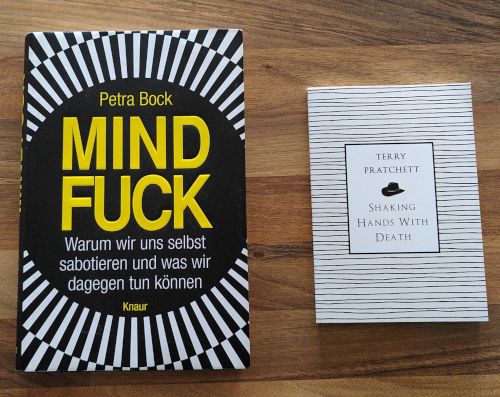
    Ich habe wieder einen passenden Roman von Terry Pratchett im Angebot, und zwar „Mort“. Auf deutsch heißt das Buch „Gevatter Tod“. Es geht darum, dass der personifizierte Tod sich einen Menschen als Auszubildenden aussucht und dieser dann mal eine neue Perspektive auf die Vergänglichkeit der Menschen und Fragen zum Beispiel nach der Gerechtigkeit und der Unausweichlichkeit dahinter stellt.

    Ein Gedicht gibt es auch wieder: Theodor Fontane beschreibt, wie sich angesichts der Dunkelheit das Bewusstsein auf das fokussiert, was wirklich wesentlich ist.

    Ausgang

    Immer enger, leise, leise,
    Ziehen sich die Lebenskreise,
    Schwindet hin, was prahlt und prunkt,
    Schwindet Hoffen, Hassen, Lieben,
    Und ist nichts in Sicht geblieben
    Als der letzte dunkle Punkt.

    Theodor Fontane . 1819-1898

    Fragen zur Vergänglichkeit stellen

    Dies sind die Fragen, die du dir oder einem Orakel jetzt stellen könntest:

    • Was hast du von deinen Vorfahren an Eigenschaften geerbt?
    • Auf wessen Schultern stehst du?
    • Wie stark verwurzelt es dich, zu wissen, wer vor dir war?
    • Was gibst du kommenden Generationen mit auf den Weg?
    • Was hättest du gerne behalten, was betrauerst du?
    • Was kannst du leicht loslassen?
    • Wo wartest du auf den Herbststurm, der dir die Entscheidung zum Loslassen abnimmt?
    • Wo siehst du deine eigenen resilienten Anteile?
    • Wer bist du in deinem widerstandsfähigen Kern?
    • Wie ist ganz allgemein Dein Verhältnis zur Transformation von Gewohntem zum Dünger für die Zukunft?
    • Was in der Geschichte der Menschheit macht dich dankbar?
    • Welche Projekte hast du dieses Jahr begonnen, Energie und Zeit investiert, um dich am Ende ihrer Laufzeit daraus wieder zurück zu ziehen?

    Deine wichtigsten Erkenntnisse in den Fokus setzen

    Mein Fokus zur Feier der Vergänglichkeit. Darauf ein Teelicht, ein Ziegelstein, ein paar braune Baumblätter, ein gehäkelter Totenkopf eine gehäkelte blaue Rose und das Bild eines Baumes ohne Laub
    Mein Fokus vom 1. November bis zur Wintersonnenwende am 21. Dezember. Hier siehst du den gehäkelten Totenkopf.

    Was sind für dich die wichtigsten Antworten auf Deine Fragen, die für dich am passendsten Zitate oder Gedichte? Lässt sich für dich ein Musikstück zum Mai auf ein Symbol verdichten? Hast du draußen in der Natur oder in deinem Garten einen Gegenstand gefunden, der es verdient hat, auf deinem Fokus präsentiert zu werden?

    Der nächste Termin für diese Artikelserie ist der 21. Dezember. Kurz vorher werde ich den entsprechenden Post auf meinem Blog veröffentlichen und den Link in den beiden Hauptposts hier und hier einfügen.

    Hast du eine Tradition rund um den 1. November? Hast du schon für dich sortiert, was du wann und wie für dieses Jahr loslassen oder auflösen willst? Wie fühlt sich das Thema Vergänglichkeit für dich an?

  • Summer Solstice Activities – Long Slow Summer Days

    Summer Solstice Activities – Long Slow Summer Days

    How to Refill Your Batteries at the Beginning of Summer

    This post is part of my second series about the wheel of the year. We are now at the time where days are long and nights are short. And so I present my ideas for Summer Solstice activities.

    Almost exactly two years ago, I wrote a blog post about the 21st of June. There are a few traditional threads that weave through it all:

    • the Summer Solstice
    • the beginning of summer and the holidays
    • St. John‘s Eve and the end of asparagus season

    My thoughts about this day crystallised into the following main themes: How things are valued even more due to their transience, the importance of resting for gathering strength for less plentiful days, enjoying the current abundance around us, trusting in natural processes and preserving your harvest in time.

    In the following paragraphs you will find suggestions that may help you experience these themes more tangibly, also some descriptions of my own activities and experiences. I will keep adding new thoughts and ideas in the future.

    You can find another perspective and additional insights into this time of year in the recent podcast episode The Wonder.

    Venturing outside

    If it was up to me, the temperatures would be a bit lower in general. At the moment, even my cat seems to just melt into the floor tiles most of the day, even though we llive in the North of Germany. Apart from that, I am amazed (like I am every year) by how light it is outside at 5 am as well as at 11 pm. Some astronomical info on the side: The earliest sunrise of the year does not happen at the solstice but a couple of days earlier, depending on your latitude. I made a graph for surise and sunset times around the winter solstice. For the summer it should look very similar, just the other way around.

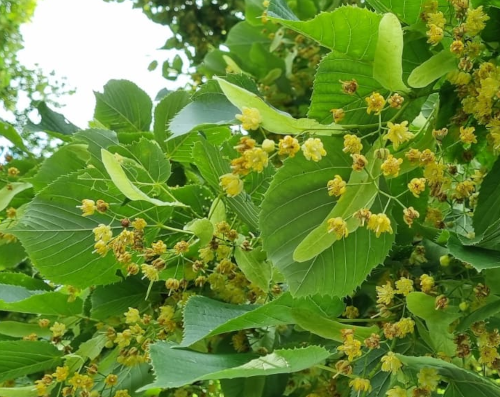
    Gone is the tenderness of may. Instead, I am faced with an abundance of leaves, fruit and flowers in my region. The main colour impression is green with a couple of multicoloured dots sprinkled in between. In my area roses are a very traditional plant to grow but also the elder trees are still blooming in bright white. There is hardly any stretch of path where I cannot smell them. The lime tree flowers on the other hand, are just about to open in a few days and release their fragrance when the elderflowers have faded.

    What does your neighbourhood look like at the moment? Which flowers can you see especially abundantly? What can you smell in nature around you? Are there as many butterflies around you seemingly soaking up every ray of sunshine they can get?

    Gardening

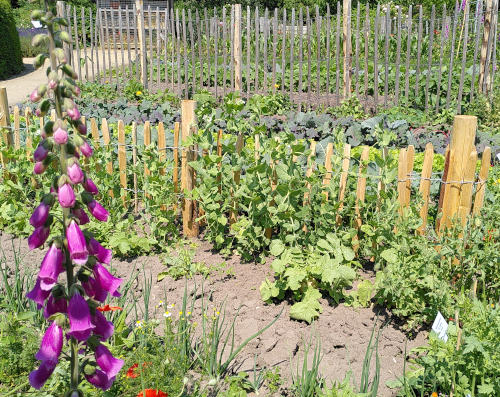
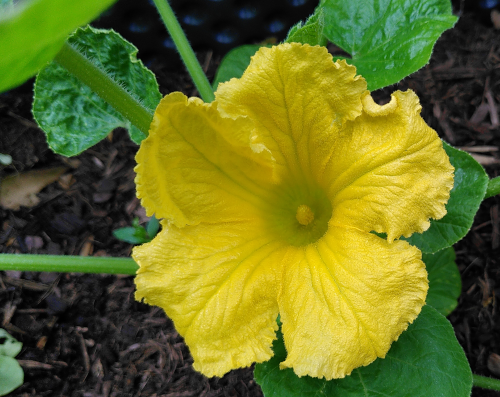
    In my garden several plants were no match for the army of slugs. Almost all of my sunflowers and all the courgette and pumpkin plants. Those that have made it this far now thrive more or less without depending on my intervention. I planted peas again, severely underestimating the way they stretch sideways when they do not turn out as pathetic as mine did in 2021. I am very much in love with how they fill one of my raised beds and produce blossoms and pods that thicken daily.

    In the same way that the time of illumination increases, the trees in my area (known for its tree nurseries) offer highly welcome shade. I am very grateful for the shaded corners in my own garden, being more of an autumn fan myself.

    Two years ago I planted some climbing strawberries which are still a bit on the puny side. The wild strawberries, on the other hand, run rampant all across my garden without me having to do anything. Actually, me not doing much in the way of “weed“ removal was exactly what helped these little friendly presents of nature to flourish.

    The manual that came with them told me I have to wait one more year before I can harvest the first asparagus. They still have to develop and gather strength to be able to withstand someone cutting pieces off them. The little trees they grow into are fascinating and beautiful to look at, as are the little shiny green berries. Another instance of non-intervention leading to an opportunity to observe something I had not seen before.

    Last year I had bought some watering bulbs, this year I added two clay jugs that are inserted into the soil and some clay tips for bottles to also poke into the ground to provide your vegetables with water more evenly. So this year I have to spend even less time worrying about those plants I am most emotionally invested in. On top of that the content of my rain barrel lasts longer.

    You can find advice on gardening in June here and here. Of course what will flourish and when you have to do certain tasks depends on the region you live in.

    What is the current state of your garden, balcony or windowsill? What grows without you having to do anything or maybe even because of your non-action?

    Meditating

    Apart from my own meditation there is a broad variety of other choices to be found online, covering different styles and durations. I would suggest the search terms “Summer solstice“, “gathering strength“ or “regeneration“ in combination with “meditation“. There are also yoga flows suited for the occasion, especially yin yoga flows. Another option would be to create a fitting atmosphere and just quietly meditate on one or more of the themes of the day.

    Creative Summer Solstice Activities

    To anchor the theme of the season in my mind I searched for a way to craft a miniature hammock. I ended up using this pattern, which I modified a bit in the second row. If you are interested in how and why I made one less loop at the end, let me know. Another tutorial shows you how to create a cash gift in the shape of a tiny hammock. This could easily be done with just a colourful piece of paper if you are not keen on putting a note on your focus. The description is in German but the photos are pretty self explanatory.

    Traditionally, the summer solstice is another great opportunity to crowns made from flowers. It‘s especially nice for kids, maybe this time of year the colours can be a bit more vibrant than for the 1st of May. The main thing is to enjoy the opulence of the season. Instead of paper flowers, I decided to crochet some roses to place on my own focus.

    To represent the sun itself you can weave wool and strips of fabric into a paper plate or a couple of sticks. Another great idea is to make a lantern from paper that you have done some water colouring on.

    And if all this still has not managed to get you into crafting gear, this list of Summer Solstice DIY projects hopefully will.

    I made a mini cardboard easel for my focus which I can present different pictures on throughout the year following these instructions originally meant for making a phone stand. Now I am going to create a new picture to put on the easel to focus on during the following weeks.

    ein Aufsteller aus roter Pappe
    Mini cardboard easel.

    Food And Drink

    If there is one thing I associate with the Summer Solstice, it is a last meal of asparagus, strawberries and sirup made with elderflowers.

    Last year I learned how to make an elderflower champagne via fermentation. Here is a similar recipe to the one I am using. If the elder trees near you are still blooming, here is a list of recipes you might like to try. Just remember to pick only what you need and leave some flowers so there will be berries for the animals later in the year.

    Ein Schraubdeckelglas, darin Wasser, Zitronenscheiben und Holunderblüten

    Listening to or making music

    In her cycle through the year, Fanny Mendelssohn also composed a piece about June. Listening to it makes me think about sitting in the shade in my garden and watching the butterflies dance through the flowers. In comparison, the Prélude à l’après-midi d’un faune by Debussy feels much warmer, a taste of the summer to come.

    No list would be complete without a mention of Vivaldi’s Summer. His version and also the one by Glasunov perfectly express the floating feeling of a hot summer afternoon. My research also made me come across “Apaisé, boisé” by Camille Pépin, a contemporary piece that transports me into a very summery forest with very old trees.

    As with the subject of love for the 1st of May, pop music offers a large variety of songs about summer. One of my favourites is “Zu heiß” by Farin Urlaub, a German ode to just lounging around instead of joining any reolution anytime soon, because it is just to hot to rebel. We can postpone any kind of street fight until maybe autumn, right?

    When I was a child in the 702 my father used to play his already dated records. One of them contained Summer in the City” by The Lovin‘ Spoonful, a song deeply embedded in my oldest memories. Their good news is: „Despite the heat it will be alright.“ We just have to wait with any partying activites until the late evening when the temperatures have dropped a bit.

    Of course, there are new and traditional childrens’ songs to be found. For example Disney’s snowman Olaf dreaming about what he would like to do in summer.

    I did not come up with any proper Metal songs about summer, but there is always “School’s out” by Alice Cooper celebrating the weeks of freedom lying ahead and also Type O Negative’s not exactly refreshing but still enjoyable “Summer Breeze”.

    Finally you could join Lisa Thiel or the Latvian group Tautumeitas in honoring the annual return of the summer sun.

    Summer Solstice Reading

    The following poem by John Updike captures how we felt as children, when the long weeks of summer holidays were before us, promising sunshine, carefree hours of playing outside and just being able to live in the moment.

    June

    The sun is rich

    And gladly pays

    In golden hours,

    Silver days,

    And long green weeks

    That never end.

    School’s out.

    The time Is ours to spend.

    There’s Little League,

    Hopscotch, the creek,

    And, after supper,

    Hide-and-seek.

    The live-long light

    Is like a dream,

    and freckles come

    Like flies to cream.

    John Updike

    There is an endless list of summer novels old and new. One book that I will add to my “to read“ list is “How to do nothing“ by Jenny Odell. In it she says:

    Our very idea of productivity is premised on the idea of producing something new, whereas we do not tend to see maintenance and care as productive in the same way.”

    Jenny Odell

    There are other similar books out there about how we can learn to cut back from the high level of activity we have grown accustomed to. Also I have seen some fun looking childrens’ books on the same subject.

    Two stories I just have to mention are Shakespeare’s “Midsummer Night’s Dream” as well as Terry Prattchett’s “Lords and Ladies”, the latter being very obviously based on the former classical comedy. Both of them feature a royal wedding, a group of craftsmen doing their very best to put together a play for the wedding entertainment and the activities of the elves threatening to bring even more chaos into the situation.

    Asking Questions

    These are the questions that might be helpful to ask yourself or the oracle of your choice:

    • What is growing in your life without you having to do anything?
    • What in your life actually profits from you not intervening?
    • How does not being able to keep hold of the moment help you enjoy it even more fully?
    • How can you integrate regular times for restoration into your schedule?
    • What does your conscience say about intentionally doing nothing?

    Focussing on Your Most Important Findings

    I have put together my own focus gathering all my findings:

    Tischchen, darauf eine Gehäkelte Hängematte auf einem Ständer aus Pfeiofenputzern, gehäkelte Rosenblüten und ein orangefarbener Teelichthalter
    My focus from the 21st of June until the 1st of August.

    What About You?

    What are the most meaningful answers to the questions above, the most fitting quotes or poems? Is there a piece of music that you can condense into a word, a phrase or a symbol? Did you find an object outside that deserves to be showcased on your focus?

    The next holiday is going to be the 1st of August. Shortly before that date, I will blog about it and add all the link to the two main posts.

    Do you have a tradition for the Summer solstice on the 21st of June? What do you like to eat at the moment? Which fruit and vegetables are currently in season where you live? How does the concept of transience help you enjoy life even more intensely? Do you allow yourself the amount of rest that you need? How do you feel about rest and enjoyment without a guilty conscience?

  • Short Story September 2022 – False

    Short Story September 2022 – False

    My contribution to the deadlinesforwriters short story challenge September 2022. Mia’s prompt was „False“.

    Who are you?

    ‘I keep telling you, you have got all this totally wrong!’ Paul can hear Helen shouting through the open front door. He rushes in and there she is, paler than usual and face to face with a man Paul has never seen before.

    The man wears a suit made from matte midnight blue material. He also wears an earpiece and black sunglasses. He leans forward into Helen’s personal space which does not seem to impress her or make her move away from him.

    ‘Is there anything wrong?’ Paul asks. It takes both Helen and the visitor a few seconds to look away from each other.

    ‘This only concerns your wife’, the man says, making air quotes around the last word. ‘I am only here for a couple of questions. Depending on your cooperation we will decide on the next steps.’

    Paul feels a cold shiver creeping up his neck. ‘Wait, cooperation with what? What steps? And who is we? Helen, what is going on here? Do you know this person?’

    Helen crosses her arms, staring at the man in the suit. ‘No idea. I have never met him in my life, he just turned up here and wants me to agree to this totally ludicrous story he made up about me.’

    Paul is impressed by how she manages to look imposing even in her soft greyish tracksuit with her sandy brown hair in a messy bun. Still, the strange man does not seem too intimidated.

    ‘Mr Taylor, what do you know about your wife’s family? About her childhood?’

    ‘What does that have to do with anything?’ Paul responds at the same time as Helen’s face loses the last bit of colour. ‘She didn’t have any family left when we met but so what? Who goes around calling on people who have lost their parents? Who are you and on whose authority are you here anyway?’ Paul can hear his voice going up both in volume and in register.

    The man pulls an identity card out of his pocket and holds it up for Paul to inspect, but really only long enough for him to catch the name J. Hunter. ‘I have already identified myself to Mrs. Taylor here. She should have known better than to drag this out for so long. You needn’t have witnessed any of this.’

    Mr. Hunter takes a small folder from inside his jacket. It opens to reveal photos of a girl with braids the same brown as Helen’s hair and eyes the same bright blue. ‘You remember this, ‘Mrs. Taylor’?’ The man manages to enunciate the quotes now that his hands are busy holding the evidence. ‘We have spent decades to find you, I have to give you that. But then your kind has always been good at vanishing in plain sight, hasn’t it?’

    ‘Okay, what do you suggest is my kind?’ Helen growls, even though Paul can see she has taken a step further back.

    ‘Mr. Taylor, the person you think of as Mrs. Helen Taylor is, unfortunately, a completely different person. A different being, to be precise.’

    Paul reaches out for Helen and she grabs onto his hand hard. He can feel how cold her own hand is and smaller than he remembers it. They look into each other’s eyes.

    ‘Whatever you are suggesting, Mr. Hunter, there is nothing wrong with Helen. She does not vanish nor is she a ‘being’. Helen is my wife and I trust her. She has never done anything wrong for as long as I have known her.’

    ‘Precisely.’ Mr Hunter stows the folder away again. ‘Let me tell you about Helen Taylor: What you see here is not a human. Not even someone from this planet. This individual was planted here about thirty years ago. Most likely to spy on us, but new intelligence has come up which we are currently working on.’

    Paul stares at Helen who seems to have shrunken a couple of inches. He looks at their hands, still clasped together.

    ‘Have you ever wondered about her parents or when and why they died? Why she does not have any other family?’

    ‘No, and I don’t care! I see no reason to

    ‘Have you never asked yourself why you two have never had any children?’

    ‘Bit personal, isn’t it? We agreed that we did not want any, that’s why! We don’t have to justify our private decisions to you! Who do you think you

    ‘Where was your wife born? Have you ever visited any of the places from her childhood?’

    ‘No, I haven’t! Well, but’ Paul looks at their hands again. Looks at her ashen face. Helen is the one who lets go first. She crosses her arms and sniffles.

    ‘Paul, don’t listen to him. I don’t know what these people want. Just because I don’t want to go back to where I came from does not make me an alien. You believe me, don’t you? Paul?’

    He takes a deep breath and faces Mr. Hunter again. ‘She is the smartest person with the biggest heart I know. She has always supported me, back when we met as students as much as today, every day. I don’t know where I would be without her. If anyone here in this room is definitely human, then it’s her.’

    ‘In all those years it never occurred to you that she might be too perfect? That her level of cleverness is unnatural? That she might simply be presenting you with an image she wanted you to see?’

    For the first time Paul wavers. He remembers their friends starting families. They never actually talked about any of their own. Neither has he ever asked Helen about her childhood. If she does not want to talk about it should that make him suspicious?

    To him, she has indeed always been perfect. But too perfect? No. What makes him love her are all her imperfections. Not how bright she is but how she does not have all the answers all the time and how she does not expect him to either.

    ‘I am sorry, Mr. Taylor. You are not the first human I have had to have this talk with. I don’t enjoy this, but you have to face the facts. And even if you don’t, we will have to take measures soon. This situation must be dealt with.’

    ‘I am not a situation!’ Helen shouts at Mr. Hunter who turns away and raises his left hand. Not to protect himself, as Paul at first assumes, but to touch the device in his ear.

    “What? The wrong No, not again! You know, just for once I wish I could send you lot out here by mistake and have you make them forget! We will discuss this!”

    He sighs, turns back to Helen and Paul and says: “Mr. and Mrs. Taylor, I am very sorry about the inconvenience.” Then he pulls out a small black sphere and holds it in front of him.

    “I am sorry love, of course I do believe you!” Paul starts walking towards Helen to pull her into his arms but before he can reach her, a bright light blinds his vision and he collapses.


    Like my contribution to the story challenge September 2022? On my blog you can find and read more of my stories!

  • Short story August 2022 – Child

    Short story August 2022 – Child

    My contribution to the deadlinesforwriters short story challenge August 2022. The prompt was „Child“.

    On The Way Down

    He realised he had not touched his toes with his legs straight in decades. There had never been any reason to. Now he found himself among a couple of teens, some middle-aged women and one man well in his eighties, all of them managing to at least reach their ankles. His own fingertips were not even down to his knees. And even this made it hard for him to breathe.

    Mia, the teacher in front, made it look effortless. She had the same sandy blond hair and blue eyes as Helen, which had instantly made him like her. At least until she started making them bend over, twist and move into a lot of not exactly comfortable shapes.

    Two years of sitting while homeworking and then sleeping in a tent for the long-awaited festival weekend had done a number on his back. The orthopaedist had said that there was nothing wrong with his spine and it was due to muscle tightening from lack of motion. It had been an education reading up on all the things that happened to you just by sitting.

    He had been advised to take up yoga, so here he was, finally rising up again into a standing position. He had spoken to the teacher about his lower back and she had told him to listen to his body and take breaks whenever he needed them. Paul really could have benefited from hearing this advice two years earlier and then also following it.

    “Try and lift your toes any amount while breathing in. Try and lower them to the ground one by one and breathe out,” said Mia.

    Paul stared down, only managing the breathing part. His toes just would not budge. On his left, the elderly guy repeatedly moved his toes up and down in an elegant dance. With his eyes closed. Eventually, Paul remembered he had to breathe out. At least his diaphragm was willing to cooperate here.

    “Now, try and feel your centre of gravity and move it back and forth a bit, then left to right. Find a position where your weight is balanced evenly across your feet.”

    Paul had never spent much thought on where his weight had been leaning. Then again, he had not been aware that standing upright could be called Mountain Pose. Giving it a name made it feel more intentional somehow. They had gone through all the cues twice before, but apparently Mia believed in repetition.

    Paul felt beads of sweat forming on his forehead when he struggled to lift his sternum up while at the same time keeping his ribs back in, widening his collarbones, drawing his shoulder blades down and inwards and on top of that to relax his arms and keep breathing. Standing had never felt so complicated and strenuous before.

    “Remember to not lock your knee joints and keep breathing,” Mia instructed them.

    Right, the knee joints. Paul willed them to go soft, damn it! He very nearly fell over from the effort. When he was happy with his Mountain Pose at last, he saw that everyone else had bent down again. His lower back slowing him down, it took him a few seconds to join them.

    “Right, now you have two options. Find Down Dog and breathe in. Either you wait here to follow my instructions through another series of Warrior Poses or you exhale lowering your knees to the ground, spreading them as wide as the mat.”

    Paul observed the other students. None of them lowered their knees. Paul inhaled consciously. Then he let go and sank down with a sigh.

    Mia beamed at him. “Rest your belly in between your thighs and see if you can lay your head down on the mat.”

    Paul’s body just melted into the mat. He had expected this class to be a lot easier and at the same time to be much more difficult. Feeling so much at home in this simple posture was a welcome surprise. Paul had not known his body even had a sense of home like this.

    “Stay here for as long as you want. I have a quote for everyone to focus on for the next couple of minutes. It is by Jigar Gor and goes ‘Yoga is not about touching your toes. It is what you learn on the way down.’”

    Paul’s body decided to stay like this for the rest of the class, blissfully ignoring the other students and forgetting all about his back and his toes.


    Like my contribution to the story challenge August 2022? On my blog you can find and read more of my stories!

  • 1. August: Geschenke am Wegesrand

    1. August: Geschenke am Wegesrand

    Wie schaffe ich einen Blick auf das, was nährt?

    Ziemlich genau vor zwei Jahren schrieb ich einen Artikel über den 1. August. Die Fäden, die hier zusammenlaufen sind weniger traditionell und hauptsächlich persönlich:

    • Freiluftmusik in Form des Wacken Open Airs (zur Not auch anderer Festivals)
    • Das hintere Ende der Sommerferien
    • Die Getreideernte

    Diese Themen haben sich für mich abgeleitet: Ein Bewusstsein für scheinbare NebensächlichkeitenDankbarkeitKooperation, lohnenden Energieeinsatz, ein Blick auf das, was nährt.

    Was folgt, sind ein paar Anregungen, wie diese Themen mehr oder weniger konkret erlebt werden können, außerdem die Beschreibungen meiner eigenen Aktivitäten und Erlebnisse. In diesen Artikel werde ich auch in Zukunft eventuell auftauchende neue Ideen einflechten.

    Raus vor die Tür

    Nachdem sie am 21. Juni noch nicht richtig in Blüte standen, ist der Duft der Linden jetzt schon verflogen. Was mir in die Nase steigt, ist der Sommerflieder. Ich weiß, ein Neophyt, aber trotzdem schön und duftend.

    Im Grunde präsentiert sich die Natur ähnlich wie zur Sonnenwende. Es ist immer noch ziemlich warm und oft auch schwül. Die Dinge haben sich weniger äußerlich verändert, sie sind eher geschmolzen weich in die Breite gegangen.

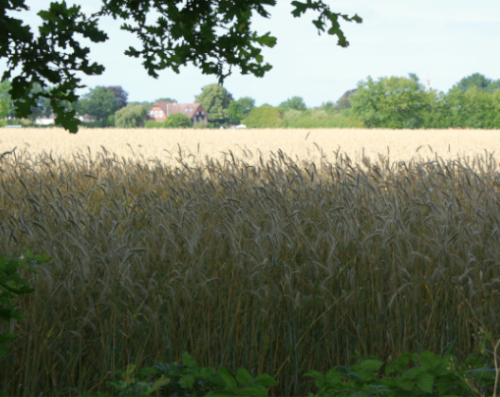
    Die Getreidefelder sind goldgelb und teils schon abgemäht. Eigentlich ist hier eher Baumschulgebiet und ich weiß gar nicht genau, wie das Getreide aus der Umgebung weiter verwendet wird. Auch der Mais sieht schon ziemlich amtlich aus. Dafür, dass hier hauptsächlich Bäume gepflanzt werden, stehen hier auf jeden Fall nebenbei noch einige Kalorien auf dem Acker.

    An meinen verschiedenen Walkingrouten gibt es in Ansätzen schon einige heimische Superfoods zu ernten, wie zum Beispiel Brennesselsamen. Auch die Hagebutten färben sich gerade langsam rot. Gerade in diesen Tagen wird mir wieder bewusst, wie sehr der Zyklus der Pflanzen vom Breitengrad abhängt. Meine Schwester hat schon vor zwei Jahren wilde Brombeeren zu Gelee verarbeitet, hier sind die allermeisten noch grün. Auch die Holunderbeeren zeigen sich zwar, sind aber noch sehr klein unreif und unscheinbar. Ein an einem öffentlichen Spazierweg stehender Apfel hat mit ein paar frühe Äpfel buchstäblich mit einem Plopp direkt vor die Füße kullern lassen.

    Das sind diese kleinen, scheinbar unscheinbaren Dinge, die mir im August dann auffallen, wenn ich bewusst darauf achte. Ich finde es wunderschön, dass in der Natur essbare Früchte wild wachsen, einfach so. Natürlich sollten wir darauf achten, dass wir der Natur nicht zu viel entnehmen und bedenken dass vor allem die Tiere auch noch reichlich Futter brauchen. Ich habe eher symbolisch drei kleine Äpfel mitgenommen und mich reich beschenkt gefühlt.

    Wie sieht es bei dir aus? Welche Pflanzen kannst du in Deiner Umgebung riechen? Was kannst du am Wegesrand an kleinen Geschenken pflücken? Steht bei dir noch Getreide oder sind die Felder schon abgeerntet? Wie sehr sind dir die kleinen Dinge in der Natur überhaupt bewusst?

    Raus in den Garten

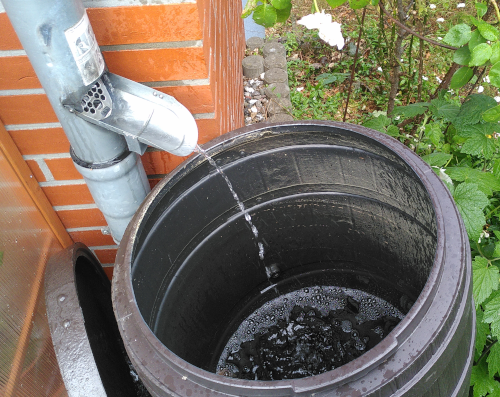
    In diesem Jahr hat es in meiner Gegend, im Gegensatz zu vielen anderen Regionen in Deutschland eine schöne Mischung an Sonne und Regen gegeben. Die Regentonne ist aktuell tatsächlich voll bis zum Kragen und ich muss nicht einmal besonders oft gießen. Das ist eine nette Abwechslung zum letzten Jahr, wobei auch die tönernen Wasservorratsbehälter einen Teil zur Entspannung beigetragen haben.

    Die Erbsen und Bohnen aus meinem Garten habe ich inzwischen schon aufgegessen. Ob aus den Blumenkohlpflanzen, die mir die Schnecken netterweise überlassen haben, etwas wird, steht noch aus. Aktuell versuchen die Kohlweißlinge, hier die Oberhand zu gewinnen. Da ist es aus meiner Sicht dann aber auch vorbei mit der Kooperation, ich suche regelmäßig die Unterseiten der Blätter nach Gelegen ab, sodass mit Glück überhaupt keine Raupen antreten werden.

    Nachdem ich meine Sonnenblumen schon als Opfer der Schneckenhorden aufgegeben habe, fand sich eine gar nicht absichtlich gepflanzte Sonnenblume im Erbsenhochbeet. Da müssen irgendwie im Eifer des Gefechtes Sonnenblumenkerne reingepurzelt sein. Diese Blume habe ich dann liebevoll umgepflanzt und bisher scheint es ihr am neuen Standort gut zu gefallen.

    Den Umgang mit Tomaten muss ich noch üben, aber immerhin sind jetzt schon einige rot, weil sie es im Anzuchtschränkchen so schön warm hatten. Das ist auch das Schöne am Garten: Ich lerne jedes Jahr dazu, nicht nur für den Jahreskreis und meine Persönlichkeit, sondern auch ganz konkret, was hinter dem Anbau von Nahrung steckt und wie ich das selbst schaffen kann. Ähnliches gilt für die Kartoffeln, da habe ich mal testhalber ein paar ausgebuddelt und beschlossen, dass die anderen noch Zeit bekommen, eine vernünftige Größe zu erreichen.

    Die Spargelpflanzen sind auch spannend zu beobachten. Dieses Jahr habe ich laut Anleitung noch nichts geerntet, dafür kann ich zusehen, wie die Beeren wachsen und rot werden. Mal sehen, was die Vögel in meinem Garten dazu sagen werden. Ich habe mir auf jeden Fall vorgenommen, im nächsten Jahr auf einer kleinen Fläche mal Weizen auszusäen, um den Lebenszyklus dieser Pflanze noch mehr aus der Nähe zu verfolgen. Lernen ist eins meiner Lieblingshobbys.

    Die drei wichtigsten Gartenarbeiten findest du hier, ein paar weitere Tipps hier.

    Wie sieht es in Deinem Garten, auf Deinem Balkon oder Fensterbrett aus? Was ist in Verlauf des Sommers schön gemütlich in die Breite gegangen? Was kannst du jetzt schon ernten? Was hast du an spannenden Dingen gelernt?

    Meditation

    Neben meiner eigenen Meditation gibt es online eine breite Auswahl an passenden und unterschiedlich langen geführten Meditationen unter den Stichworten „Dankbarkeit“, Ernte und Kooperation. du findest auch geeignete Yogaflows zu diesen Suchbegriffen, es gibt auch ausdrücklich für dieses Fest konzipierte Flows. Eine weitere Alternative wäre es, einfach in der Stille eins oder mehrere der Themen dieses Tages in geeigneter Atmosphäre zu meditieren.

    Kreativität ausleben

    Wenn schon die Getreidefelder so leuchtend reif sind, ist es eine schöne Idee, aus den Halmen, die eventuell bei der Ernte heruntergefallen sind zu verflechten. Es gibt Anleitungen für traditionelle Corn Dollys z.B. hier, hier oder auf Deutsch hier.

    Ich habe einen großen Hang zum Häkeln, da bieten sich dekorative Sonnenblumen oder Mohnblumen an.

    Eine kreative Möglichkeit, die Getreideernte für länger haltbare Dekorationen zu transformieren ist Salzteig. Ich kann mir vorstellen, daraus ein Füllhorn zu formen, um mich daran zu erinnern, wie reich ich oft beschenkt werde, ohne viel dazu beigetragen zu haben.

    Zum 2. Februar habe ich nach dieser Anleitung für einen Smartphoneständer aus fester Pappe einen Aufsteller gebastelt, auf dem ich das ganze Jahr über ein jeweils jahreszeitlich passendes Bild präsentieren kann. Jetzt werde ich ein neues Bild anfertigen und meinen eigenen Fokus für die kommenden Wochen neu gestalten.

    ein Aufsteller aus roter Pappe

    Essen und trinken

    Wie schon erwähnt ist jetzt die Zeit der Getreideernte. Da bietet es sich an, Bort selbst zu backen, vielleicht sogar mit eigenem Sauerteigansatz. Vielleicht auch in Figurenform, wenn wir schon mal dabei sind.

    Die drei Sommeräpfel, die ich vom Walking mit nach Hause gebracht habe, habe ich zu Marmelade verarbeitet. Aber hier gibt es natürlich eine breite Palette von Rezepten, genauso wie für alle möglichen Beeren die jetzt reif werden.

    Eine Aktivität, die eher herzhaft Geschmackserlebnisse liefert, ist Kräutersammeln. Wenn dir das suspekt ist, könnte vielleicht mal eine angeleitete Kräuterwanderung in Deiner Nähe für mehr Wissen und Bewusstsein sorgen.

    Musik hören oder machen

    Eigentlich finde ich ähnliche Musik angemessen wie am 21. Juni, wenn es auch schwerpunktmäßig weniger um den Ferienbeginn und mehr um den Einstieg in die Ernte Saison geht.

    Im klassischen Bereich klingt Fanny Mendelssohns August deutlich aktiver als ich bei diesen Temperaturen normalerweise wäre, genauso wie die Ernte aus Tschaikowskis Jahreszeitenzyklus. Selbst wenn er bei dieser Auftragsarbeit nicht mit 100% Herzblut zu Werke gegangen sein sollte.

    Im Bereich der Popmusik kommt mir abgesehen von den jährlich neu gekürten Sommerhits die Surfersparte in den Sinn, zum Beispiel God only knows von den Beach Boys, in dem sie zu sommerlichen Klängen ihre Dankbarkeit für die Anwesenheit einer anderen Person ausdrücken. Oder auch Island in the Sun von Weezer, wozu es auch eine schöne Anleitung zum Nachsingen mit Ukulelenbegleitung gibt. P1nk besingt das Gefühl, von Sonnenschein überschüttet zu werden, Jördis Tielsch besingt die kleinen Dinge, genauso wie Mark Forster unter dem gleichen Titel. Sting singt über seine Erinnerungen an goldene Getreidefelder

    Unter den traditionellen Kinderliedern fand ich „Heho, spann den Wagen an“ gespielt von Jürgen Fastje und als Noten mit Text. Weniger traditionell singt Bernd das Brot darüber, wie wir das Leben vielleicht besser nicht sehen sollten, immer mit dem Blick auf das zu Kurze oder nicht Funktionierende 😉

    Im Bereich Metal und Rock könnte ich eigentlich sagen, dass hauptsächlich wichtig ist, dass es in den nächsten Tagen live und draußen gespielt wird. Grundsätzlich habe ich aber eine Version von Vivaldis Sommer von Vladimir Zelentsov gefunden und ein Stück über die Ernte von Opeth. Dass es da wirklich um die Gewinnung von Backgetreide geht, kann ich aber nicht garantieren. Genauso wenig wie beim gleichnamigen Angebot von Nightwish. Shelter dagegen sprechen sich in ihrem Song Appreciation wirklich dafür aus, die Geschenke des Lebens bewusst wertzuschätzen.

    Traditionell passend, allerdings weniger an Kinder gerichtet ist das Lied von John Barleycorn, der von drei Männern gruselig abgemetzelt wird. Wie gut, dass John kein Mensch ist, sondern das Getreide, aus dem letztlich Whiskey gebrannt wird.

    Zwei weitere eher ruhige Beispiele zum musikalischen Ausdruck der Dankbarkeit sind Grateful: A Love Song to the World von Empty Hands Music und ‚I Thank You‘ – Morning Gratitude Song von Susie Ro. Ansonsten bleibt noch, mit Faun oder Damh the Bard diesen Tag zwischen Sonnenwende und Tagundnachtgleiche zu feiern

    Lesen

    Weil es mir trotz meines geographischen Vorteils eigentlich noch immer viel zu warm ist, um ganze Bücher zu lesen, gibt es dieses Mal nur ein Gedicht. Erich Kästner deutet darin an, wie wir bei aller Geschäftigkeit nie ganz alleine bestimmen, was aus dem wird, was wir säen und wie wir dennoch säen müssen, wenn wir ernten wollen. Und wie gleichzeitig nichts und alles bleibt wie es ist.

    Der August

    Nun hebt das Jahr die Sense hoch

    und mäht die Sommertage wie ein Bauer.

    Wer sät, muß mähen.

    Und wer mäht, muß säen.

    Nichts bleibt, mein Herz. Und alles ist von Dauer.

    Stockrosen stehen hinterm Zaun

    in ihren alten, brüchigseidnen Trachten.

    Die Sonnenblumen, üppig, blond und braun,

    mit Schleiern vorm Gesicht, schaun aus wie Frau’n,

    die eine Reise in die Hauptstadt machten.

    Wann reisten sie? Bei Tage kaum.

    Stets leuchteten sie golden am Stakete.

    Wann reisten sie? Vielleicht im Traum?

    Nachts, als der Duft vom Lindenbaum

    an ihnen abschiedssüß vorüberwehte?

    In Büchern liest man groß und breit,

    selbst das Unendliche sei nicht unendlich.

    Man dreht und wendet Raum und Zeit.

    Man ist gescheiter als gescheit, –

    das Unverständliche bleibt unverständlich.

    Ein Erntewagen schwankt durchs Feld.

    Im Garten riecht’s nach Minze und Kamille.

    Man sieht die Hitze. Und man hört die Stille.

    Wie klein ist heut die ganze Welt!

    Wie groß und grenzenlos ist die Idylle …

    Nichts bleibt, mein Herz. Bald sagt der Tag Gutnacht.

    Sternschnuppen fallen dann, silbern und sacht,

    ins Irgendwo, wie Tränen ohne Trauer.

    Dann wünsche Deinen Wunsch, doch gib gut acht!

    Nichts bleibt, mein Herz. Und alles ist von Dauer.

    Erich Kästner

    Fragen stellen

    Dies sind, teils auf meiner Meditation basierend, die Fragen, die du dir oder einem Orakel jetzt stellen könntest:

    • Welche Dinge in Deinem Leben basieren auf der Arbeit anderer Menschen? Welchen Einfluss hat die Verbindung mit diesen Menschen auf Dein Erleben dieser Dinge?
    • Welche Dinge in Deinem Leben basieren auf Deiner eigenen Arbeit? Welchen Einfluss hat Deine Verbindung mit Deiner eigenen Wirksamkeit auf Dein Erleben dieser Dinge?
    • Welche Dinge in Deinem Leben haben sich scheinbar von selbst entwickelt? Welche richtigen Umstände haben sie dafür gebraucht?
    • Was in Deinem Leben hat davon profitiert, dass du ihm Zeit gegeben hast?
    • Wie ist es für Dich, dass manche Dinge nicht durch Aktivität erreichbar waren?
    • Welche Dinge in Deinem Leben bedurften einer dramatischen schnellen Wandlung durch hohen Energieeinsatz?
    • Wie und wo erlebst du in Deinem Leben Kooperation zwischen anderen Menschen, dir, langsamen und unscheinbaren sowie schnellen und dramatischen Veränderungen?
    • Wie nähren diese Dinge Dein Leben und was daran macht Dich dankbar?
    • Was musst du aktuell besonders gründlich wässern und abkühlen, damit es nicht vor lauter Sonnenschein eingeht?
    • Wo gibt es in Deinem Leben eventuell scheinbare Nebensächlichkeiten, die eigentlich wichtig sind, die du aber vor lauter Grundsätzlichkeit nicht mehr siehst?
    • Wie kannst du Dein Bewusstsein für diese Nebensächlichkeiten steigern?

    Deine wichtigsten Erkenntnisse in den Fokus setzen

    Ich werde meinen eigenen Fokus mit meinen eigenen Erkenntnissen zum 1. August zusammenstellen und später hier als Photo einbinden.

    Was sind für fich die wichtigsten Antworten auf feine Fragen, die für dich am passendsten Zitate oder Gedichte? Lässt sich für dich ein Musikstück zum Mai auf ein Symbol verdichten? Hast du draußen in der Natur oder in Deinem Garten einen Gegenstand gefunden, der es verdient hat, auf deinem Fokus präsentiert zu werden?

    Der nächste Termin für diese Artikelserie ist der 21.September. Kurz vorher werde ich den entsprechenden Post auf meinem Blog veröffentlichen und den Link in den beiden Hauptposts hier und hier einfügen. Hast du eine Tradition rund um den 1. August?

  • Short Story July 2022 – As Long As

    Short Story July 2022 – As Long As

    My contribution to the deadlinesforwriters short story challenge July 2022. The prompt was „As long as“.

    Conditioned

    Helen lay dozing in her hammock on a warm July afternoon, when she heard a strange chomping sound from about three feet away. She was wide awake instantly. Paul had left for a business trip, and the neighbours did not usually turn up unannounced. Even if they did, they would call for Paul and Helen instead of go munching on the vegetation.

    Okay, just stay low and take in only very shallow and quiet breaths. Do not make a sound and hopefully it will aaall go away by itself. Oh, God…

    Unfortunately, the chomping did not go away. From the sounds of it, its source moved even closer to her cocoon of cream-coloured cotton. Torn between panic and curiosity, Helen lifted her head just enough so she could peek over the edge of the hammock. To her surprise, there was an elephant in her garden. An elephant. In her garden. It was close enough to her that she could see the wrinkles in the dark grey skin. She imagined she could even feel the warmth radiating from this unexpected intruder. It was quite small, so it fit in relatively well between the shrubs. But not so small that Helen felt totally safe with the situation. Very slowly and very quietly she withdrew again, her thoughts racing.

    Okay, this is what an elephant looks like from up close. I like elephants. In theory. Right, shallow breaths, shallow breaths. Oh God, I need some oxygen. Hope it hasn’t seen me. It looked quite preoccupied with my plants. Aaaw, the plants! And they were starting to look just like I had wanted them. All the digging and grooming and the patience. And I am not exactly good at patience! Please, let it at least not eat the roses!

    The urgent need for more detailed information outgrew her sense of doom and eventually Helen gave in and ventured another look at the animal, which seemed to be absolutely relaxed and happy to sniff at the leaves of the plants around it. I bet they have excellent hearing with those ears, Helen thought at the same moment as the elephant turned around and looked directly at her.

    Don’t move. Stay very quiet. How good is their eyesight again? Those eyes look pretty small, don’t they? Wait, elephants are vegetarians, but I think I read something about attacks on humans. How dangerous can they be? Really? What do you have to do to make an elephant attack you? Does it depend on their general mood? This one looks pretty chill to me.

    Helen realised her phone was on the table nearby. She had placed the hammock so that she could swing a bit, should she feel like it. This meant that the phone was probably just about out of reach. Helen and the elephant stayed locked in a weirdly calm staring contest for what felt like another minute, then it turned away again to pluck some petals off the rose bushes.

    There go the roses. What a shame.

    Neither Helen nor Paul had the greenest of thumbs. They tried, however, and the garden was the one thing they were tenacious with. Through the years they had managed to get the combination of shapes, colours and textures just right. Since their garden had a lot of shade from the neighbours’ tree, they had chosen mostly brightly coloured flowers: Creamy roses, white and light green hydrangeas, pink begonias, light blue violas. All of them easy to spot even in the shade. Even if your eyesight was not excellent. Maybe the dark red cherries were safe. They grew on the small tree near the hedge at the back end of the garden. The hedge with a brand new entrance, roughly the width of a medium-sized elephant.

    Helen somehow gathered the courage to lean slowly over towards the table, her eyes not leaving her visitor for a second. When her hand was just a few inches away from the table, the elephant looked at her again and blinked. She froze, wondering if she should pull back her arm slowly or quickly. Eventually she went for slowly and hid again behind the cotton wall.

    Should I call the police? The responsible thing would be to let someone know, right? We can’t have a wild animal running around in the neighbourhood. Why did it chooseour garden anyway? Why didn’t I hear it? What is going to happen, when all the flowers and shrubs are gone? When it eats something it doesn’t like?
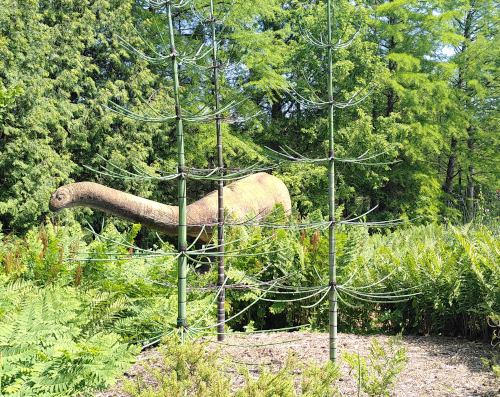
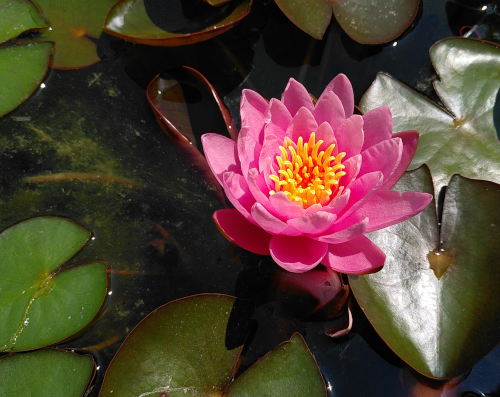
    A grey trunk reached over the edge of the hammock, ruffled and sniffed Helen’s hair. It began probing her left ear, which to a person whose only plan had been to lie in the shade in peace and quiet turned out to be unpleasantly loud. The trunk felt like it was all muscle, mainly because it was. The tip was a bit wet and left a trail of snot behind. It pulled at her shirt for a bit, prodded her feet, and eventually disappeared again. This did not seem to be too dangerous after all, even if a bit yucky. At this point, Helen remembered where the animal was most likely to have come from.

    Oh yeah, those posters advertising the bloody circus all over town. Poor little creature, I wouldn’t want to be in your place. Dance like they tell you and there will be no trouble. Let people drag you up and down the country and parade you in front of others who see you as nothing but entertainment. Judging and punishing you for what they think of as misbehaving. I can kind of relate, you know.

    Feeling more sympathetic than scared by now, Helen sat up so she could look at the animal again. It really did not seem to want to cause any trouble, just chew up her flowers. That seemed kind of fair, even though Paul would not love the new look of their hedge. Or how their pond got a thorough stirring around right now. Good thing they had decided not to put any fish in there.

    I don’t blame you, Helen thought, anyone would try to escape that kind of life. I hate when people assume their expectations are more important than what others need. You know, society in general: As soon as you are a bit bigger than people would like or whenever anyone decides to trumpet a bit differently than the rest, things can get ugly so quickly.Okay, I admit that my problems don’t exactly compare to yours.It’s just, a lot of the time I feel like I could do more or be more if I did not hold back so much. Or if I maybe decided some decisions are not really mine to make and worry over. If I didn’t get into knots over nothing.

    The elephant had started on the cherries by now. It was plucking them slowly, one by one from the branches, really savouring them with its eyes closed.

    “So what is your name? Your real name? I wish you could tell me about your life and what you would want to do, if it was up to you. Apart from eating my cherries.”

    The elephant did not answer, but it paused and stared into Helen’s eyes again for a long few seconds. It appeared to sigh and went back to the cherries.

    “I know I should alert the authorities somehow. It’s the adult thing to do in a situation like this, right? Not that I have ever been in a situation like this one before. But what if I don’t? Would I be responsible for any damage you do elsewhere? You could stay in my garden for a while. Until all the edible plants are gone, I guess, but still. You would just have to keep the noise down.

    And I don’t know how much water you require. That might be a problem, because I would really like to keep the pond the way it is. Or, you know, there is a beach nearby. If you go back through the hedge and turn left, you just walk straight on for about a mile. Can’t miss it, and it’s just lovely. The sand is so soft and the water is quite warm this time of year. I bet you would like the beach.”

    Suddenly, there was music coming from the table: “I don’t care who you are …” Helen leaned over and this time managed to grab the phone. “Where you’re from…” In all the excitement she had forgotten that she had set the alarm, in case she fell asleep. “What you do …” She hit the button to stop the music and switched on her browser. She half-heartedly searched the internet for information on who to call in case of a surprise visit by exotic animals.

    “Is it okay, if I take a couple of pictures? Paul is never going to believe this otherwise. Well, he is going to believe that something happened to our plants, but this? Probably not.”

    The elephant seemed to realise what Helen was about to do and lifted its trunk in an arc above its head. As if it was posing. Then it began a little pirouette. Helen winced.

    “No, not like this! Stop! Just go back to doing what you did before! You don’t have to dance for me!”

    The animal froze and made a small trumpeting noise. It seemed to shrug into a more natural stance, then remembered there were more of those nice little red things to eat.

    Helen took a few photos. And there it was. Looking at the scene on the display, she saw this living creature as if for the first time. Without thinking about the why or the how or the why not. No rational thought in general, just taking in how the elephant got this much joy from the simple yet perfect activity of eating fresh fruit from a cherry tree. Without negotiating or waiting for things to meet any requirements. Helen took a deep breath and decided to deliberately not make a decision and instead to just watch and wait. The lack of guilt she felt made her strangely happy with herself.

    When the tree was finally devoid of any fruit, the elephant gave it a couple of shakes to check for stray cherries it might have missed, then sniffed and trumpeted once more, a bit louder than before. It trotted over to the hammock to spread some more snot onto Helen’s outstretched hand before it turned and walked towards the back of the garden. It waved its trunk as it squeezed through the new exit in the hedge, then turned left and stomped away. Helen hoped it was going to love the beach as much as she did.


    Like my contribution to the story challenge July 2022? On my blog you can find and read more of my stories!

Cookie Consent mit Real Cookie Banner